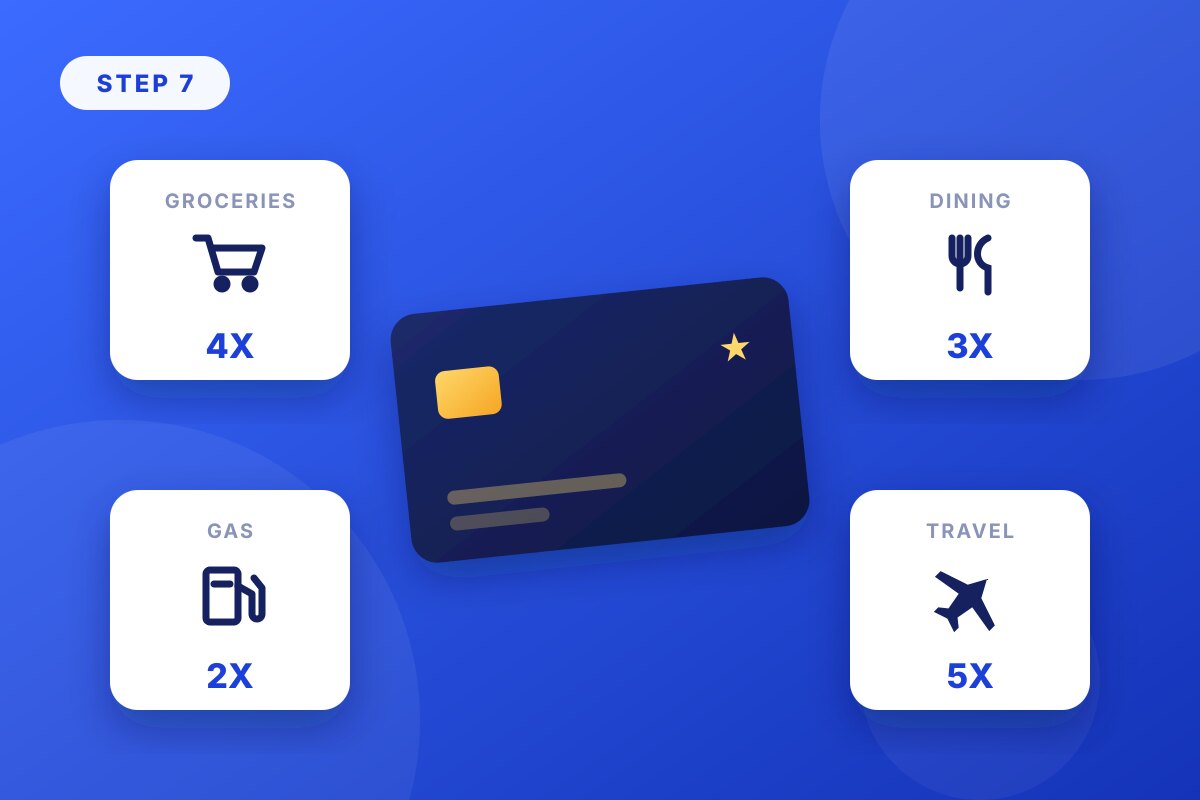
The welcome bonus is a one-time boost. What decides whether your rewards strategy works long-term is how many points you earn on the money you already spend every month: groceries, gas, dining, bills and travel. With the right setup, the same budget can easily earn two or three times the rewards. This guide shows how.
Before you think about which cards earn the most, look at where your money actually goes. Pull up two or three months of bank and card statements and group the totals into a few buckets:
Most households find that two or three categories make up most of their card spending. Those are the categories worth optimizing. Earning 5x on a category where you spend $20 a month barely matters; earning 3x or 4x on your grocery bill can add up to a free flight every year.
Most rewards cards pay a base rate, typically 1 point per dollar, and a higher rate in certain categories. A few things to know:
Read your card's rewards terms once, and you will know exactly which purchases earn the higher rate.
No single card earns the top rate everywhere. The most effective approach is two or three cards that cover each other's weak spots, usually from the same points program so the points can be pooled. A common structure looks like this:
Within some programs, you can move points from a no-fee card into the premium card's account, where they become eligible for transfers to airlines and hotels. That is how a "cash back" card can effectively earn travel points worth more than cash. Check your program's rules: who you can combine with, and whether a premium card is needed to transfer.
Keep the team small. Every extra card adds an annual fee to justify and a payment to track. Two or three well-chosen cards beat seven that you can't remember how to use.
Most major issuers and airlines run online shopping portals. You click through the portal to a retailer's website and earn extra points or miles per dollar on top of what your card earns. Portal bonuses are especially strong around holidays. Clear your cookies or use a fresh browser window if purchases don't track.
Several airlines and hotel chains run free dining programs. Link a card, eat at participating restaurants, and earn extra miles or points automatically, on top of your card's regular rewards.
Issuers such as American Express and Chase show targeted offers in your account, like a statement credit or bonus points at a specific merchant. Add the ones you would use anyway; it only takes a minute a month.
Some premium cards earn their highest rates only when you book through the card's travel portal, while others reward booking directly with airlines and hotels. Booking directly also matters for earning elite credit and getting help when plans change. Know which method your card rewards before you book.
Adding a spouse or family member as an authorized user lets their spending earn points in your account. Some cards charge a fee per authorized user, so check first.
Some cards and programs now let you earn on rent or mortgage payments without the usual processing fees. If housing is your biggest expense, it is worth researching. Avoid paying a 2.5% to 3% processing fee to earn 1 or 2 points per dollar; that usually loses money.
Once you are earning steadily, the next question is where to spend those points for the most value. In the next guide, we explain transfer partners: how moving bank points to airlines and hotels works and why it often beats redeeming for cash.
Earning rates, categories and program rules change. Confirm current terms with your card issuer.