.svg)

A Lighter Morning at 35,000 Feet: British Airways to Refurbish Club Europe Breakfast Service
.jpg)
%20(1).svg)
British Airways is poised to institute one of the more overt alterations to its shorthaul premium cabin experience in recent memory, and the frequent flyer debate has, unsurprisingly, already begun. The carrier intends to institute changes, effective January 7, 2026, to the Club Europe business class breakfast service on some of the shortest of European routes to forgo traditional hot meals in favor of an option that is much lighter and more basic.
For the traveler who has grown accustomed to a full English breakfast at cruising altitude, it may constitute a retrograde step, but for others, it reflects a broader industry trend toward streamlined on-board service. Either way, the decision makes for a meaningful shift in how British Airways approaches premium dining on short flights.
What's changing in Club Europe?
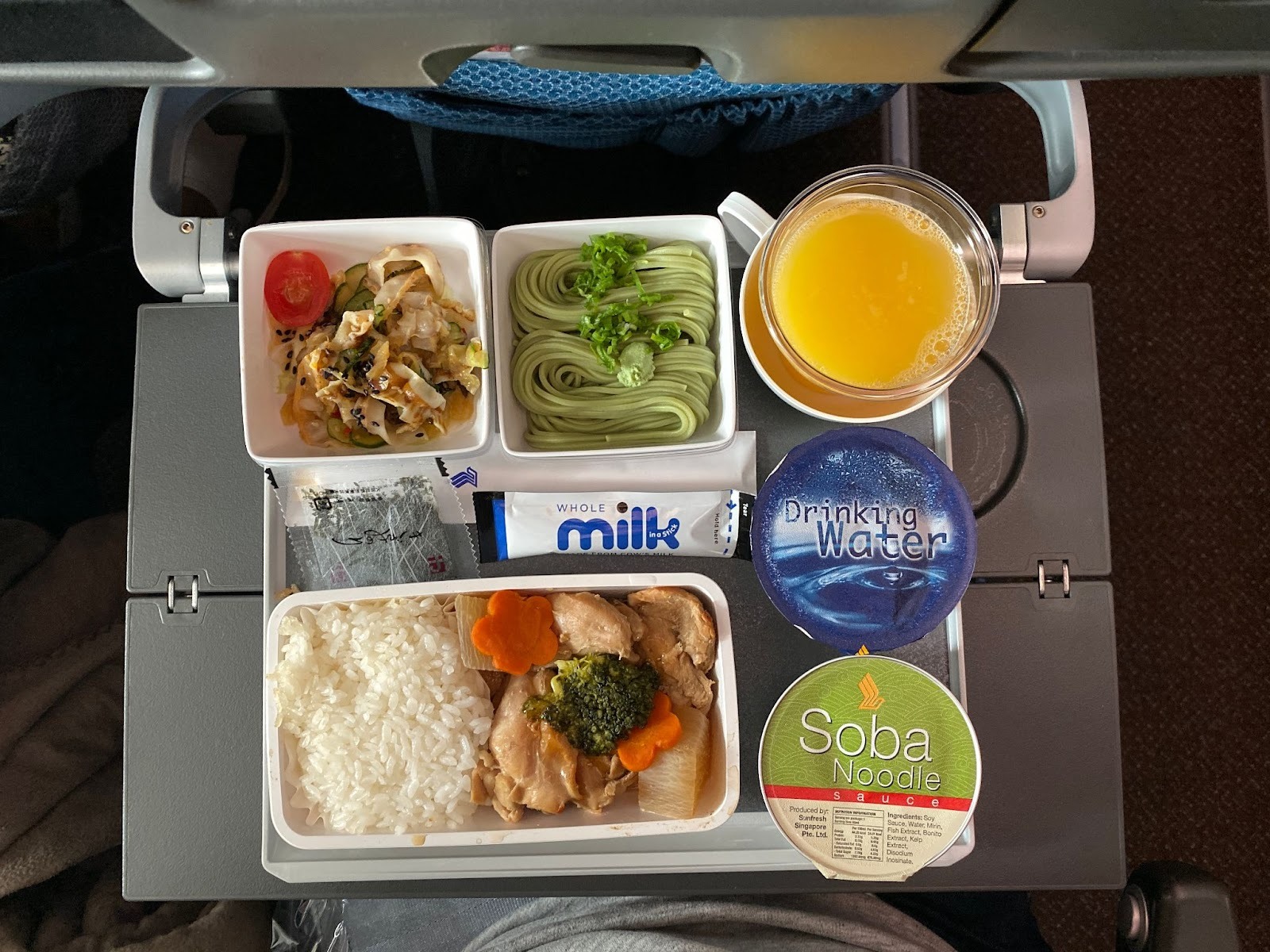
Effective immediately, British Airways is cutting hot breakfast options in Club Europe on some short-haul European flying. Instead, passengers will be given a much more minimalist morning meal featuring:
- Fresh fruit plate
- Yogurt
- A pastry warmed
This replaces the previous format of two or three hot entrée choices, which often included a full English breakfast or other items that had to be cooked.
According to British Airways, this refreshed service has been designed to simplify operation on board, enabling flight attendants to move more efficiently through the cabin and freeing up time so they can interact more with customers.
Routes Impacted by New Breakfast Policy
The new breakfast service will be available on selected high-frequency, short-duration routes, mainly those whose flight time is less than one hour. These routes include:
- Amsterdam (AMS)
- Belfast: BHD
- BRU (Brussels)
- Dublin, DUB
- Jersey (JER)
- Manchester MAN
- Newcastle= NCL
- Paris (CDG)
The rest of the Club Europe routes still have a complete hot breakfast offering at least for the moment.
Why British Airways says it is making the change:
British Airways cast this as a service enhancement, not a cut. According to the carrier, reducing the number of breakfast options will help cabin crew serve meals more efficiently on flights where time is really tight.
Fewer meal components, in theory, mean:
- Quicker service
- Less congestion in the aisle
- More time is devoted to individualized customer contact.
This is not illogical from an operational perspective: on a 45–60-minute flight, serving a full hot meal and then clearing trays can be challenging.
The explanation has not persuaded everybody, however.
How does this compare to other European airlines?
But, to be fair, British Airways usually did more than most of its European rivals when it came to short-haul catering.
That said, most major European carriers today offer only cold breakfasts or light snacks in their premium cabins on flights of this length-or even slightly longer. Think Air France, KLM, Lufthansa, SWISS, and Iberia: in that context, British Airways's former approach was more the exception than the rule.
The ironic truth is that in scaling back its breakfast offering, British Airways actually brings itself more in line with industry norms. Yet alignment does not always equal improvement, especially when expectations have already been set.
Breakfast and its cultural importance
The first reason this shift has raised eyebrows is cultural: in the UK, breakfast is a more substantial meal than in large swaths of Europe. In this light, a hot and filling morning meal can be presented as a normal rather than an indulgent part of the day.
For early flying British, Club Europe breakfast wasn't about the food; it was about the experience. This might be less about pragmatic adjustment and about lost identity: not being able to offer hot options on key domestic and near-international routes.
Not every passenger, however, looks at this move with disappointment. Those travelers who do not like a lot of heavy meals or avoid some ingredients because of certain conditions, may even like this change.
Is it about Service-or Cost?
While BA trumpets the virtues of efficiency and customer interaction, most onlookers believe the real driving force here is cost control.
Some of the effects of reduced varieties of hot meals are:
- Lower catering costs
- Simplified Logistics
- Reduced food waste
- Faster aircraft turnaround times
The airline has similarly made decisions like this in the past that seemed to put savings over the passenger experience: on long haul flights, for example, it once tried to consolidate meal services into extended "brunch" and "supper" windows-moves widely perceived to have been cost-cutting measures, and partially reversed.
Given that history, it is altogether understandable that some travelers view with skepticism the airline's stated rationale:
Does it dilute the Club Europe experience?
On the shortest flights, it is positioned as a business class product, while in practice offering only an economy-style seat with a blocked middle seat. The value traditionally has relied very heavily on service, catering, and flexibility.
To the frequent flier, especially the weekly city-to-city commuter, it is the little things that count - London to Paris, for example. A hot breakfast helped justify the premium fare-at least on early departures.
This risks making Club Europe feel less differentiated from economy - at least during mornings - with its removal on some routes.
But who might actually benefit from this change?
Some travelers, despite criticism, find this update to be worth it:
- Passengers with short connections who want quicker service
- Health-conscious travelers who like fruits and yogurt.
- Those who avoid heavy or meat-based breakfasts
- For the business traveller, efficiency-not indulgence-was called for.
This suggests that, in such contexts, a lighter breakfast may even complement rather than detract from the onboard experience.
What this says about the future of short-haul premium travel
The change could also be part of a rethinking of what premium service is on short flights. Across the industry, airlines would seem to increasingly question whether traditional business-class amenities make sense on routes under one hour.
We may see more carriers:
- Simplify meal offerings
- Pay attention to speed and consistency.
- Concentrate more on lounge access and not dining onboard.
Invest in digital and ground-based perks instead. The breakfast update of British Airways may mark the beginning of such a shift.
Final Thoughts
As of January 7, 2026, British Airways will cut hot breakfast service on many of its shortest and busiest Club Europe routes down to fruit, yogurt, and a pastry. According to the carrier, this is done to simplify service in order to enhance crew-customer interaction. Admittedly, British Airways traditionally have had more generous short-haul catering than most of their competitors, but this move places them more in line with European norms.
But to those travelers who value a hot, more traditional breakfast-especially on those very early flights-this may be a downgrade. Whether it actually will be more efficient, or further erode the premium experience, ultimately depends on passenger response. What is clear is that once more, British Airways is testing just how far they can pare down service before undermining loyalty.
DISCOVER THE RIGHT CARD FOR YOU.
Explore our card recommendations and find a credit card that suits your personal needs.
Browse card categories
%20(1).jpg)
.svg)