.svg)

Alaska Airlines Makes Its Largest Aircraft Commitment Ever with Boeing
.jpg)
%20(1).svg)
Alaska Air Group has officially made a new step of expansion. To assure growth over the long term, the purchase of the larger aircrafts, increased capacity aircraft and a well calculated approach to international flyings, the airline has confirmed the biggest aircraft purchase in companies history and it has been a huge order placed with Boeing.
The transaction focuses on two aircraft lines: the Boeing 737 MAX 10, the largest narrowbody aircraft Boeing has ever built and the Boeing 787-10 Dreamliner, the longest aircraft in Boeing history. Collectively, these aircraft are going to influence the fleet strategy of Alaska as far as the next decade.
Though the announcement is not going to come as a shock to industry observers who are paying close attention to the Alaska Boeing loyalty, the sheer magnitude of the order and focus on larger planes makes it a turning point to the carrier.
The Notesbreakdown of the Alaska Record Boeing Order
Alaska Air Group has entered into an up to 145 Boeing aircraft in terms of firm orders and options respectively. This order extends the deliveries to 2035 giving the airline long-term flexibility and fleet stability.
What’s Included in the Order?
- Firm orders 105 Boeing 737 MAX 10 aircraft.
- 35 optional 737s, which can be modified in to Max 8 or Max 9 versions.
- 5 Dreamliners 787-10 aircraft exercised under outstanding options.
The new and current orders are taken into consideration and the current numbers of Boeing aircraft ordered by Alaska Air Group stands at 245, further supporting the claim that it is one of the most loyal customers of Boeing in the United States.
The way this order fits into Long-term plans of the Alaska growth
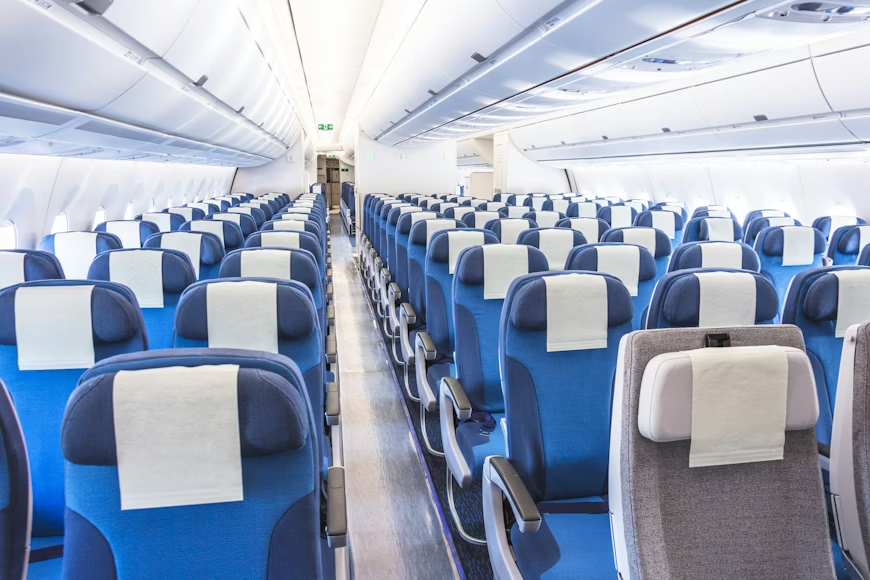
Currently, there are slightly more than 400 aircrafts in the fleet of Alaska Air Group. The airline project that the airline anticipates to grow to with the new-announced order is:
- Approximately 475 aircraft by 2030
- More than 550 aircraft by 2035
This growth does not just include fleet growth but also a massive enhancement in average aircraft size that directly affects capacity, operating costs and route economics.
Notably, these new ordered airplanes are not destined to Hawaiian Airlines but Alaska Airlines. With the Alaska merger with Hawaii, Hawaiian will still be maintaining a mixed fleet that has Airbus A330s, Airbus A321neos, and Boeing 717s, whilst Alaska will be comfortably stuck in Boeing.
The 737 MAX 10 is at the heart of the Alaska strategy because of the following reasons.
The most striking thing about this order is the high investment of Alaska on the Boeing 737 MAX 10 which is yet to be fully certified.
- A Moving Away of Smaller Narrowbody Jets.
- Traditionally, the 737 models with higher capacities have been preferred in Alaska:
- The airline greatly depended on the 737-900 as compared to smaller models.
- In this transition of the MAX, Alaska focused on the MAX 9 rather than the MAX 8.
- The MAX 10 goes even further and in providing the highest seating capacity of any 737.
The bigger aircraft enable Alaska to reduce the unit cost per seat making the routes more profitable without the need to increase the frequency of flights. The strategy has been very successful in the high demand leisure and transcontinental markets.
Risks and Flexibility of Certification
Alaska has created flexibility into its order, even though the MAX 10 is not certified. The airline has the option to reconfig aircraft to smaller MAX versions in case of any certification schedule or operational requirement.
This risk-averse style is in line with the historic conservative style of management in Alaska.
The Future of the Boeing 787-10 in the State of Alaska
Compared to the big narrowbody order, Alaska widebody commitment is purposely small.
Futuristic and Present Dreamliner Fleet.
Through this announcement, Alaska will eventually run 17 Boeing 787 aircraft and mostly comprising of:
- The 787-9 Dreamliners that are transferring out of Hawaiian Airlines.
- Newly-confirmed 787-10 Dreamliners, the biggest in the family.
The 787-10 has a greater capacity than the 787-9 to carry passengers and hence it is more appropriate in high demand long-haul routes and still retain fuel economy.
Why Alaska is not Going All In on Long-Haul Flying
Alaska has not decided to grow fast into a global mega-carrier though there has been speculation in the industry. It is instead going about long-haul flying in a cautious way.
This calculated growth indicates that Alaska views long-haul international service as a complement, and not a core identity. The airline has been seen to be concentrated on profitability and reliability in its operations before it embark on the major intercontinental capacity building.
Alaska could have increased to 2 or 3 times its order of Dreamliners in a different universe. Rather than that, leadership appears to be comfortable to expand gradually, experiment, and to evade the dangers which may necessarily come with fast expansion across borders.
What This Implicates to Passenger Experience
Since Alaska is moving towards the higher aircrafts, one would wonder what is happening on the onboard products.
More Space, More Possibilities
Bigger models such as 737 MAX 10 provide the airlines with more choices concerning cabin design. Alaska has not announced any changes but industry observers have predicted the possibility of upgrades, which include:
- Expanded premium seating
- Enhanced first-class cabins
- Better inflight facilities
There have been even speculations on whether Alaska would get to eventually rollout lie-flat seats in some of its long routes on a narrowbody fleet. This is just speculation but with the extra cabin space such innovations are possible unlike before.
The Alaska Ongoing Investment in Boeing
This historic order supports the long history of association of Alaska with Boeing, another Pacific Northwest institution.
Branding and operational perspective: By keeping the major fleet with Boeing, Alaska can:
- Simplify pilot training
- Minimize the complexity of maintenance
- Enhance reliability of supply chain
- Maintain fleet commonality
When most airlines are moving to diversify their manufacturers, the loyalty of Alaska is notable, and Boeing can only enjoy its benefits.
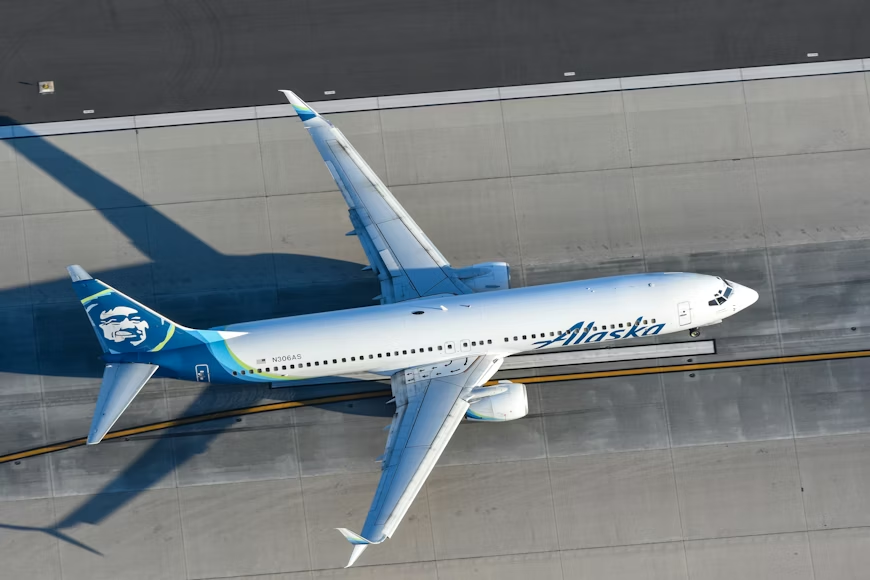
Executive View of the Order
The Alaska management has positioned the acquisition as an investment in a long-term and sustainable growth. The airline highlighted that such aircrafts would facilitate enlargement of the network besides providing modern fuel-efficient technology to the customers.
The advertising highlights three themes that are consistent:
- Scalable growth
- Operational efficiency
- Improvement of customer experience
These messages fit well with the fact that Alaska is a financially disciplined air company that believes in reliability, rather than risky and fast growth.
Final Thoughts:
Alaska Airlines’ latest Boeing order is more than just a headline-grabbing aircraft purchase it’s a clear statement about where the airline is headed.
By committing heavily to the 737 MAX 10, Alaska is betting on higher-capacity narrowbody flying as a key driver of profitability. At the same time, its limited but strategic investment in the 787-10 Dreamliner signals cautious optimism in long-haul markets without overextending the airline’s reach.
With plans to grow from just over 400 aircraft today to more than 550 by 2035, Alaska’s future fleet will not only be larger but also significantly more efficient and capable than it is today.
DISCOVER THE RIGHT CARD FOR YOU.
Explore our card recommendations and find a credit card that suits your personal needs.
Browse card categories
%20(1).jpg)
.svg)