.svg)

Hyatt Management overhaul: Tom Pritzker retires following emails about Epstein
(1).jpg)
%20(1).svg)
The shift of leaders in the large international hotel corporations can hardly occur overnight. However, that is just what happened at Hyatt Hotels Corporation, when the company long-term executive chairman Tom Pritzker suddenly claimed that he was quitting after the emails related to the Jeffrey Epstein case became publicly available.
Although the official statement of the company presents the move as a question of retirement, the timing heavily indicates external forces that are related to the recently published sources touching on Jeffrey Epstein and Ghislaine Maxwell.
This is what occurred, what the emails indicated and how this change of leadership may impact Hyatt in future.
An abrupt departure off the Board of Hyatt
Tom Pritzker is a long time figure at Hyatt at the age of 75. He has worked in the top management positions over the decades and was elected as the executive chairman of the board in 2004. His career was marked by his period of leading Hyatt to become an actual global hospitality brand with a transition to an asset-light business model and major international expansion.
Nevertheless, Hyatt declared that Pritzker would step down of his job immediately and will not pursue re-election at the next annual shareholder meeting of the company.
Hyatt President and CEO Mark Hoplamazian will be appointed chairman of the board in his place where he will remain as chief executive.
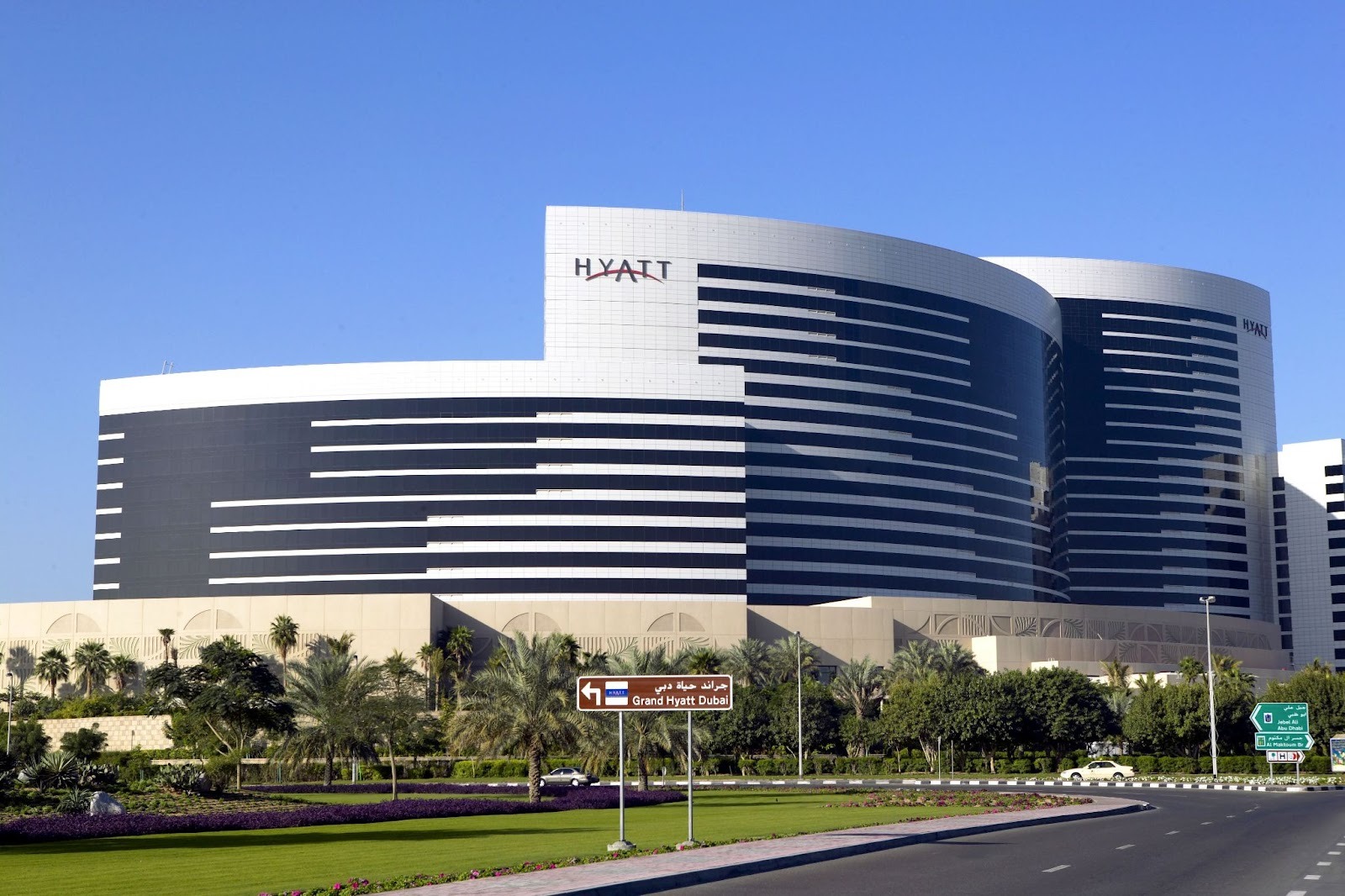
In the press release issued by the company, Pritzker claimed that he had spent decades working with Hyatt, and he was confident that the future of the company was in the hands of the leadership team. Official communication focused on continuity, long term plan, and stability of the corporation.
What the release did not specifically point out though, was the outside controversy that appeared nearly at the same time.
The Controversial Emails
Pritzker left shortly after more documents related to the investigation of Epstein were leaked out. Some of the materials included email communications in 2018 between Epstein and Pritzker about hotel accommodations of a woman connected to Epstein.
During one transaction, Epstein asked help in finding hotel rooms in Asia, Kuala Lumpur and Tokyo. Pritzker replied that he would be happy to assist and established a connection with the concerned traveler.
The email exchange had comments that have been described by many observers as inappropriate and disturbing in the wider context of crimes by Epstein. Even though the messages were sent years after Epstein was already charged with serious accusations, they indicated that he experienced further interactions with people.
After being publicly scrutinized, Pritzker made a personal statement accepting what he referred to as ineffective judgement in continuing to be in contact with Epstein and Maxwell. He apologized and that he ought to have dissociated earlier on.
Hyatt did not specifically mention the Epstein issue in its leadership announcement, but rather emphasized continuity of governance.
Public Accountability and Corporate Governance
In terms of corporate governance, the time when Pritzker resigned seems to be very important. Reputational risk has become a very sensitive issue in public companies particularly when the leadership is associated with controversial personalities.
Trust in the public is particularly crucial to the hospitality brands. Hotels are customer-facing enterprises whose foundation is founded on image, reputation, and experience of their guests. Bad news about top management may easily extend to the brand image.
Pritzker had resigned and, as a result, could have led to the saving of Hyatt under a microscope or shareholder pressure. Although leadership transitions are disruptive, they can also act as a reset button to companies in reputational trouble.
Nevertheless, critics point out that the nature of corporate accountability does not always lead to any further ramifications, especially when people concerned are secure financially or have connections.
The Strategic Position of Hyatt in the Future
Nevertheless, Hyatt is considered to be one of the largest hospitality companies in the world which operates on the premises of various luxury, lifestyle, and all-inclusive brands. The major focus of the company under the leadership of Pritzker was an asset-light model, which implies that the company is more concerned with management and franchising as opposed to the ownership of property.
The change leaves more responsibility on Mark Hoplamazian, who is now the CEO, as well as, the chairman. Having those roles together may simplify the decision process, but it also puts power into the hands of a limited number of individuals.
Operationally, there are unlikely to be changes that guests will note in the immediate future. Board-level changes usually do not impact day-to-day operations of the hotel, loyalty programs as well as expansion strategies.
Nevertheless, leadership optics is relevant in international companies. Investors and customers are some of the stakeholders who tend to interpret rapid change of executives as one of the indicators of responsiveness to societal interest.

The Broader Epstein Fallout
The Epstein case still resounds in various sectors especially amongst business owners and public figures whose names have been published in published documents.
These constant revelations have revived the discussion about morals, influence and responsibility among influential people. Although the association does not necessarily mean a criminal activity, popular opinion tends to be quicker than the judicial verdicts.
Here, in the case of Pritzker, the scandal is not about criminal charges, but about judgment and appearance, in particular, the criminal history of Epstein, which was not much of a secret.
The bigger concern revolves around the fact that social and professional associations have the potential to incur a long-term reputation cost, especially in the digital epoch where archived communications can be recalled many years later.
Final Thoughts
Tom Pritzker’s sudden departure from Hyatt’s board comes amid renewed scrutiny tied to released Epstein-related emails. While the company’s official announcement framed the move as a retirement, the broader context suggests reputational concerns played a role.
Hyatt now moves forward under consolidated leadership as Mark Hoplamazian assumes the chairman role in addition to serving as CEO. For guests, operations remain unchanged. For observers, the episode underscores how associations even years old can resurface and reshape corporate leadership in an instant.
In today’s environment, accountability and optics often intersect quickly. And for global brands, perception can be just as powerful as performance.
DISCOVER THE RIGHT CARD FOR YOU.
Explore our card recommendations and find a credit card that suits your personal needs.
Browse card categories
.jpg)


.svg)