.svg)

I Pay $895 a Year for the Amex Platinum and I Barely Use It for Spending
%20(1).svg)
It is likely that that headline would be the prelude to a warning story on the dangers of paying too much with a credit card. It is quite the contrary.
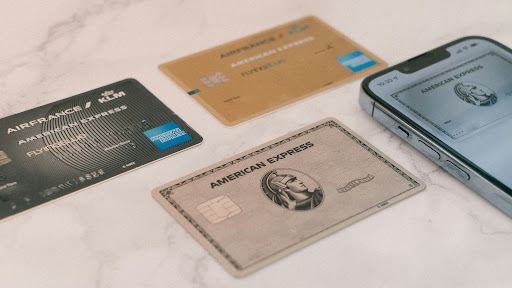
The Annual Membership Fee of the Platinum Card at American Express is an amount of 895USD, a figure that sends chills down the spine whenever it is mentioned. And still, the card is not the one that I deem as the most useful in my whole wallet due to the number of points that it will earn me whenever I buy groceries and various other items, but all the other things that it effectively does. My usage of this card would defy certain assumptions on what a good travel card should be.
The following is the candid way it works in practice.
Amex Platinum Is a Real Weak Spending Card
It is best to get this out of the way at the beginning, as it is a vital context to all that follows. When you are primarily interested in getting points on your day-to-day spending groceries, dining, gas and general purchases, then the Amex Platinum is not the card you will want in your wallet at the checkout.
The card will earn 5 points per dollar on airfare booked directly with airlines or via AmexTravel.com, which is actually great on that particular category. However, beyond that, the average purchases at the stores get 1 point per dollar. It's a non-competitive, flat rate in a market where various non-annual fee cards regularly beat it on those categories that constitute a large percentage of the monthly expenditure of most individuals.
In the case of groceries, the Platinum is miles behind a card that accrues 6 points per dollar at the U.S. supermarkets. In terms of dining, even a simple cash-back card with 3% rate will be better than the 1x rate on the Platinum. In the case of non-bonus general spending, cards that have a fixed 2x or 1.5 percent return on all are more efficient options. The arithmetic is simple: when you are planning to earn as many points as possible on the regular spending, the Platinum is not the best card of the first choice. How come it is on top of my wallet list? The fee is not paid by spending the rewards it is paid by benefits.
My Real-life Subtraction of a $895 Yearly Fee
The actual value of the card is here and it involves a change of mindset on the fee. Instead of posing a question of what rewards will I accrue on my spending the better question would be which of these benefits would I pay anyway?
The credits that I have been actively utilizing each year are:
- Its digital entertainment credits are up to $300 which cover streaming subscriptions such as Disney+ and Peacock with which I would pay anyhow.
- Up to 100 quarterly in Resy dining credits Easy dining credit at local restaurants
- Uber rides and Uber Eats orders are eligible for $15 a month Uber Cash (including a $20 bonus in December) when the Amex Platinum is chosen in the app.
- As much as $75 monthly lululemon credit on purchases I would have made anyway.
- Prepaid hotel credits of Fine Hotels + Resorts or The Hotel Collection hotel reservations up to $600 a year.
- Up to $155 to a Walmart+ membership that will also cover a Paramount+ Essential subscription at no extra charge.
- Airline incidental fee credits up to $200 that I can use to upgrade my seats, lounge access fee, and incidentals with my airline of choice.
The important word to all this is actually. I do not give a credit just because it is on the card. Had I to alter my actions, test a service with which I am not desirous, or give up a sum of money which I would not otherwise give up to avail myself of a benefit, I do not include it in my reckoning. That filter makes the math tell the truth and it still clears the annual fee with spare money on the credits alone.
The Travel Benefits That Don't appear on a Bill
In addition to the credits, the Amex Platinum offers a series of travel benefits that cannot be easily attributed to a specific dollar value but do have a tangible effect in the experience of traveling.
The most obvious one is the airport lounge access. The card is an entry point to the Global Lounge Collection, comprising of American Express Centurion Lounges, Priority Pass outlets, and various other networks. When you're traveling solo, this is a nice perk. It can be truly transformational when you are on a family trip.
It is somehow explicatory when you find yourself just having spent 60 dollars on airport food on behalf of the family yet no one has even boarded the plane. A working lounge access advantage avoids that all food, drinks, a more relaxing atmosphere, and a much better start to a traveling day. That value manifests in quality of experience where it does not appear on a statement as a line item.
The card also offers credits on Global Entry or TSA PreCheck applications, CLEAR+ membership of expedited security, and free elite status with Hilton Honors and Marriott Bonvoy, and various rental car programs. These benefits do not involve any expenditure to be used they are linked to cardmembership a fact that is why they play a role in justified fees in a manner that discussions on earning rates sometimes overlook.
The Unitary Category In Which I Do Reach to the Platinum First.
An exception to my overall policy of spending on other cards is airfare. The 5x earning rate on flights that were booked directly with airlines or AmexTravel.com is high enough to make the Platinum my default card in that category of purchase.
Here too there is subtlety. I will tend to use my United co-branded card when I book United flights, where I will receive benefits such as free checked bags and priority boarding that I will not get on other cards. However, at the incidental fees related to the same trip, the Platinum kicks back in to claim the $200 annual airline credit on eligible charges with my carrier of choice.
The travel guarantees that the Platinum provides also makes it a factor in my decision to use it in airfare. Trip cancellation and interruption coverage, trip delay reimbursement, and baggage insurance are truly helpful protections that come into effect when youuse the card to pay for travel. When flights that I have a lot at stake in the trip going smoothly, having such protections linked to the purchase offers a measure of peace of mind that cannot be easily priced.
Should You Use the Amex Platinum as Your Only Card?
The honest answer is no and that's not a knock on the card. The Amex Platinum works best as part of a thoughtfully assembled wallet, not as a standalone solution. Its weak everyday earning rates mean you'll leave meaningful rewards on the table if other cards with stronger category bonuses aren't handling groceries, dining, and general purchases.
The card is designed for a specific kind of traveler: someone who flies multiple times a year, values lounge access, stays at hotels often enough to use a hotel credit, and uses enough of the monthly and quarterly credits to offset the fee without stretching their spending habits. For that person, the $895 annual fee is easier to justify than many lower-fee cards with less competitive benefit structures.
For someone who travels occasionally, rarely uses airport lounges, and doesn't naturally spend in the categories the credits cover, the math looks different and there are better options at lower price points that would serve that profile more efficiently.

The Bottom Line
My Amex Platinum sits at the top of my wallet not because it earns the most points, but because it pays for itself through benefits I was already going to use. The credits cover streaming, dining, ride-sharing, hotel stays, and retail purchases that would have happened regardless of which card I carried. The lounge access changes how my family experiences travel days. The travel protections give me confidence when booking expensive trips.
The $895 annual fee is real, and it demands a real answer. Mine is that the benefits make the math work not the rewards earning. That distinction is everything when it comes to deciding whether this card belongs in your wallet.
DISCOVER THE RIGHT CARD FOR YOU.
Explore our card recommendations and find a credit card that suits your personal needs.
Browse card categories


%20(1).jpg)
.svg)