.svg)

Near-miss at Houston Airport: How one takeoff error almost led to disaster at IAH
.jpg)
%20(1).svg)
Indeed, on December 18, 2025, there was a critical aviation safety incident whereby two aircraft that were departing came within moments of each other after taking off from George Bush Intercontinental Airport, IAH. This incident is instructive in pointing out that errors combined with late intervention can turn out to be life-threatening in such airspace, which is replete with frequent traffic.
Although no one was injured and both flights went on to their respective destinations without further incident, the encounter serves as a sobering reminder of how wrong things can go during one of the most critical phases of flight. What follows is a detailed breakdown of what happened, why it went wrong, and how modern safety systems prevented a catastrophe.
Two Departures, One Critical Mistake
The incident involved two commercial aircraft taking off from parallel runways at Houston Intercontinental, a configuration in common use at many major U.S. airports to handle heavy volumes of traffic.
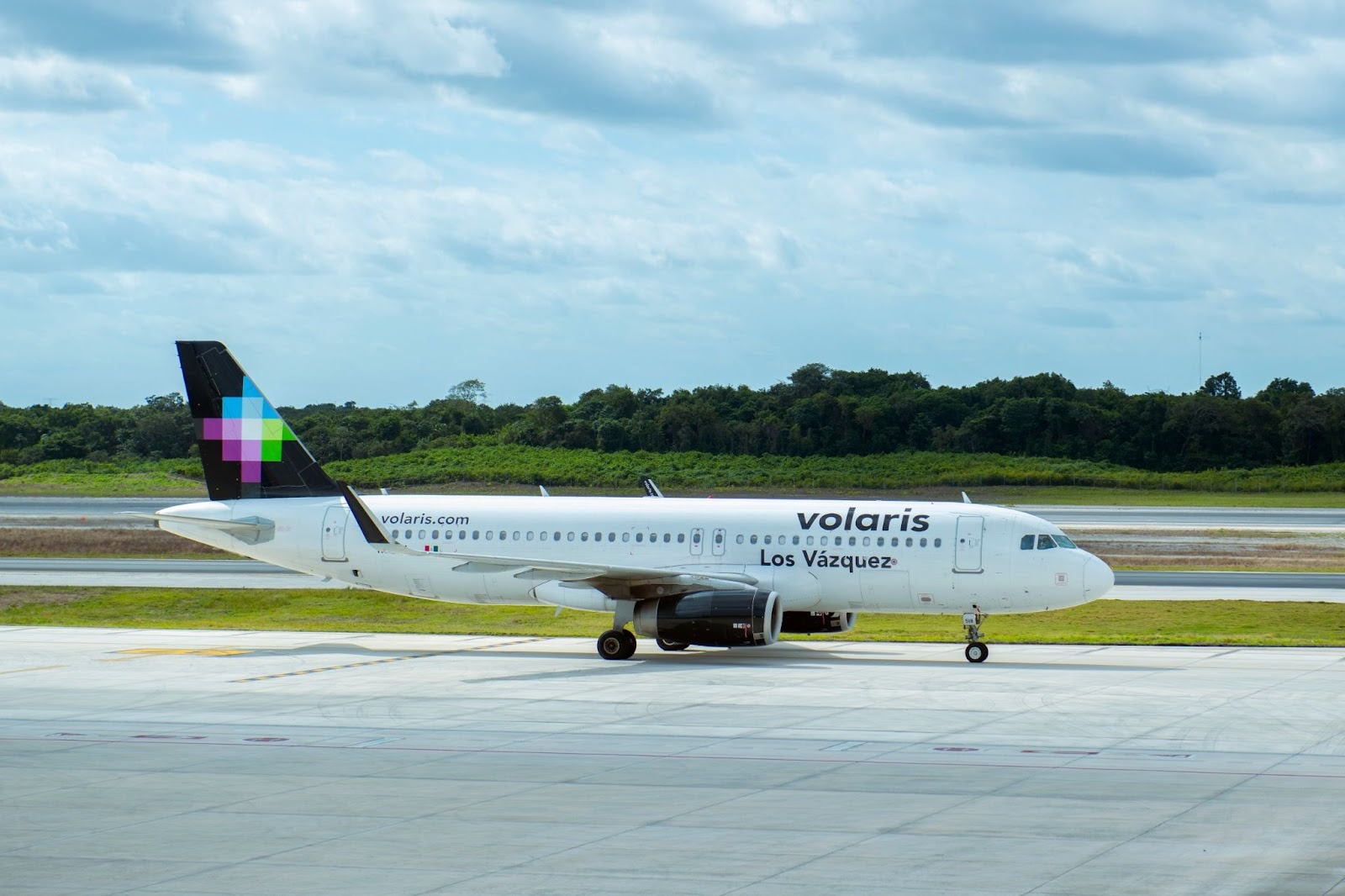
Volaris El Salvador Flight 4321
- Aircraft: Airbus A320neo
- Destination: San Salvador (SAL)
- Assigned runway: 33L
- Post take-off instruction: Left turn to heading 110 degrees
United Express Flight 4814
- Aircraft: Embraer E145 by CommuteAir
- Destination: Jackson, Mississippi (JAN)
- Assigned runway: 33R
- Post take-off instruction: Right turn, heading 340 degrees.
Both the runways were aligned at approximately 330 degrees, which implies that each aircraft was supposed to diverge shortly after lift-off in order to keep a safe separation.
While the jet operated by United Express flew along its assigned course, that from Volaris did not.
How the situation escalated after take-off
The Volaris jet was somewhat late in starting its takeoff roll, with the result that both jets became airborne at virtually the same time. Ordinarily this would have presented no problem, since their departure clearances were tailored to take them in opposite directions.
But just seconds into the flight, the Volaris A320 banked right instead of left and put it squarely onto the path of the incoming United Express aircraft.
This put the two aircraft on a rapidly developing collision course, converging both horizontally and vertically. While the danger was quickly identified by radar systems, the severity of the situation was not immediately addressed on the control frequency.
A Delayed Response in the Control Tower
At this point, the Volaris pilot radioed the air traffic controller to confirm his assigned heading and asked if the turn should be to the right. The controller appropriately responded by repeating the instruction to turn left to heading 110 degrees.
By this time, the two planes had already triggered collision alarms on the radar system. At this point, however, the controller began to give routine instructions to other aircraft-which means that the potential gravity of what was unfolding had not yet sunk in.
The first clear acknowledgment that something was amiss came not from air traffic control, but from the United Express crew, who reported receiving a TCAS RA-a sort of automated command telling pilots how to maneuver immediately to avoid impact.
TCAS means Traffic Collision Avoidance System, independent from air traffic control, and intended to be the last line of defense against midair collisions. And in this case, it worked exactly as designed.
Why This Incident Was So Concerning
Several factors make this near-miss particularly concerning from the point of view of safety.
The instructions were given clearly and read back.
This was not a misunderstanding between the controller and the Volaris crew; the turn-left instruction was clear and correctly read back, but the aircraft turned the wrong way.
Situational awareness was lacking
Since the Volaris aircraft departed the left runway, simple logic would indicate that turning right would put it closer to traffic that is departing the parallel runway.
A large heading change may have played a role
This instruction did involve a turn in excess of 180 degrees which can sometimes be counterintuitive to fly for pilots, especially during high-workload phases of flight such as initial climb. Although this does not excuse the error, it perhaps can explain how the mistake happened.
Controller workload was evident
While this is not unusual for air traffic controllers to handle more than one aircraft at any one moment in time, it would appear that this accident occurred during one such busy period. However, the late identification of a collision risk certainly raises questions about workload management and staffing pressures.
The Role of Nonstandard Communication
Casual phrasing of radio communications is another interesting feature of the case. Phrases like “let’s see,” “go ahead,” and “standby” were interchanged by two aircraft in active convergence.
While aviation obviously depends on calm communications, the use of non-standard phraseology can sometimes dilute urgency. In this case, though, it was clear by the tone of the exchange that a serious safety event was unfolding as TCAS alerts fired in the cockpit.
How Disaster Was Ultimately Avoided
The aviation safety net functioned as it was designed to, given the mistakes and delays.
- Immediate, clear instructions to the pilots were given through TCAS Resolution Advisories.
- The United Express crew immediately followed the RA guidance.
- Eventually, the Volaris aircraft corrected its flight path.
- Vertical and lateral separation increased before the collision became unavoidable.
It is this layered approach-pilot training, onboard technology, and procedural safeguards-that explains why midair collisions remain extremely rare, even when multiple failures occur.
What this means for aviation safety
Incidents like this do not point to flying being unsafe, but rather that there are redundant systems in place to catch human mistakes before they can turn into tragedies.
Yet, this near-miss does raise some critical questions:
- Should large heading changes after take-off be issued differently?
- Are the controllers in major airports being stretched beyond their limits?
- Can improving cockpit cross-checking procedures facilitate the earlier detection of directional errors?
These investigations of the incident will probably look very closely at these factors.
Final Thoughts
A Volaris Airbus A320neo and a United Express Embraer E145 came close to a collision at Houston Intercontinental Airport when one pilot turned the wrong direction after takeoff despite clear instructions. Air traffic control did not immediately intervene, but onboard collision avoidance technology kept both aircraft safely separated.
This incident represents one of the strongest possible reminders that aviation safety depends on precision and situational awareness supported by layers of defense. When one layer fails, others must compensate. In this case, they did. As ever, TCAS was the ultimate protection that prevented what could be a catastrophic mid-air collision during one of the busiest phases of flight.
DISCOVER THE RIGHT CARD FOR YOU.
Explore our card recommendations and find a credit card that suits your personal needs.
Browse card categories
%20(1).jpg)
.svg)