.svg)

A Unit Conversion Error Left a Brand New Boeing 767 Without Fuel at 41,000 Feet

%20(1).svg)
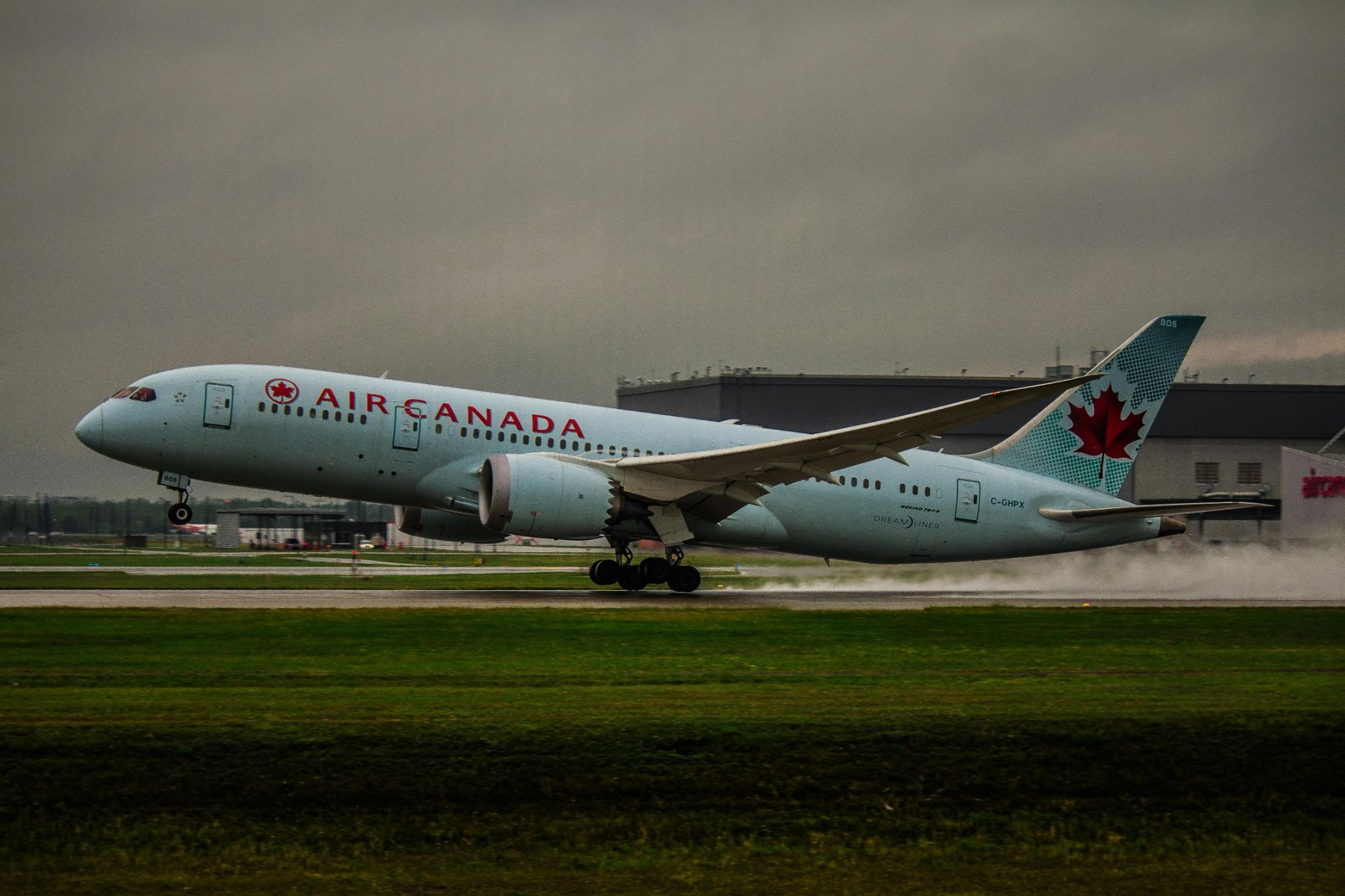
On July 23, 1983, a state-of-the-art Air Canada Boeing 767, flying at 41,000 ft over northern Ontario with 69 people on-board, experienced what commercial air travel is specifically engineered to avoid both engines stopped.
The cause of it wasn't mechanical, it wasn't the weather and of course, it wasn't pilot error, per se. It's a math mistake. On one of the most important changeovers in Canadian aviation history, a unit conversion issue arose a clash between old habits and a new measurement system.
A mistake that was made before the wheels left the ground
In 1983, Canada was in the process of switching to the metric system and the new Boeing 767 was the first aircraft of the fleet to use kilograms instead of pounds to measure fuel load. All of Air Canada's other planes were still in use in pounds. Crews, dispatchers and fuelers were used to one system, and with this one aircraft type, something different had to be used.
It was a space that was opened up for just the type of mistake that happened. Fuel was loaded and verified for Air Canada Flight 143 and the measurement was done in litres, converted to pounds per litre by multiplying with the appropriate conversion factor of 1.77. This led to a weight in lbs. However, the individuals that calculated the number treated that number as kilograms.
The numbers in detail:
- During manual check approximately 7,682 ltrs were discovered at Montreal.
- To complete the flight, 22,300 kg of fuel was needed at the minimum.
- Around 5,000 additional liters were loaded the correct number should have been around 20,000 liters.
- On each of the airport legs, the plane was loaded with about half the amount of fuel the crew thought they had.
The Moment Everything Changed
Flight 143 left Montreal, made a stop at Ottawa and then moved on to Edmonton. The plane climbed normally, and although it reached cruise altitude, no problems were mentioned. Next, warnings were issued over northern Ontario. Low fuel pressure. It was initially interpreted as a potential system fault and not a real shortage of fuel a type of anomaly in an instrument that trained crews can handle.
Pilots who have experienced the silence, even in simulators, say it is disorienting. Commercial aircraft seldom fly in silence. For powered flight, the constant hum of the motor is part and parcel of the sensory feeling of flying and not being able to hear it is an instant indication of something being very amiss.
The story of Wright Brothers' Flight to the North Pole
Captain Robert Pearson had one thing in this situation that few people had that he was a veteran glider pilot. It was a set of skills not often used in commercial aviation, but one that was about to spell the difference between life and death.
First Officer Maurice Quintal hit on a landing spot: Gimli Industrial Park Airport, the former Royal Canadian Air Force base in Gimli, Manitoba. The runway existed. The length was adequate. The site was accessible. They looked to Gimli.
As the crew got closer, they were unaware of the following:
- The old air force base would have been converted and no longer used for commercial flights.
- One of its runways was being used that afternoon as a public drag strip.
- Cars, families and onlookers, including children, filled the strip.
- As both engines were silent, the aircraft approached close by without making a sound to warn the people on the ground.
A Photo of a Glider Pilot's Move in a Commercial Airliner
However, a new issue arose as Pearson and Quintal turned towards Gimli. They were high and fast more than low and slow, but was a problem if excess altitude and speed could not be lost prior to the runway. Under normal circumstances, approach energy is controlled by piloting with the thrust, flaps and drag devices. All those were not sufficiently available.
The basis of Pearson's solution was inspired by his experiences with gliders. He performed a forward slip, a cross control maneuver that caused the aircraft to turn it's side into the air and greatly increased the aerodynamic drag and reduced his altitude more rapidly than a standard approach would have done. It's a technique glider pilots use routinely. Is something that a commercial jet pilot would never use in a 767.
After the aircraft was lost, what became of it?
This Boeing 767, dubbed the Gimli Glider, was repaired and returned to service. It flew passengers for Air Canada for 25 more years and was finally retired. The second act of this airplane when it was quietly flying passengers on normal flights without many knowing that the plane had survived is another kind of remarkable footnote.
The accident investigation resulted in important changes to Air Canada's approach to the transition to metric measurement, to the aircraft type verification of fuel calculations in the fleet, and to aircraft type verification procedures. The 767 was no longer the only time that they were using kilograms, the processes standardized, and the opportunities to create the kind of unit-confusion error that led to this accident were purposefully eliminated.
Why is this story still relevant after 40 years?
The Gimli Glider incident is not so much an unusual or exotic failure mode as it is a more common and more dangerous form of failure, a normal failure. A unit conversion error by trained individuals, following standard procedures in an environment where there were new systems and old procedures without proper safeguards.
The aviation industry's unparalleled safety record is based on the premise that humans will make mistakes and the system must be designed to detect their mistake before they snowball down the line. In this instance, safeguards which are supposed to detect the error, such as cross-checks, independent verification, gauge instrumentation, were not present, were faulty, or were circumvented by informal procedures and practices that emerge when new and old procedures operate simultaneously without clear distinction.
The Bottom Line
The saga of Air Canada Flight 143 is one of those few aviation accidents that is so far-fetched, so dramatic and so impossible that it almost couldn't possibly have happened. It is a simple mistake in mathematics. A powerless 767. A pilot who was just sitting in the captain's seat who was a glider pilot. A drag strip of people who knew nothing of what was coming towards them. And 69 who left on foot.
The Gimli Glider is one of the most interesting case studies in aviation safety in the history of flight, not because the pilots were so amazing (they were), but because it shows us with such clarity how a series of minor gaps in the process can add up to the most serious emergency. Converting pounds to kilograms appears to be such a simple task. In fact, it was close to being unpowered at 41,000 feet at which point it was not.
DISCOVER THE RIGHT CARD FOR YOU.
Explore our card recommendations and find a credit card that suits your personal needs.
Browse card categories
%20(1).jpg)
.svg)