.svg)

AirAsia just booked the largest single order ever placed on Airbus A220 and it alters our understanding of ultra low cost airlines
.jpg)
%20(1).svg)
If a carrier that is known for operating one type of aircraft decides to acquire a different type, it's well worth keeping an eye on. For not only is this the biggest single order for Airbus' A220 program, 150 A220-300s, but the transaction is important on so many other fronts.
Orders are set to start in 2028, and Airbus' total orders for A220s exceed 1,000 for the first time thanks to this order. It is a significant milestone for a programme that took years to establish its credibility since it was bought by Airbus from Bombardier, and AirAsia's order is a testament of faith in the plane and the economics.
The second version of the high density edition, which didn't exist before this order
The interesting part of this story beyond the number of planes ordered are the details of Air Asia's order of the standard A220-300. The Malaysian airliner is the first operator for a new high density variant of the aircraft that hasn't been commercially introduced yet.
The A220-300 is a standard certified for up to 149 seats. The version will have an added overwing emergency exit, which allows AirAsia to seat 160 passengers, per certification requirements. That's 11 more revenue seats on each flight than any other AirAsia A220-300 operator has in their fleet, and at AirAsia's scale that's a substantial boost in per flight revenue economics.
It's also important to note that this is not the same as an entirely new, longer variant of the A220 that is a separate concept that Airbus is working on, the A220-500. The AirAsia configuration is not a new derivative of the A220-300 but an optimized configuration of the current airframe. Various projects, various time, various purposes.
So, why is AirAsia changing its fleet philosophy?
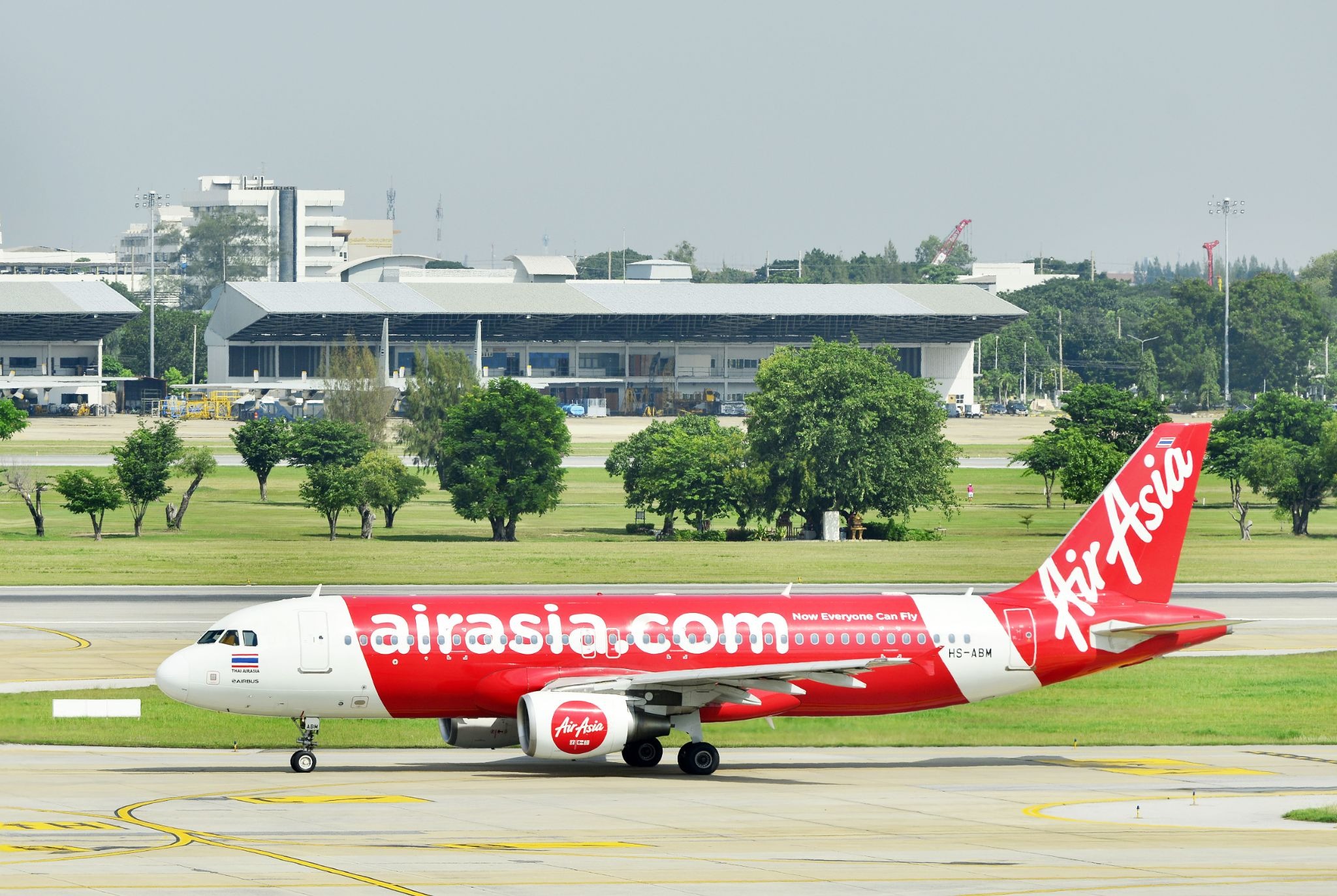
One of AirAsia's strengths, and many of its cost savings, was its fleet simplicity. The Malaysian airline's flight fleet has always revolved around the Airbus A320 family, which allows for crews, maintenance, spare parts and common systems to be pooled, and the efficiencies achieved through shared knowledge of a single family of aircraft.
The decision to add the A220 is a conscious move away from that philosophy and so is worthy of study. So why AirAsia, with more than 400 A321 family aircraft on order, with the aircraft configured at 236 seats in single-cabin layout, also would want 150 A220-300s?
Network architecture is the answer. The existing and incoming A321neo fleet has been optimized for higher density, more extended routes where it is possible to fill 236 seats. However, not all of Southeast Asia and Central Asia has demand for so many seats, the airline pointed out specifically. In some markets, an efficient, smaller aircraft is required in order to be economically viable at viable frequencies.
What makes the A220's Economics work for this Application?
The Airbus A220-300 has proven to be a very economical plane in terms of fuel usage capacity, which is especially true on shorter hops where the economics of larger planes are less favorable. For an operator with thousands of daily flights in a region where fuel accounts for a meaningful part of margins, the advantage of this meaningful decrease in fuel burn per seat is tangible.

Coherent operating cost profile is the A220's selling point for AirAsia's end user routes between ASEAN countries and central Asia, which do not need the range or capacity of an A321neo. The reduced per frame acquisition costs, reduced maintenance complexity compared to older aircraft types that it would replace and the efficiency benefit on shorter sector lengths all made for a compelling business case that stood up well to the scrutiny of a 150-aircraft order.
The fleet changeover also has an undertone of a comment on the existing classic A320 aircraft of AirAsia. The A320ceo's in service on the airline fitted with 180 seats are the obvious choice for replacement when the A220s enter service from 2028 onward. Reducing capacity from 180 seats to 160 per aircraft is a reduction in capacity, but that will increase the number of planes in the fleet, and the economics of the newer planes will more than make up for the loss in per-seat operating economics.
A Win for Airbus, but beyond the Order Count
For Airbus, that is no longer just a production milestone, but a significant shot in the arm to the company's recent growth.That's not just a production volume milestone for Airbus, it's a shot in the arm to recently growing Airbus. Historically, the A220 has not been a strong performer with UCLs a niche often dominated by the larger and higher density A320 family, which are easier to economically scale. In the U.S., one of the few airlines to get on board with the type is Breeze, which is more of a value operator than a ULCC.
There isn't any doubt AirAsia is one among the world's top ultra low cost airlines. The A220, and in particular the high density version, is a testament to the market to the rest of the ULCC sector that the aircraft can be made to operate in a cost centric business model. This is a big proof point and Airbus will be referring to it when it discusses the type with other airlines interested in the type.
It is significant that AirAsia was able to pick the launch customer for the 160-seat variant. The airline's size, and its 20+ year history of orders for aircraft from Airbus, gives it the power to influence aircraft design instead of just taking what is ready off the shelf.
How this impacts the future
This order was put in place as part of AirAsia's long term goal of becoming the first "true" low cost network carrier, which will need scale and flexibility in routes. It's part of that vision and the A220 is the smaller side of that facility the A321 family can't.
Deliveries beginning in 2028 implies that the impact on operation won't be immediate. However, the direction of strategy is clear: AirAsia is creating and developing a combination of two types of aircraft that will be able to reach more markets than any one type of aircraft. The airline's success with scaling its A320 family operation is given weight to the extent that it can be taken seriously.
The Bottom Line
AirAsia has ordered the most 300s for Airbus A220 to date, with 150 firm orders, bringing the total orders for the program to over 1,000. It's also the first airline to order a new high density model that features an overwing exit, to increase the standard 149-seat certification. The deliveries are scheduled to start in 2028, for routes in ASEAN and Central Asia, where the A220's economics beat that of the larger A321neo. The commitment from Airbus is a major step in proving the viability of A220 in ultra low cost operating models. It's a new roadmap towards a more flexible network architecture for AirAsia and a daring guess as to the airline's future over the next ten years.
DISCOVER THE RIGHT CARD FOR YOU.
Explore our card recommendations and find a credit card that suits your personal needs.
Browse card categories
.jpg)
.jpg)
.jpg)
.svg)