.svg)

American Airlines Faces Major Catering Issues at London Heathrow
.jpg)
%20(1).svg)
If you've been flying American Airlines between the U.S. and London Heathrow recently, you may have noticed something off about the food — and by "off," we mean boxed wine in business class, no ice cream sundaes, and a meal service that barely resembles what you'd expect in a premium cabin.
Since February 28, 2026, American has stopped catering its flights locally at Heathrow. Instead, the airline is "double catering" from the U.S. — loading enough food for both the outbound and return flights before the plane even leaves American soil. The result has been a noticeable downgrade in dining quality across all cabins, and the situation has now stretched beyond a week with no clear resolution date.
What Went Wrong?
American Airlines has historically used dnata, a major global aviation services provider, for its catering at Heathrow. In late February, the airline abruptly paused that arrangement.
American hasn't publicly explained the exact reason. In an internal memo, the airline stated only that it "regularly evaluates suppliers to ensure they are providing the best experience and highest level of service for customers and team members." However, reports from aviation insiders — first broken by JonNYC — suggest the split was triggered by hygiene concerns at the dnata facility, with some accounts pointing to a possible rodent problem. A photo of what appeared to be a mouse in a bread basket circulated online, though its authenticity and timing haven't been fully confirmed. For its part, dnata has firmly denied the allegations, saying independent audits confirm its facility meets all food safety requirements.
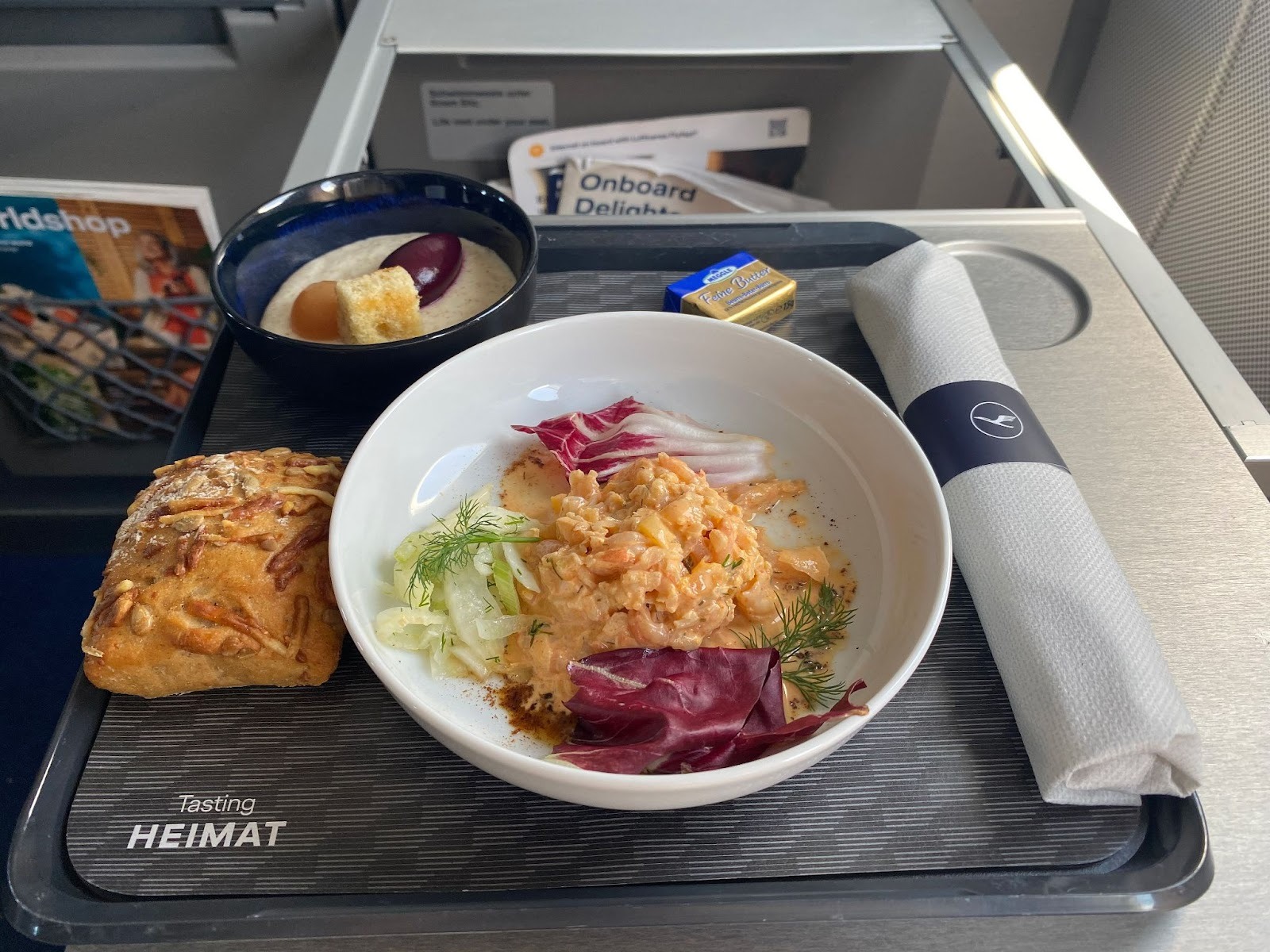
What Double Catering Actually Means
Here's the practical impact: when a plane departs from, say, Philadelphia to London, it now carries all the food and drinks for both the flight to Heathrow and the return trip back to the U.S. That creates two big problems.
First, food quality suffers. Meals prepared in the U.S. have to last the entire round trip — sitting in aircraft galleys for far longer than they normally would. As a result, American has cut items that don't hold up well over extended periods: no seafood, no ice cream sundaes, and a simplified menu with fewer choices overall.
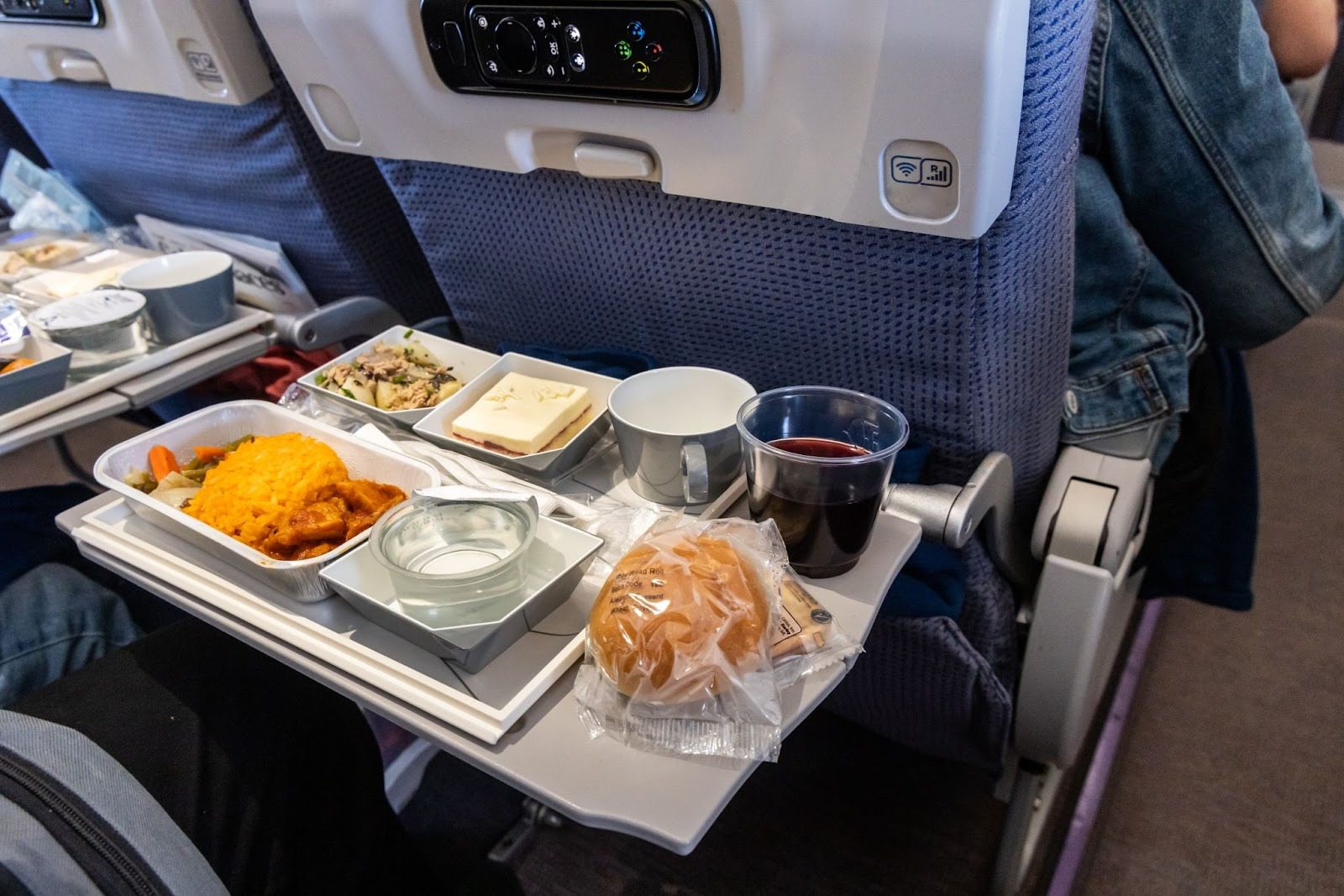
Second, space is limited. Airplane galleys aren't designed to hold provisions for two full flights. Something has to give, and it's given in both directions. Passengers on outbound and return flights are getting reduced service — including single-tray meals in premium cabins, which is typically a pandemic-era measure.
Perhaps the most eye-catching detail: multiple passengers have reported being served boxed wine in first and business class. On one of American's most premium routes, that's a tough look.
How American Is Compensating Passengers
To the airline's credit, it's been proactive about communication. Affected passengers are receiving emails before their flights explaining the situation. The compensation package includes 10,000 to 15,000 bonus AAdvantage miles (amounts have varied by report), and passengers in Flagship First and Flagship Business are being offered access to premium lounges to eat chef-prepared meals before boarding — an attempt to offset the diminished onboard experience.
Why Can't They Just Use Another Caterer?
It's a fair question, and one that many frequent flyers have been asking. British Airways, American's joint venture partner, uses DO & CO for its Heathrow catering. Why not tap into that?
The reality is more complicated than it sounds. Airline catering is highly customized: each carrier has its own menus, tableware, food packaging standards, and preparation requirements. Swapping caterers isn't as simple as placing a call — it takes time to align all of those specifications. There are also contractual considerations and the logistics of ramping up service for roughly 16 to 17 daily flights.
The good news: recent reports suggest American may be close to resolving the situation, with strong indications that the airline is transitioning to DO & CO — widely regarded as one of the best airport caterers in the world. If that switch happens, the long-term outcome could actually be a better dining product than what American had before.
What to Do If You're Flying AA Through Heathrow
If you have an upcoming American Airlines flight through London, here's what to keep in mind. Expect a simplified menu with limited choices — plan to eat in the lounge before boarding if you're in a premium cabin. Don't count on pre-ordered or special meal requests being honored. Watch your email for communications from the airline, which may include bonus miles. And if flexibility allows, consider adjusting your travel dates until the situation fully stabilizes.
Bottom Line
Catering disruptions happen — but the duration and visibility of this one have been unusual, especially on a route as high-profile as the U.S.–London corridor. American Airlines finds itself in an uncomfortable spotlight at a time when the carrier is already under pressure to strengthen its premium product.
For now, travelers should temper their expectations on Heathrow flights. But if the switch to DO & CO comes through, there may be a silver lining: a genuinely upgraded catering experience once the dust settles.
DISCOVER THE RIGHT CARD FOR YOU.
Explore our card recommendations and find a credit card that suits your personal needs.
Browse card categories
%20(1).jpg)
.svg)