.svg)

Austria has just declared Ryanair's fees illegal and the airline has three months to correct the mistake
%20(1).svg)
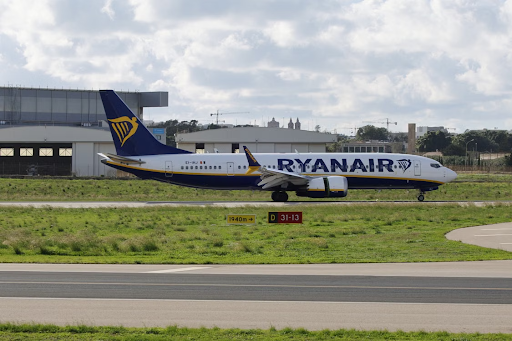
Ryanair is no stranger to charging for anything outside of the seat. Not only are they unpopular, however, but a portion of the airline's standard fees is illegal, said Austria's top court. This decision could cause some real discomfort for the budget airline that has made surcharges its whole thing.
This is not the first time that Ryanair has come into conflict with European regulators, and won't likely be the last. However, because of the range of what Austria's highest court just overturned, this one is a must-read.
Exactly what the Court ruled was the real decision
The case was brought forward by the Austrian Consumer Information Association which objected to a long list of clauses hidden away in Ryanair's terms and conditions. The conflict escalated to the highest court in Austria, which in a significant degree supported the consumers.
The court determined that 14 specific provisions in Ryanair's terms were illegal under Austrian civil law, in particular because they infringed on the rights of the passengers under Section 879(3) of the Austrian Civil Code, which guarantees consumers protection against clauses in contracts that greatly disadvantage them. For Austrian consumers, these clauses are no longer in use for Ryanair, which will now have three months to change.
The fines that were struck off give a fairly good idea of the extent of the ruling. The court called for all the above fees to be deemed as unfair and not sufficiently transparent, as it regarded them to be part of a pyramid scheme designed to benefit Ryanair.The court deemed all the above fees to be unfair and not sufficiently transparent and considered them to be part of a pyramid scheme that would benefit Ryanair. The consumer organisation has also said the passengers should also be entitled to a refund as it maintains that they previously paid these fees.The consumer organisation has also stated that those who paid these fees earlier should also be entitled to a money-back guarantee which Ryanair has refused to concede.

A Business Model Under Pressure
One has to grasp what the pricing model of Ryanair actually is to appreciate the importance of this decision beyond the context of Austria. The airline always provides some of the cheapest base fares in Europe sometimes mind bogglingly so but charges an array of extra fees for extras like a checked bag or a seat selection. The fees are not secret, but must be paid close attention to during booking to avoid any surprises at the airport.
Ryanair has consistently said that this is clear and fair, and that is indeed the case. They are calculated at booking and a passenger travelling light and checking in online may find that their travel cost is very little. The rebuttal and one that seems to have swayed Austria's court is that some of these fees, especially the airport check-in charge, are unfair towards passengers who slip up or don't fully grasp what they are supposed to be paying.
When Ryanair is put under regulatory pressure, it comes back at its assailants with volley, never leaving them to stew in their own juices. Yet in the face of growing public attention in several European nations at once, it's becoming difficult to maintain such a strategy.
Three ways this could go
Ryanair now has three months to decide how it will respond to Austria's ruling, but there is no obvious solution. One option is to withdraw entirely from the Austrian market, using the decision as a precedent to demonstrate that operating in markets with such regulatory requirements is not guaranteed. While this would be a bold move, it would be consistent with Ryanair's reputation for taking a firm stance in disputes. Another possibility is to review and standardise its fee policies across all markets, adopting Austria's approach throughout its network. However, this would represent a significant shift from the pricing strategy that has helped make Ryanair one of Europe's most popular airlines.
A third option is to introduce Austria-specific policies, applying different fees only to flights operating to and from Austrian airports while maintaining its existing structure elsewhere. Although this would allow Ryanair to continue serving Austria, it could create additional confusion for passengers and encourage regulators in other countries to demand similar treatment. None of these options offers a straightforward solution, and each comes with significant trade-offs that extend well beyond Austria's borders.
Written by Keith Graham and Liane H. Dizon.Written by Keith Graham and Liane H. Dizon
The verdict in Austria is not a standalone decision and can have far-reaching consequences. The European Union, too, is working on new laws that would mean the price to the passenger would include a carry-on bag in the headline fare. The overall regulatory landscape is constricting around budget airlines' pricing, and it's getting more coordinated by the minute.
The short-term instability could actually create some benefits for the travelers, whether it be a reduction in fees or a more even exposure to fees. As Ryanair may well react by withdrawing from some markets or increasing base fares to offset the loss of fees, though, those who have benefited most from its low fares might be feeling the pinch as well.

Final Thoughts
Austria's top court gave Ryanair one of its bigger regulatory setbacks, finding fees levied for airport check-in, printing of boarding passes, infant travel, oversized cabin bags and rebooking fees in the event of flight changes were all in breach of consumer protection law. The airline is given three months to respond and the outcome will likely have an impact on regulators around the continent as to exactly how much Ryanair is willing to go to sustain its fee-rich operation.
So, if you believe that Ryanair is some kind of consumer trap or that its pricing model really is a natural and unbundled one, the walls are coming down a little closer. The next three months will be interesting times for both Austrian passengers and budget air travel in Europe as a whole.
DISCOVER THE RIGHT CARD FOR YOU.
Explore our card recommendations and find a credit card that suits your personal needs.
Browse card categories
%20(1).jpg)
.svg)