.svg)

The announcement comes at a time that poses some interesting questions for JetBlue, as five routes to Newark are being eliminated
%20(1).svg)
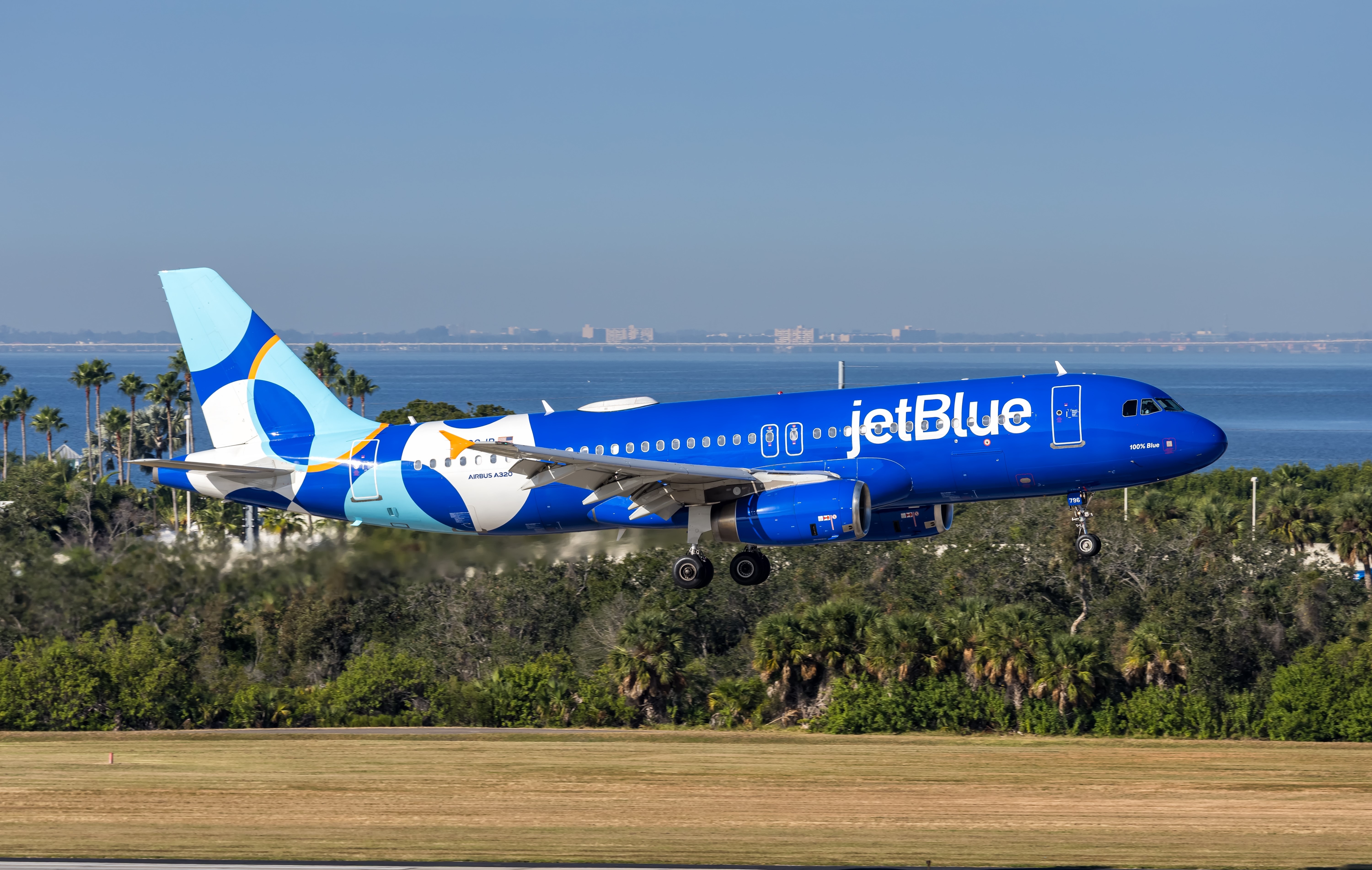
The plan to relocate JetBlue from Newark, New Jersey, to Long Island Sound, Connecticut, appears to be a good business decision at the outset. But delve a bit deeper, and things become more complex and more captivating.
Starting July 8, 2026, JetBlue will eliminate five year-round routes from Newark Liberty International Airport, and add another five routes from South Bend, Indiana, on July 1, 2026. The cuts are significant, and the timing of the introduction as Spirit Airlines is just shutting down deserves a second look.
What exactly will be removed?
The five routes that leave from Newark have been budget travelers' favorites and are all leisure or international options for JetBlue. The airline is discontinuing flights from Newark to Aruba, Cancún, Punta Cana, Santo Domingo and Tampa, accounting for almost half of the airline's year-round operations from the airport.
The leftover footprint at Newark is: Fort Lauderdale, Fort Myers, Las Vegas, Orlando, San Juan, Santiago de los Caballeros, and West Palm Beach. That's a service profile in a state which is more like a minimal presence being maintained than a competition in New York area.
Fort Lauderdale Opportunity is a reality
And to comprehend the logic behind JetBlue's decision to drain resources from Newark, one must grasp what's going on 1,200 miles south. Spirit Airlines used the airport to a large degree, and this airline recently went out of business. JetBlue was number two. After the departure of Spirit, one of the busiest airports in one of the nation's most popular leisure travel markets is suddenly required to supply a tremendous amount of gate access, slots and passenger demand.
The rationale of the strategy is good. In the past, there's never been any pricing power for a carrier at Newark, the United bastion fortress, and it's impossible for a carrier to challenge them on anything but what's referred to as spill traffic. Fort Lauderdale, however, is a market where JetBlue can truly be the market leader both in terms of pricing power and operational power.
Constant challenges have targeted Newark's problems for JetBlue:
- It's hard to imagine that other carriers will be able to establish pricing power or loyalty at EWR, United's stronghold.
- It's always been JFK and not Newark that made for JetBlue's natural strength in the New York area, so that makes EWR an inherently secondary operation.
- With no dominance and differentiation in Newark, returns on capacity are lower here than at Fort Lauderdale.
Optics are ill at ease in this place
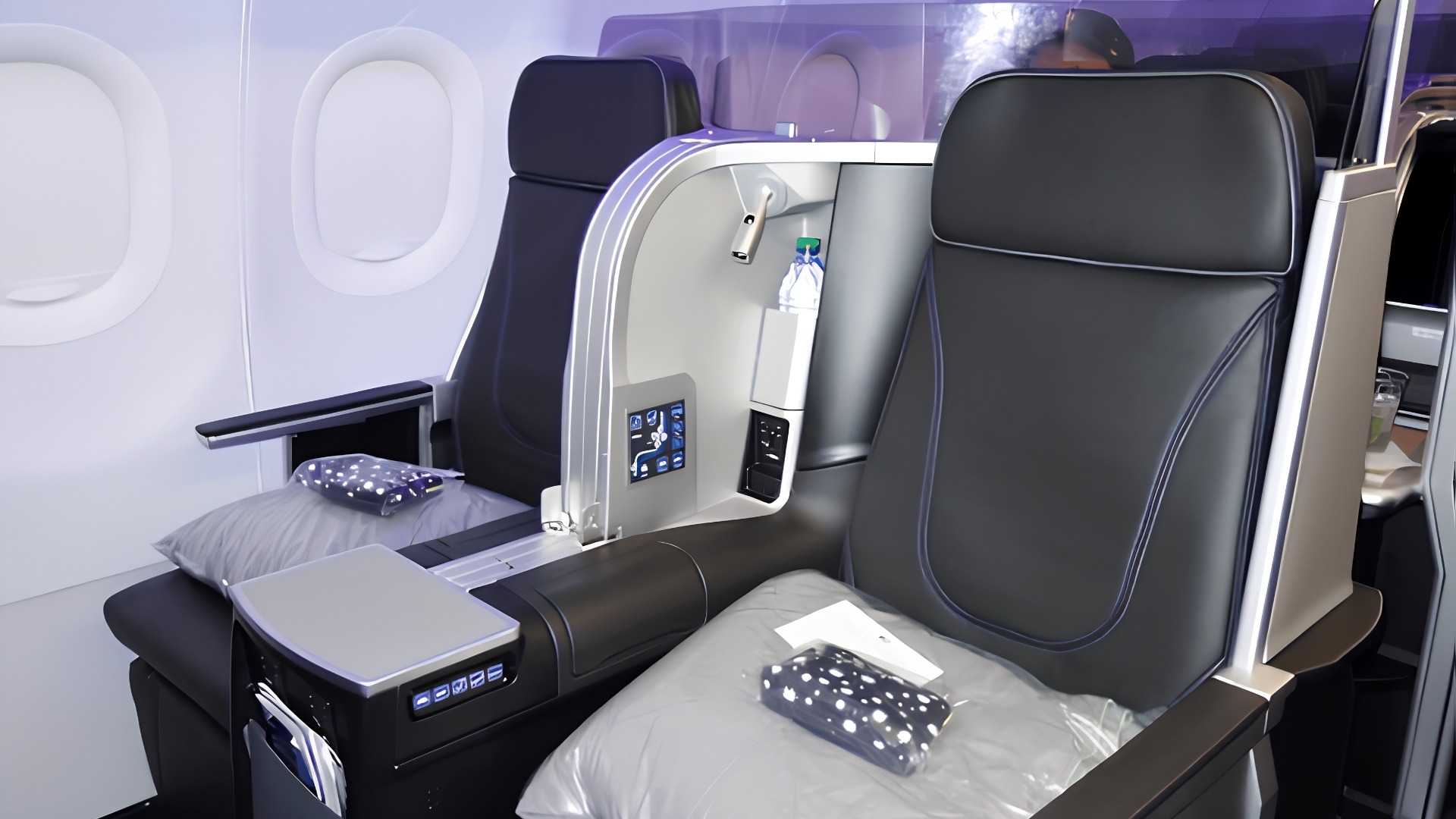
Now, the question becomes how does this differ from the simple concept of capacity reallocation? The airline industry has been waiting for two new codeshare and loyalty initiatives since they were announced: one between United and JetBlue, which, in spite of the code share agreement, has been a topic of much speculation.
The unfortunate irony is that one of United's most incendiary opponents has already been removed from the game; Spirit's liquidation. United is the sole airline at the airport, and now JetBlue, which was United's partner airline, has backed off of five more routes at the airport. The net result is a Newark market with reduced competition and increased pricing power for United in the market.
Does this appear to be deliberate co-ordination? Not, by any means, if you're an airline partner there are clearly defined legal lines drawn that wouldn't allow the type of capacity coordination that would constitute antitrust violation. But the Fort Lauderdale opportunity is really a business decision for JetBlue to make, and isn't strictly about Newark.
Why is it that JetBlue is getting anything from this?
The answer to the question that is the most hard to come up with a good answer for this time is probably the last one: what JetBlue's getting out of the United partnership, anyway? The most important thing that JetBlue has is that it's not United. A lot of leeway, particularly on the East Coast, where JetBlue has a loyal customer following, on its back half.
In turn, United will begin to book flights from the travel portal of JetBlue, a revenue sharing arrangement which may begin to drive a lot of traffic into JetBlue. If it's going to happen, that will have to be proven out and on a large enough scale. Further integration with the portal does not necessarily mean revenue.
There is also a longer term aspect that needs to be taken into account. Lower overlap between the two airlines would make a merger possible if JetBlue and United ever begin to seriously consider a merger; the latter has an interest in gaining more market share on the East Coast, and JetBlue was struggling financially. The less busy the airport, the less planes need to compete to fly into the airport at Newark. This is not a charge of ill will, it's just a statement on how the chess board is being set up.
Travelers can plan on what to expect at Newark Going Forward
In the immediate future, it is easy to see that the answer for passengers who fly out of Newark frequently is that there is less competition, and less pressure on fares. The status of United's presence at EWR is already significant and will only improve further, and any destinations that JetBlue gave up on Cancún, Aruba, Punta Cana, Santo Domingo will either be added to the United network, or disappear from the budget travelers' wish list.
If you are flexible with your flight's origin, you may be able to find a better rate at JFK as it has more competition and JetBlue is more widely used at JFK. Fort Lauderdale, where capacity is being developed by JetBlue, could be a more compelling option for travelers seeking to reposition for better fares and more options for Caribbean and leisure travel, in particular.

The Bottom Line
Most fundamentally, the cuts in Newark by JetBlue are a logical business move on a real serious market opportunity in Florida's Fort Lauderdale. Smart, on time and more logical than to play at an airport where you never had a chance of being competitive.
Also, it's not like JetBlue was making rational decisions for just one interest, and it's safe to say that United has a more wicked "hub" than they used to have in Newark. It's a question the airline hasn't answered with anything more than a shrug and a smile, yet, about whether JetBlue is getting what it deserves for its half of that partnership, future portal bookings, or other means.
The Fort Lauderdale bet may yet go a long way for those who bet right, if JetBlue executes well. In the case of an airline partnership, however, the terms are as important as the deal and in some cases, it can only be determined after the deal is done who's getting the better end of the stick.
DISCOVER THE RIGHT CARD FOR YOU.
Explore our card recommendations and find a credit card that suits your personal needs.
Browse card categories
%20(1).jpg)
.svg)