.svg)

What happened when American Airlines pilots were locked out of their cockpits at DFW?
%20(1).svg)
There are many different types of airline delays. It's the typical suspects you see on the departure board, every day: weather, mechanical problems, late planes, crew timing. Then, there are the delays that are just plain silly almost cinematically silly.
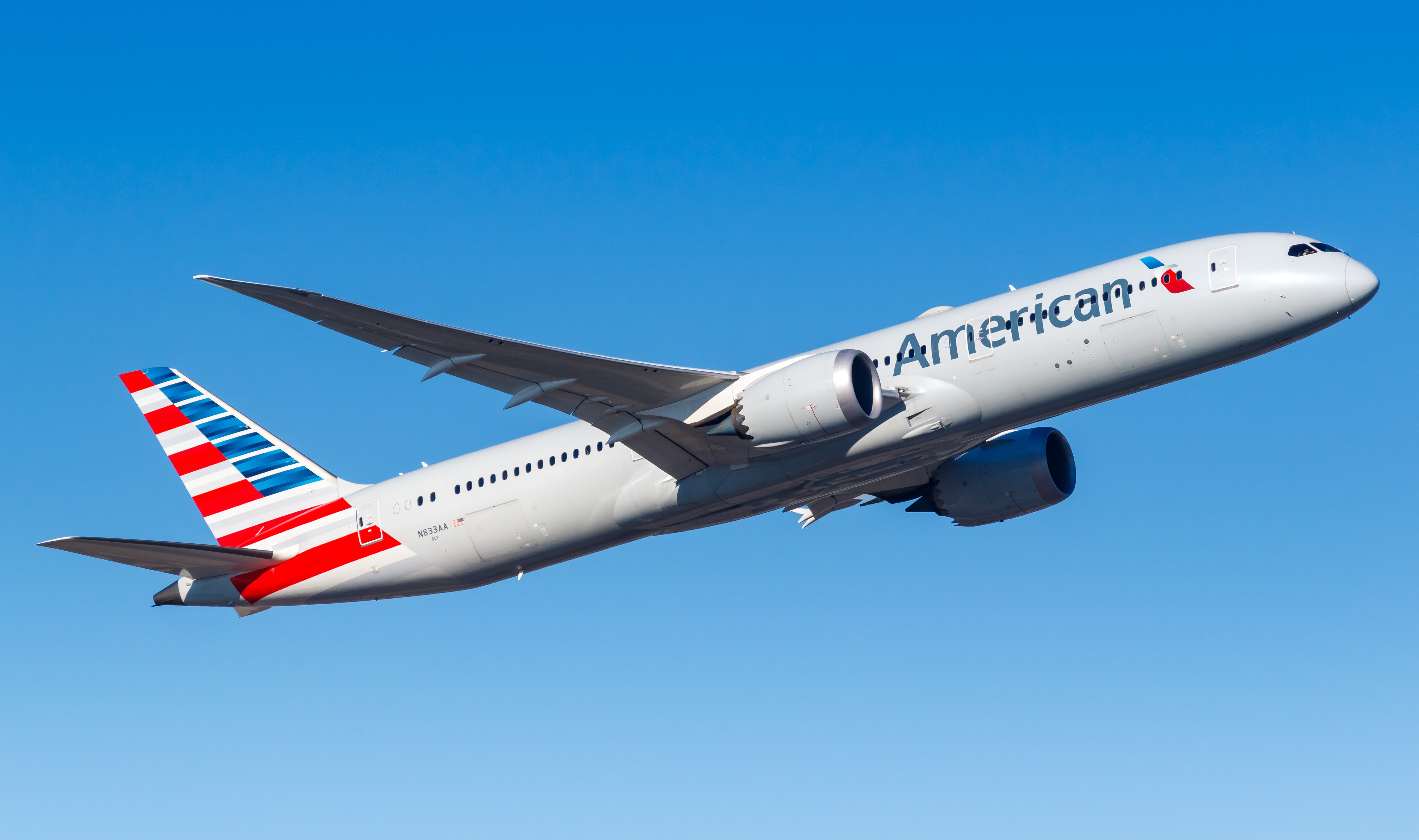
American Airlines 2140 from Dallas-Fort Worth to Monterey, California is definitely a part of the second group. When the Boeing 737 MAX pilot came from the jet bridge, he made an unusual announcement to passengers: Turn around and head back to the gate, the plane was scheduled to depart at 10:15 AM. The cockpit was locked, the pilots had no access to it and it was a problem that nobody in the boarding queue had thought of a maintenance technician going through the cockpit window and unlocking the door inside.
The flight was eventually to take off at 11:57 AM, about one and a half hours late. The remedy, as the pilots happily put it, was to "lube it up real good.
How Does a Cockpit Lock from the Outside?
It's a fair question and the explanation is based on the cockpit security door design of commercial aircraft. These doors are designed to be extremely robust and reinforced, to be locked from the inside and are difficult to break from the outside by design. The intent of the security is self-evident. The occasional complication of operations is not so widely discussed.
In this case, it seems that the problem was not human error but a faulty door latch. The door was sticking, and the pilots were out of the cockpit during pre-boarding activity, the door was either closed and latched so that the crew could not open the door from the corridor side, or the door mechanism did not open as normal into an open position. In both cases, the outcome was the same: no pilots in the cockpit, and a flight that was leaving without a place to travel.
This is not the first incident of the kind to hit the news. A similar incident occurred on a Southwest Airlines flight 3 years ago, when a passenger closed the cockpit door on a flight between San Diego and Sacramento while trying to use the forward lavatory, but wasn't in the cockpit. In that instance, the resolution was the same a pilot climbed through the cockpit window to re-enter the flight deck. While the window entry is one of the more eye-catching options, it's apparently a standard and viable contingency for just such situations.
The Passenger Experience
The trip was weird for the people that were already on the jet bridge, including a passenger in this instance with an injured husband being cared for at the airport with pre-boarding quarters, who were feeling disoriented in the sense that only surprising travel disruptions can do. You're thinking about taking off, you've got your bags, you've got your seat then you're told to turn around and take off to the gate, for some reason that no one is quite getting at at that moment.
Unfortunately, the communication in these situations is very predictable: there is some initial ambiguity, then some more clarity, and then an explanation that is less exciting than what passengers could have imagined, but more boring. The eventual answer in this case it's a sticking door, maintenance was called, someone got through the window, then stuck lubricant in is on the border between a bit of reassurance and it's really pretty funny.
The Delay Breakdown
Here are the highlights of flight 2140's morning:
- Upon departure: 10:15 AM from Dallas-Fort Worth.
- Boarding was started: Individuals started to walk down the jet bridge and then back to the gate.
- Cockpit door locked and jammed, crew cannot get in.
- Maintenance called and the techs got into the cockpit through the outside of the window to unlock the door from the inside.
- Repair: Door latch was lubricated to restore normal function.
- Actual departure: 11:57 AM (one hour and 42 minutes behind schedule).
The delay crossed into a peculiar grey zone with regards to its categorisation. There were times when passengers were informed they were waiting on a "part" which, though not strictly correct, is in fact a maintenance material applied to the door mechanism. Whether that framing wholly captures what was going on is up for debate.
Cockpit Security Doors: The Unintended Consequences of Good Design
It's only because of a very serious reason that American Airlines has this particular headache. In the wake of the September 11 attacks, the regulations for aviation security were upgraded worldwide, and ballistic resistant, locked cockpit doors became compulsory. The function of the doors is to be virtually impenetrable from the passenger cabin side, as they will be.
Unfortunately, the strength that makes these doors a useful security tool also can lead to issues with their operation when they become jammed or accidentally locked. A very secure door which may be opened only from the interior, is good as long as no one is there to open it.
Theatrical though this was, it was actually executed relatively efficiently, because airlines and maintenance crews have procedures in place for this scenario. It took some time to reach the outside of the plane, enter the cockpit through the side window and open the cockpit latch from the inside, but it was not a new technique for them.
The Seinfeld (or Jerry Seinfeld) Angle
There's that iconic moment in which Jerry Seinfeld asks himself if planes have keys, and whether pilots ever lose them so that flights are delayed, but that's caused by something more plausible-sounding. The punch line is effective because airline delays are beyond comprehension, and the entire business of how things work “under the hood” of an airline is mysterious.
In American flight 2140, things were simpler and stranger than Seinfeld's key scenario could have made them up. No keys were lost. A door latch was broken and a maintenance man had to climb through the window, and the "cure" was to lubricate the latch. The clarity in this instance, in that the pilot actually shared the "lubed it up real good" comment directly with the passengers, is refreshing, in contrast to the general mechanical delay jargon that covers most such situations.
The Bottom Line
American Airlines flight 2140 from Dallas-Fort Worth to Monterey was forced to be delayed about 1 ½ hours because the cockpit door was not functioning properly, and had to be opened from the cockpit. The maintenance man used the outside cockpit window to enter the flight deck, unlocked the door from the inside, and lubricated the sticking latch mechanism all of which occurred in an unusual sequence in respect to an incident, but not altogether unprecedented.
A similar window entry resolution took place on a Southwest Airlines flight three years ago in differing circumstances. Although the purpose of reinforced cockpit security doors is essential to safety, they can cause operational challenges at times, which is where this kind of nontraditional maintenance technique comes into play. The flight was delayed, the door was repaired and the pilots explained all the information that passengers needed.
DISCOVER THE RIGHT CARD FOR YOU.
Explore our card recommendations and find a credit card that suits your personal needs.
Browse card categories
%20(1).jpg)
.svg)