.svg)

When a British Airways Pilot and a JFK Controller Couldn't Speak the Same Language Despite Both Speaking English
%20(1).svg)
It shouldn't be too hard to reach an agreement between two professionals in the sphere of aviation who speak English as their primary language. Yet, this was exactly the situation that happened during the night of May 9, 2026, in the busiest airport of the country.
The audio recording of this unusual conversation became a popular topic for discussion among professionals in aviation recently, and it caused a variety of reactions from laughter to disappointment and serious concerns with regard to communication between two individuals when conflicting regulations and training approaches are involved.
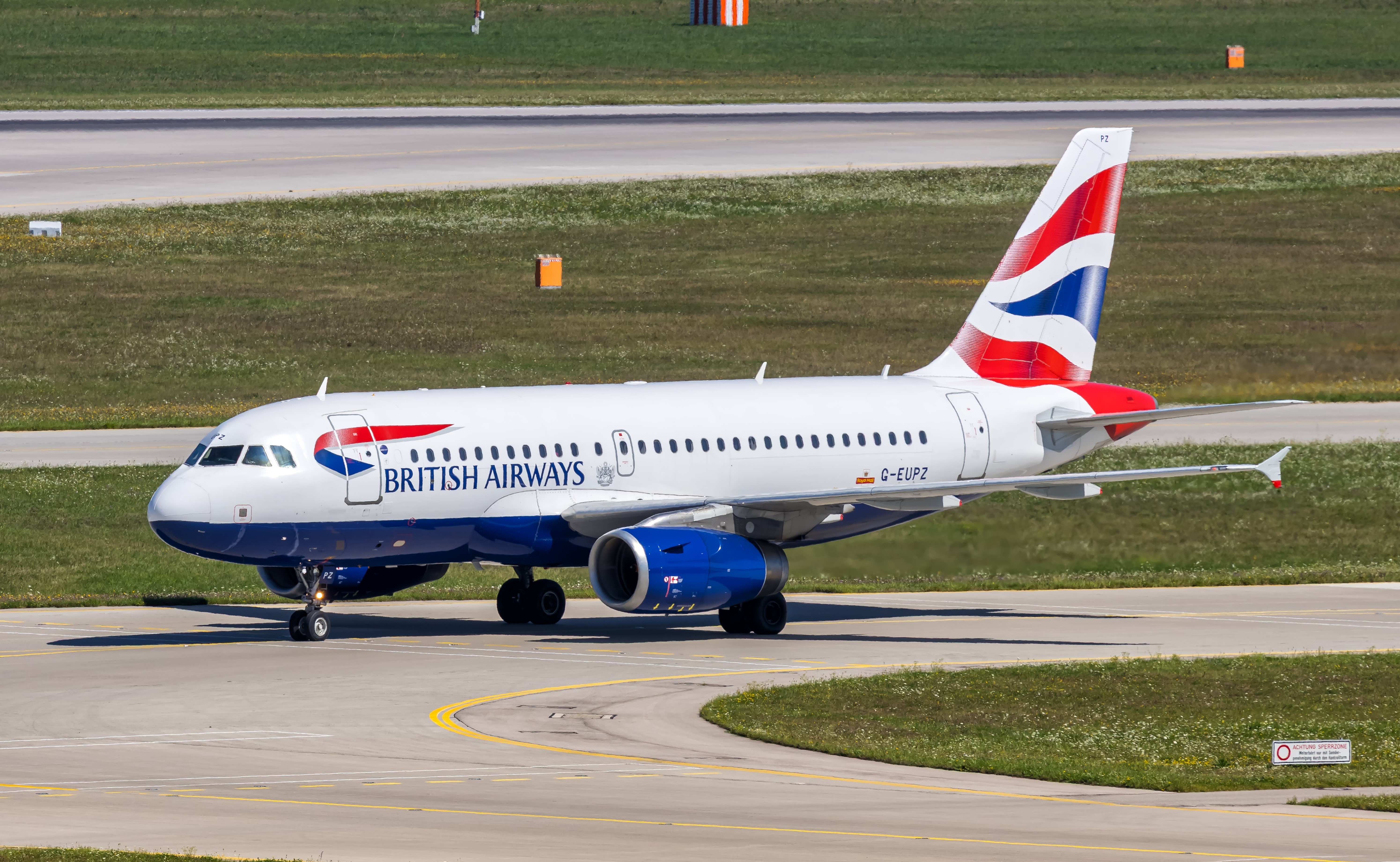
According to the audio recording from John F. Kennedy International Airport, the unusual situation occurred on the night of May 9, 2026, involving a crew of the British Airways 787-10 jet who was preparing for departure towards London Heathrow in conditions of reduced visibility. What is worth noting is that despite being offered an excellent chance to ensure their safety, the controller failed to understand what had been communicated to him.
The Visibility Has Decreased and So Has the Communication Efficiency
To begin with, let us discuss the background of this unusual conversation between a pilot and a controller. According to the recording, visibility was considerably reduced in JFK airport on the said day and resulted in RVR reaching 1,000 feet mark. One should realize that the standard visibility is usually estimated in miles, and when the RVR gets reduced to 1,000 feet, some special safety measures have to be taken.
Therefore, the crew of the British Airways 787-10 intended to receive confirmation that the specific safety measures, known as LVO (low visibility operations), have been implemented before they left for Heathrow airport. The term "LVO" is a standard term used according to ICAO guidelines, which implies that pilots who fly internationally should know what this is, whereas a controller at JFK airport didn't know this term.
The conversation between the pilot and the controller unfolded as follows: the pilot asked whether low visibility operation was in force when departing at the airport. The controller denied the statement, stating that he didn't know what LVO is. After realizing that the controller didn't understand this terminology, the pilot tried to get confirmation again and mentioned that according to ICAO standards, this term is used. He requested confirmation regarding low visibility operation again and the controller responded negatively yet again.
Finally, the crew of the British Airways 787-10 chose to stay at the threshold until getting permission to depart. The flight was successful but took place much later than expected.
The Controller Is Not Actually Wrong
While looking at the discussed example, one can easily suggest that a controller had problems with comprehending the terminology used by a pilot. Still, one shouldn't blame the controller for this communication error immediately. The reason is simple the terminology that was used differed from FAA standards for pilots working domestically and the controller wasn't familiar with this terminology.
ICAO develops standards and practices for international aviation and regulates international flights according to the standards it creates. However, FAA doesn't utilize the term LVO. Instead, this organization prefers to employ another notion known as SMGCS (surface movement guidance and control system). As soon as the RVR gets below 1,200 feet mark, these procedures become operational automatically.
That means there was no need for a pilot to request a permission for starting the procedure since it was activated automatically. The safety procedures mentioned by the controller were activated automatically and this is why the controller stated that low visibility operation wasn't taking place.
Communication Mistakes Made by Both Parties
Although the discussed communication error seemed trivial at first glance, one shouldn't forget about other mistakes that were made by either of these two parties in terms of communication.
As it has been stated above, the controller wasn't familiar with specific terminology, which could become a source of problems. However, neither pilot nor controller made attempts to overcome the language barrier in order to make sure that their ideas were clearly understood.
Instead of trying to understand the meaning of the terminology used, the controller simply denied all suggestions about implementing the safety procedure, which led to misunderstanding. The pilot, in turn, also made mistakes by using the same terminology in vain, expecting his questions to be answered positively.
Communication plays an important role in aviation, as pilots have to communicate with a controller and vice versa, and misunderstandings lead to failures in accomplishing goals. That is why in such cases, one needs to change the strategy for communicating a particular idea or notion.
Important Safety Issues Arising From the Misunderstanding
In the case under discussion, one can say that the misunderstanding occurred because of the use of unfamiliar terminology. However, things aren't as simple as they seem to be, especially considering the fact that the problem discussed above is actually a serious threat to safety.
Important Safety Concerns:
- Misunderstanding aviation terminology can create serious flight safety risks during low-visibility operations.
- Pilots need clear confirmation from air traffic control to ensure all required low-visibility procedures are active.
- Safe low-visibility departures depend on accurate communication and coordination between pilots and controllers.
- Using inconsistent or unfamiliar terminology can lead to confusion, delays, and potential operational hazards.
Why This Is a More Serious Issue Than it Might Seem to Be
This example demonstrates another discussion regarding the question whether air traffic controllers in the USA are ready to deal with international air traffic. The reason is that the JFK airport handles a large number of planes, most of which are operated internationally.
The difference between ICAO terminology and FAA procedures has long been known in the sphere of aviation. The question is whether sufficient measures have been undertaken in order to avoid possible miscommunication in practical situations.
Based on this particular case, one might conclude that there is definitely room for improvement in the air traffic controller system. The matter is that the communication style used by the controller can be perfectly fine in the context of communication in the domestic environment.
However, an international crew will never understand such a communication style as they are trained differently and expect the use of particular terminology. That is why such a communication style becomes a problem in this particular case.
The Bottom Line
Thus, one can observe two professionals who are fulfilling their duties in accordance with regulations but cannot agree on anything because of terminological problems. While one of them tries to ensure his/her safety through communication with a controller by insisting on low visibility operation, the latter sticks to his communication style, thus causing problems.
In this case, it would be reasonable for the controller to change the communication style temporarily in order to establish communication with an international crew. Better training in international terminology and improved communication practices should solve the issue.
DISCOVER THE RIGHT CARD FOR YOU.
Explore our card recommendations and find a credit card that suits your personal needs.
Browse card categories
%20(1).jpg)
.svg)