.svg)

Air Canada's First Airbus A321XLR Is Here And It's Set to Revolutionise Canadian Travel to Europe
.jpg)
%20(1).svg)
Some fleet deliveries are routine. An airline receives another example of an aircraft it already flies, customers don't notice, and the world keeps spinning. Air Canada's first Airbus A321XLR is not one of those.
The plane with the appropriately literal tail code C-GXLR is something new for Air Canada: a narrow-body aircraft with the range to fly across the Atlantic, the efficiency to make low-density routes work, and the flexibility to link Canadian cities with European destinations that would be unviable for a larger aircraft. The first of 30 A321XLRs arrived at Air Canada four years after the airline placed the order in March 2022. Here's what it means for passengers and what to expect when you fly one.
The A321XLR Is a New Type of Plane
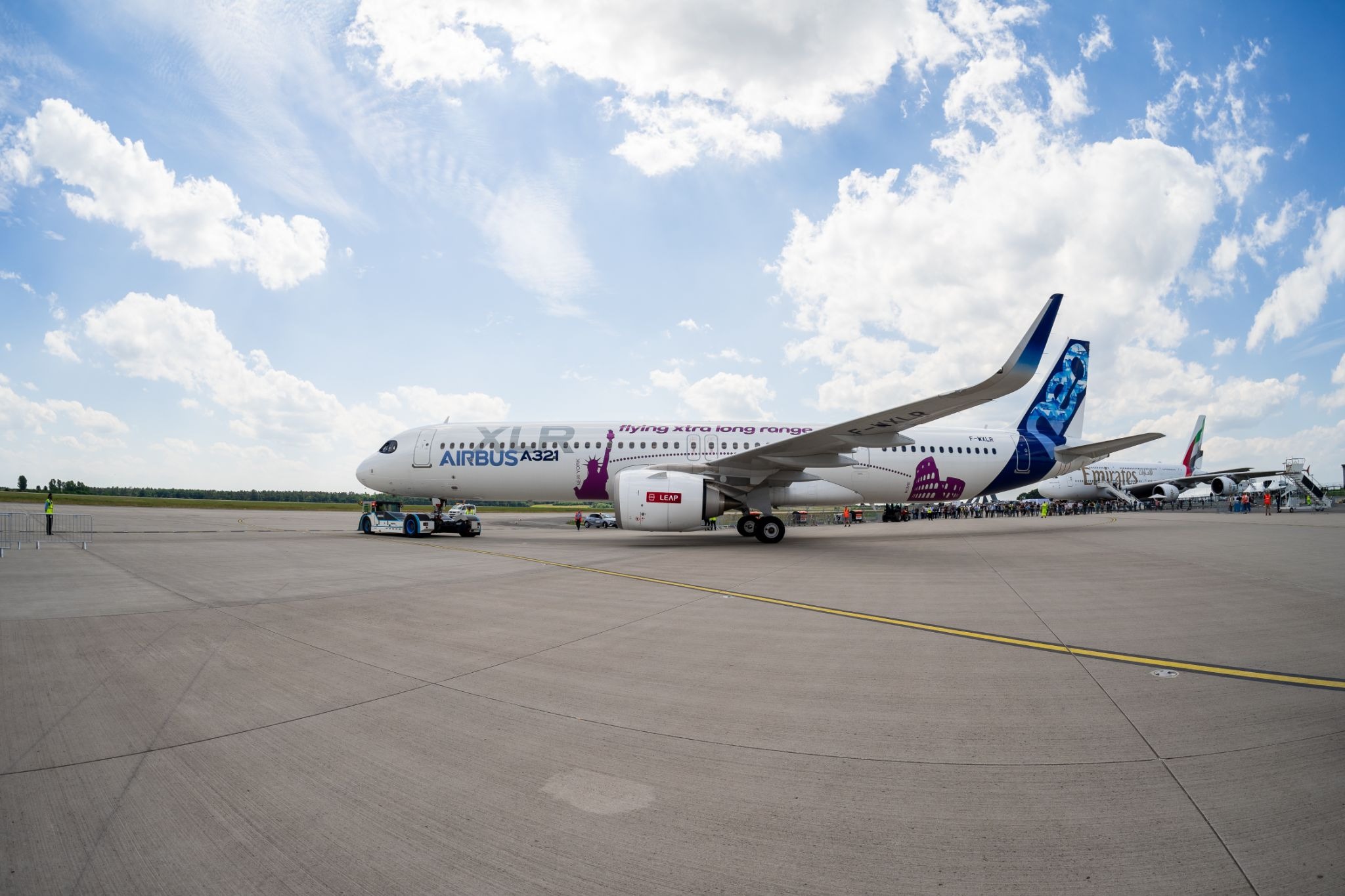
The Airbus A321XLR began commercial operations in late 2024 with Iberia and Aer Lingus as the first customers. The "XLR" or Extra Long Range is a significant engineering leap from the standard A321neo. The addition of a structural rear center fuel tank (instead of an external auxiliary tank) allows the aircraft to fly up to 4,700 nautical miles, including into the transatlantic market.
For comparison: Air Canada's smallest long-range aircraft was previously the Airbus A330, a wide-body twin-aisle jet with 250+ seats. The gap between that and its domestic narrow-body fleet left a significant gap in the airline's network. Markets that have demand but not enough to fill an A330 had no viable way to be served nonstop. The A321XLR is the answer to that.
Air Canada's Chief Commercial Officer called the arrival a "game-changing moment" because the new aircraft will enable the airline to open new international routes and enhance service on existing routes, while helping to modernise the fleet. That's corporate speak, but in this instance, it's true the A321XLR does something Air Canada's existing fleet doesn't.
182 Seats, 14 Flat Beds, and a Cabin Worth Understanding
Air Canada's 30 A321XLRs will all have 182 seats: 14 business and 168 economy. There is no premium economy cabin, a decision that will come as a surprise to some travellers as premium economy is now the norm on most long-haul narrow-body configurations from other airlines.
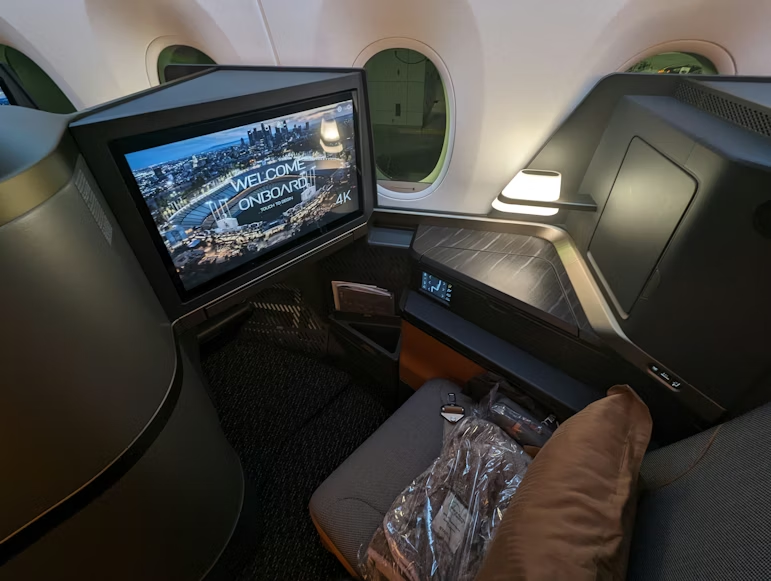
Business class is based on the Collins Aerospace Aurora platform, with a herringbone configuration and aisle-facing seats. All seats are fully flat beds, a must-have for transatlantic overnight travel. The technology package is impressive for a narrow-body plane: 19-inch 4K OLED screens, Bluetooth connectivity, and a range of power outlets (AC, USB-A, USB-C). The hard product is contemporary, well-appointed, and a step up from the previous generation of business class on similar aircraft.
The business class cabin is relatively small. By contrast, American Airlines and United Airlines have each ordered A321XLRs with 20 business class seats and 12 premium economy seats, a configuration that allocates more space to higher-yield cabins. Air Canada's decision to go denser is a different revenue model, and it's worth noting that flying nonstop on a narrow-body to secondary European destinations is a premium for those who prefer the direct flight to the size of the cabin.
Where the A321XLR Will Fly
Air Canada's first batch of A321XLR routes is bold, and it demonstrates the role this aircraft will play in the airline's transatlantic network.
From Montréal (YUL), Air Canada will use the A321XLR to serve Berlin, Lyon, Nantes, Palma de Mallorca, Porto and Toulouse European destinations that would not support wide-body frequencies but have demand from Montreal. It will also be used on domestic transcontinental routes from Montreal to Calgary, Los Angeles and Vancouver, showing its potential as a long-haul and high-end domestic aircraft.
From Toronto (YYZ), the first confirmed long-haul A321XLR route is to London Heathrow Air Canada's most important transatlantic route pair likely to be used to increase frequency or replace existing wide-body service on certain times.
Looking further down the track, Air Canada has indicated that Ottawa (YOW) and Halifax (YHZ) will also eventually see A321XLR service. In particular, Halifax is an interesting market: it's a market with transatlantic demand (driven by the Maritime provinces' Irish and British heritage) that has been historically under-serviced by non-stop European flights. A Halifax-Dublin or Halifax-London route is precisely the type of route the A321XLR is designed to serve.
The Economics of the Thin Route Strategy
The A321XLR economics are important to understand because they explain why Air Canada and many other airlines are placing their bets on this aircraft type for the next wave of transatlantic expansion.
The Boeing 787 or Airbus A330 wide-body aircraft are designed for high density markets where 250 to 300+ seats can be filled. On low density city pairs where perhaps 100 to 150 people travel each day in each direction, operating a wide-body at the right frequency results in either low load factors or low frequencies. Neither is good for the airline or the passenger.
The A321XLR changes the math. It has 182 seats and costs that are more like a single-aisle than a wide-body, so it can operate those markets at two or three flights per week with positive unit economics. Consumers gain nonstop access to destinations they previously connected. Air Canada wins origin traffic it lost to competitors with superior nonstop networks. And the Star Alliance adds new European destinations that enhance its network value proposition.
What Aeroplan Members Should Know
For travelers building award strategies around Air Canada, the A321XLR introduces new booking opportunities worth tracking. As the aircraft enters service on transatlantic routes particularly the European secondary city destinations that are genuinely new additions to Air Canada's network Aeroplan award availability on those routes will emerge for the first time.
Business class awards on A321XLR transatlantic routes offer lie-flat beds at Aeroplan redemption rates that have historically been competitive within the Star Alliance ecosystem. The 14-seat cabin means limited award inventory, so booking well in advance will be important on popular routes. The domestic transcontinental deployments will also create award opportunities on routes like Montreal Vancouver and Montreal Los Angeles, where the A321XLR's business class product represents a meaningful step up from standard narrow-body configurations.
The Bottom Line
Air Canada's first Airbus A321XLR has landed, and with 30 aircraft on order, it's the beginning of a significant network transformation for Canada's flag carrier. The 182-seat configuration 14 lie-flat business class seats and 168 economy is denser than some competitors' approaches, and the absence of premium economy will disappoint some travelers.
But the routes this aircraft makes possible are what the story is really about. Secondary European cities from Montreal, new transatlantic options from Halifax and Ottawa, and economically viable thin routes that simply couldn't exist before the A321XLR isn't just a new plane for Air Canada. It's a new kind of flying.
DISCOVER THE RIGHT CARD FOR YOU.
Explore our card recommendations and find a credit card that suits your personal needs.
Browse card categories
%20(1).jpg)
.svg)