.svg)

The Trump Administration Wants to Buy Spirit Airlines Using a Wartime Emergency Law And the Logic Is Hard to Follow
.jpg)
%20(1).svg)
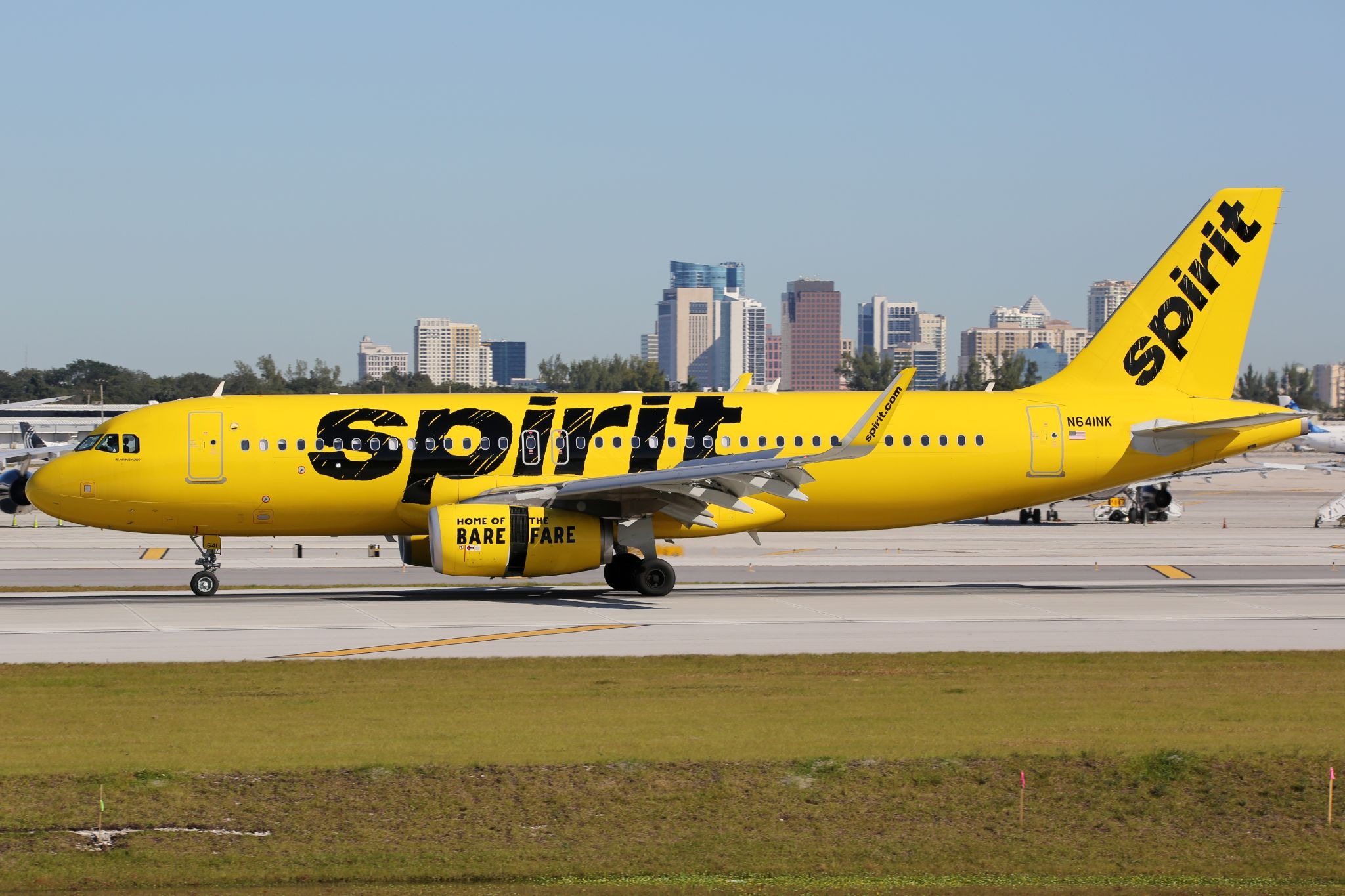
Spirit Airlines has long been one of the aviation industry's most-visible failures for years. It's lost money, badly, raising alarm bells for even the most seasoned observers, and it's in bankruptcy right now with no clear saviour on the horizon. So its report that the Trump administration is considering a government bailout caused consternation throughout the industry. Now we have some idea of how it would work, and it's more than eyebrow-raising.
The Trump administration is reportedly contemplating invoking the Defense Production Act a national emergency power that has been used in the past to compel private companies to give preference to the government in times of crisis to make a $500 million loan to Spirit, take a 90% stake in the company, and then sell it to another airline at a profit. In the meantime, the Pentagon would use Spirit's underutilised fleet to move troops and cargo. National security is the rationale. Whether it's a good justification is quite another question.
The Defense Production Act Explained
For the general public, the Defense Production Act is a footnote in US policy, a Cold War measure that may be invoked in times of genuine need. This law allows the executive to prioritise private industry for national defense, secure supplies of critical products, and, in certain circumstances, provide loans to private companies to further national defense goals.
It's been used for semiconductors, pandemic-related personal protective equipment and industrial supply chain chokepoints. The common denominator in terms of what constitutes legitimate uses of the act is a clear nexus between the action and national defense needs.
Whether an ultra-low cost, money-losing airline that hasn't made a profit since before the pandemic is a national security need is the argument the Biden administration would have to make and the case being presented publicly hasn't been particularly persuasive.
How it will work
The deal structure would be something like this. The government would provide a $500 million loan to Spirit at a fair interest rate, and be considered Spirit's senior creditor in bankruptcy proceedings. This loan would be backed by Spirit's assets - its aircraft, slots and other assets that the government says would be worth more than the loan. The government would receive warrants that allow it to own 90% of the airline post-bankruptcy.

The long term plan is to then sell that stake on to another airline at a profit, while the US military takes advantage of the available capacity on the planes to move troops and cargo. The idea has some degree of self logic. But in practice, it has a number of glaring issues.
Here's where the plan hits some air pockets:
- The $500m will pay for months, not years at Spirit's current burn rate, so the government is likely to be back to the negotiating table for further funding (if not more) before a sale has time to take place
- The airline has not attracted plausible interest from other airlines despite the ongoing bankruptcy proceedings which would beg the question as to whether the government's ownership will attract interest
- Government ownership is a distortion if Spirit wins lucrative contracts to serve the government that competitors cannot, the precedent it sets is troubling for market equity
- The "sell at a profit" timeframe hinges on oil prices falling and a prospective buyer appearing, both of which are not guaranteed outcomes with no specific time constraints
The loan arrangement ensures that taxpayers are not at risk if Spirit's assets are greater than the loan. Whether that will be true over a period of time with operating losses is another question.
The Most Questionable Statements
Official statements on the deal are not helpful. In a widely reported set of comments, the president talked about the purchase in terms that were inconsistent with one another suggesting the government would purchase Spirit at a good price, sell it to another airline at a good price, and that it would do so while also preserving airline competition.
The conflict between "we're going to sell it to another airline" and "I like lots of airlines so there's competition in the industry" is fairly obvious. Selling Spirit to another airline will decrease, not increase competition. You can't have it both ways whether you want consolidation or competition.
And there was a reference to a merge of Spirit and People Express being blocked by the Obama administration which is a bit of an odd bit of history since the People Express went out of business in 1987, over 20 years before Obama was elected. This kind of error is the sort that can weaken an argument's credibility by casting doubt on the underlying analysis.
What It Means for the Airline Industry
Forget the political drama for a moment, the Spirit case represents a real problem in the airline industry. The fortunes of ultra-low-cost carriers have been in decline for some time, with increasing labor costs, volatile fuel prices and competition from the major carriers' basic economy offerings all contributing to a loss of margin that makes the model unsustainable. Spirit's situation is not the result of poor management, but the outcome of a business model under pressure from all sides.
It's valid to ask what will happen to Spirit's workforce, fleet and route system if it goes out of business. Spirit has thousands of employees and serves routes that, in some markets, offer price discipline to the benefit of consumers. Those are real stakes.
But the Defense Production Act is meant for national security issues with a clear origin and destination of semiconductor supply chains, medical equipment shortages, and critical minerals. Extending it to save a troubled low-cost airline with a bad balance sheet, and no obvious strategic buyer, is a dramatic expansion of the law's scope, and one that needs to be viewed with caution.
The Bottom Line
The Trump administration's reported plan to use the Defense Production Act to acquire a 90% stake in Spirit Airlines through a $500 million loan is one of the more unconventional aviation policy proposals in recent memory. The legal mechanism is a wartime emergency authority; the stated justification is national defense through troop transport capacity; the exit strategy is a profitable resale to a buyer who hasn't yet materialized.
Whether any of that comes together as described remains genuinely uncertain. What's clear is that Spirit's situation is dire, the proposed solution is unusual by any historical standard, and the airline industry will be watching closely to see whether the government's first foray into commercial aviation ownership in the modern era proceeds and what it means for competition, taxpayers, and the thousands of Spirit employees whose livelihoods hang in the balance.
DISCOVER THE RIGHT CARD FOR YOU.
Explore our card recommendations and find a credit card that suits your personal needs.
Browse card categories
%20(1).jpg)
.svg)