.svg)

Could JetBlue's Next Big Move Be a Merger? Here's What Travelers Need to Know
.jpg)
%20(1).svg)
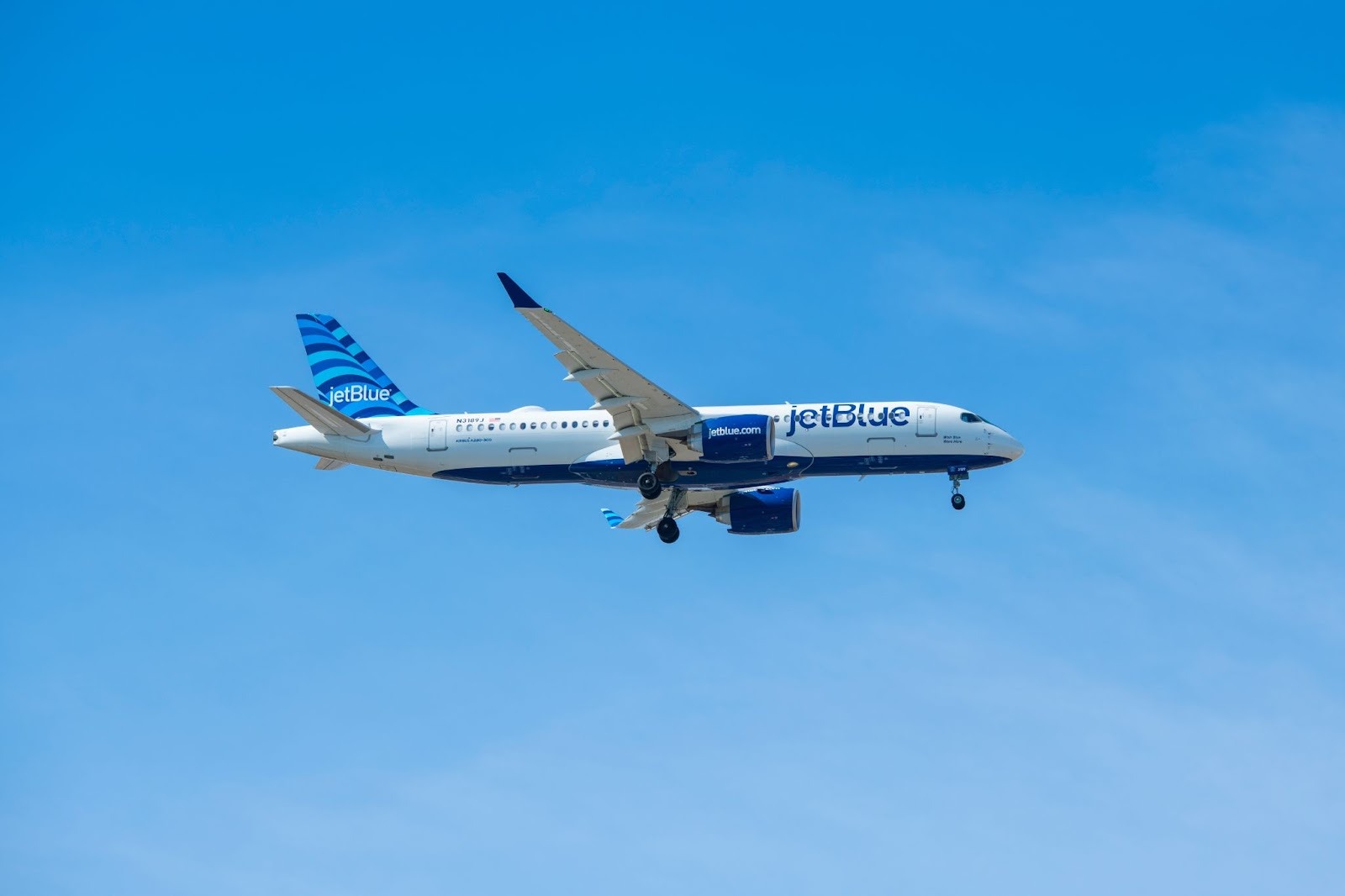
To anyone who has been on a recent JetBlue flight and enjoyed the spacious legroom, who had sampled the free snacks, perhaps tuned to a free in-flight show on the inflight TV screen the news so quietly making spash in the aviation industry may come as a shock. JetBlue, the former underdog that disrupted the American air travel, is allegedly considering selling to a bigger airline. And with whoever finds themselves at the table this would turn the whole domestic travel scene upside down.
JetBlue has invited external counselors, according to Semafor reports, to determine whether a sale or merger is a strategic move. Three have come up as the most probable suitors, they include United Airlines, Alaska Airlines, and Southwest Airlines. The news that JetBlue surged more than 13% on the news is a sure indicator that the investors are hesitantly positive about what a deal would imply to the long-suffering carrier. Then how did it get like this and what may it mean to the daily flyer? Let's break it down.
Someone of a Carrier That Has Been Struggling to be in the Black
JetBlue has been misfortunate the past several years, and that is mildly so. The airline has not made a profit since the COVID-19 pandemic, and despite implementing its “JetForward strategy a multi-year plan to recover the financial health of the airline, the road to profitability has been paved with roadblocks. The increased cost of operation, fleet issues and unsuccessful bid to purchase Spirit Airlines all added up. Put in the existing volatility regarding the price of oil, and you begin to see why the leadership of the airline might be considering consolidation as a better way to go ahead than to go it alone.
Reacting to the merger rumor, JetBlue was diplomatic and said the company still has JetForward to concentrate on and it was certain that it is the correct strategy to bring back shareholder value and employee opportunities. Still a 13 percent stock surge in a vacuum does not occur in Wall Street between the lines.
Why Now? The Regulation Has Changed the Climate
Everything is timing in the airline business and the merger negotiations do not occur in a vacuum as far as the political landscape is concerned. In the past, aviation consolidation has been the target of close scrutiny by federal regulators simply consider the way the Biden administration has vetoed JetBlue proposed acquisition of Spirit Airlines in 2024. That was antitrusted and the blow struck JetBlue to the scramble.
The existing regulatory environment under the Trump administration is, however, broadly regarded to be much more accommodative to consolidation. Airline executives in general have observed the change, and JetBlue seems to be gambling that it has found the right moment to look into its possibilities. It is a calculated step and not a desperate one but certainly not an unprofessional one.
It is interesting to mention that nothing is final. People on the ground say that the M and A planning was initial and JetBlue can end up choosing not to strike any deal. There are no official negotiations, and it is not known whether any of the prospective partners have officially shown interest.
Disaggregating the Potential Partners
All the three competitors offer something new on the table and each has its complications.
United Airlines is generally regarded as the most obvious candidate. United and JetBlue already have a codeshare partnership in place in 2024, and United chief executive officer Scott Kirby has said openly how obsessed he is with dominating the JFK airport in New York, where JetBlue calls home. On the issue of consolidation, Kirby has already mentioned that it is on the ball of JetBlue to take action, but has also been keen to emphasize that United does not require a merger in order to perform. The greatest challenge in this case would be the regulatory clearance, as a United-JetBlue alliance would establish colossal market concentration in the Northeast.
On paper, the geographical location of Alaska Airlines is sound. Alaska has been working intensely to establish its presence in the East Coast and JetBlue presence in the area will be a good complement. Nonetheless, Alaska continues to consume the digestive process of acquiring Hawaiian Airlines that entered a liquidation in 2024 and acquired another merger this soon may strand the integration bandwidth of the company.
The wild card is Southwest Airlines. The all-Boeing 737 fleet of Southwest is a source of pride to the carrier and moving the Airbus-intensive operation of JetBlue would bring complexity to its fleet which Southwest had never wanted. With that said, the fact that the advisers of JetBlue took into account Southwest in their scenario planning indicates that there might be angles here that the outsider can not recognize easily.
The Dark Horse Nobody is Talking About
This is where the interest comes in. American Airlines, despite not being cited among the competitors, may be the one that will benefit the most in terms of an acquisition of JetBlue. The duopoly in the markets, the possibility to reinforce the American East Coast and Caribbean destinations, and the ability to revitalize a brand that has been finding it hard to distinguish itself all of that makes a strong case on paper.
The catch? The balance sheet of American is not in a fighting position at all at the moment, and the leadership of the airline would have to act both with ambition and precision to ensure that such a deal works. The question of whether that trust on the management is justified is an open one among the industry observers.
What This Means for Flyers
Airlines change hardly ever plays in the favor of passengers in the short term. Mergers usually imply a decrease of competition, which may drive fares up and ensure that airlines feel less pressure to maintain the quality of the service. JetBlue has been a consumer friendly alternative with generous legroom, transparent pricing and a product that underpunches its price. Anyone that buys JetBlue will be pressured by the attentive customers to maintain what makes the brand worth flying.
To point and miles enthusiasts, in particular, a merger would nearly certainly bring about some major adjustments to TrueBlue, the JetBlue loyalty program. That can either be conversions, devaluations or a completely new rewards system depending on what the acquiring airline does. It is also good to monitor your present balance of TrueBlue and redemption.
The coming few months will be interesting. It is all money, politics and competition in the air and the underdog airline is getting the full attention of everybody at least once in a lifetime.
DISCOVER THE RIGHT CARD FOR YOU.
Explore our card recommendations and find a credit card that suits your personal needs.
Browse card categories
%20(1).jpg)
.svg)