.svg)

Delta Air Lines Bets on the Boeing 787-10 to Shape the Future of Long-Haul Travel
.jpg)
%20(1).svg)
Delta Air Lines has made a significant move in redefining its future wide-body network strategy by announcing the addition of the Boeing 787-10 Dreamliner to its wide-body fleet. This is the first time Delta has placed an order for the Dreamliner aircraft and represents a deliberate move towards more fuel-efficient aircraft with higher capacities, which are typically used on long-haul, premium-heavy routes.
Although rumors of the Boeing order had been floating around for several months, the confirmation of the order helps to bring more clarity to Delta’s long-term strategy of updating its fleet, lowering operating costs, and adding more premium products without overextending the range of the aircraft beyond what is needed for its core markets.
A Landmark Order: What Delta Has Committed To
Delta has ordered 30 Boeing 787-10 Dreamliner aircraft with options to buy 30 more in the future. The delivery of these planes is expected to take place in 2031, in line with the airline’s plan to phase out its older wide-body aircraft that are currently in service on transatlantic and South American routes.
The 787-10 is the longest version of Boeing’s Dreamliner series of aircraft, which is intended to transport more passengers while still offering remarkable fuel efficiency. As Delta has stated, this aircraft provides a fuel efficiency that is 25% better per seat than the previous generation of wide-body aircraft that it will replace. This alone is a major source of savings.
In addition to fuel efficiency, Delta pointed to a number of operational benefits, including greater cargo capacity and the ability to accommodate larger premium cabins, which will become an increasingly important consideration as Delta continues its transition towards serving more profitable customers.
Why the 787-10 Makes Strategic Sense for Delta
Delta’s decision to choose the 787-10 over the 787-8 or 787-9, which are smaller aircraft, tells a lot about how Delta perceives its international network.
While ultra-long-haul aircraft are designed to serve distant city pairs, the 787-10 is designed to serve high-demand routes with heavy passenger loads. This makes it ideal for transatlantic routes, where Delta operates many flights between North America and Europe, as well as some routes to South America.
The aircraft provides greater seating capacity than Delta’s Airbus A330-900neo while offering lower operating costs per seat. This enables Delta to maximize revenue on high-demand routes without compromising on efficiency.
From the perspective of the passenger, the Dreamliner offers known comfort improvements such as:
- Higher cabin humidity
- Lower cabin altitude
- Larger windows with electronic dimming
- Better air filtration systems
These elements help to minimize fatigue during long flights and are in line with Delta’s overall strategy to enhance the in-flight experience, especially for high-end customers.
The Role of the 787-10 in Delta’s Current Fleet
Delta already has one of the most diverse long-haul fleets, which includes Airbus A330s, Airbus A350s, and Boeing 767s. The introduction of the 787-10 does not diminish this diversity; it enhances it.
The new plane will eventually enable Delta to retire its existing Boeing 767-300s, which are currently the workhorse of its transatlantic network. It may also enable the airline to retire its existing A330-200s and, later on, its 767-400s.
Instead of sticking to one aircraft type, Delta is still preferring flexibility. This is because Delta can now better align its capacity with demand in various regions by using more than one aircraft type.
While Delta has yet to announce seating configurations and onboard offerings for the 787-10, it is clear that Delta will use a premium-dense configuration for these aircraft. This strategy reflects Delta’s recent efforts to enhance Delta One suites, Premium Select seating, and lounge access.
Sustainability and Efficiency: An Increasing Imperative
Issues related to the environment are becoming more prominent in the decisions of airlines regarding their fleets, and Delta’s 787-10 order is no exception.
The Dreamliner is also more fuel-efficient because it is made of advanced composite materials that make it lighter than older wide-body jets. This is important for an airline that has aggressive sustainability plans, including carbon reduction.
By replacing less efficient jets with more modern aircraft such as the 787-10, Delta can make significant strides in reducing its impact on the environment without shrinking its network.
The Political and Industrial Undercurrent
Although the choice of aircraft is based on operational reasoning, there is also a political undertone to this decision.
Delta has always tended towards Airbus when it comes to wide-body jets. This Boeing order is significant not only because it brings in a new line of aircraft, but also because it emphasizes manufacturing in the U.S.
Delta has specifically pointed out that the aircraft and engines are designed and built in the United States, which is a significant factor in the current political environment. The renewed focus of the federal government on supporting the domestic aerospace industry is likely to be more than just a coincidence.
While Delta has maintained a relatively low-key public posture in comparison to some of its rivals, the decision places the airline in an advantageous position within the larger national dialogue regarding investment and job creation.
What This Means for Passengers
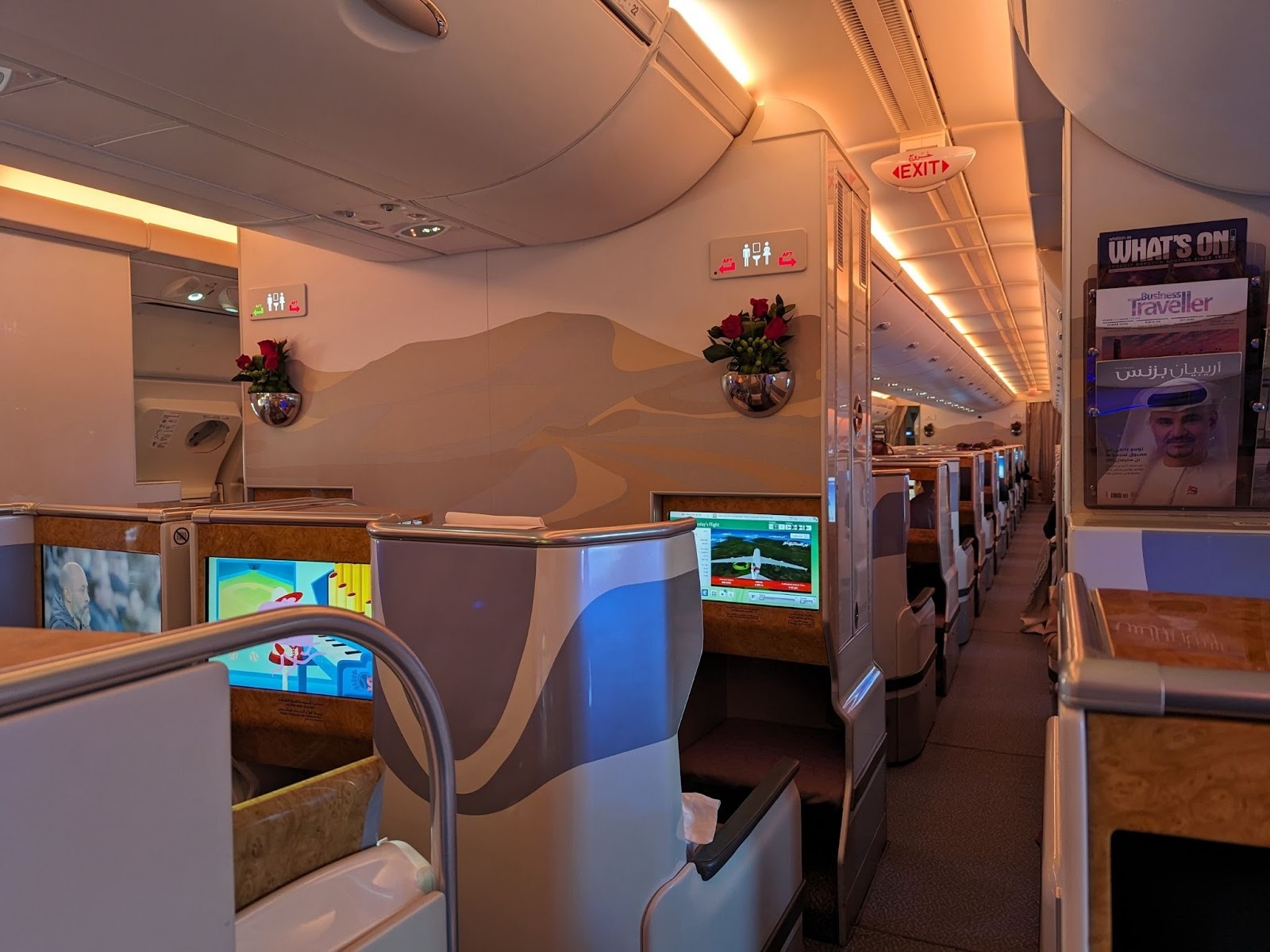
For passengers, the coming of the Boeing 787-10 is a welcome development, although they will have to wait a bit longer, as delivery of the aircraft will only begin in the next decade.
Once in service, the following can be expected of passengers:
- Newer, more comfortable cabins
- Larger premium sections
- Better air quality and less jet lag
- A more standardized in-flight experience on global routes
Although Delta has not yet revealed designs for its cabins on the new aircraft, the recent improvements to Delta’s products indicate that the 787-10 will enter service with some of the most sophisticated cabin interiors in the company’s history.
Conclusion
Delta’s move to introduce the Boeing 787-10 aircraft into its fleet is more about planning for the future rather than making headlines. The aircraft will complement Delta’s current wide-body fleet and will help the company achieve its strategy of focusing on premium travel, as well as offering a clear way to retire its older and less efficient aircraft.
As the world of international travel continues to change, it is those airlines that are able to strike the right balance between capacity, efficiency, and customer experience that will be the most successful. With this announcement, Delta is making it clear that it plans to be one of them.
The Dreamliner may not materialize in the next night, but when it does, it will usher in a new era for Delta’s long-haul network, one characterized by “smarter capacity,” comfort, and a future-ready fleet.
DISCOVER THE RIGHT CARD FOR YOU.
Explore our card recommendations and find a credit card that suits your personal needs.
Browse card categories
%20(1).jpg)
.svg)