.svg)

Florida Wants to Rename Palm Beach's Airport for Trump A Pilot Is Trying to Stop It

%20(1).svg)
Airport renaming battles do not tend to receive national coverage. However, when a state legislature chooses to rename a county owned airport in honor of a sitting president despite local protest and without local consent a lot more interesting than a typical city dispute is in question.
And that is what happens in Palm Beach, Florida, where a licensed pilot has filed a lawsuit seeking to prevent the state in its initiative to rename Palm Beach International Airport as President Donald J. Trump International Airport, which will take effect on July 1, 2026.
The legal battle poses some truly fascinating questions of state versus local power, the boundaries of legislative power, and the meaning of renaming publicly owned infrastructure. Unpacking what is really occurring here.
How Florida Was Given the Authority to Change the Name of a County Airport
The legal basis of the renaming is the Florida House Bill 919 signed into law and giving the state government the right to name major commercial service airports, thus depriving local governments of the naming rights that they have long had over their facilities.
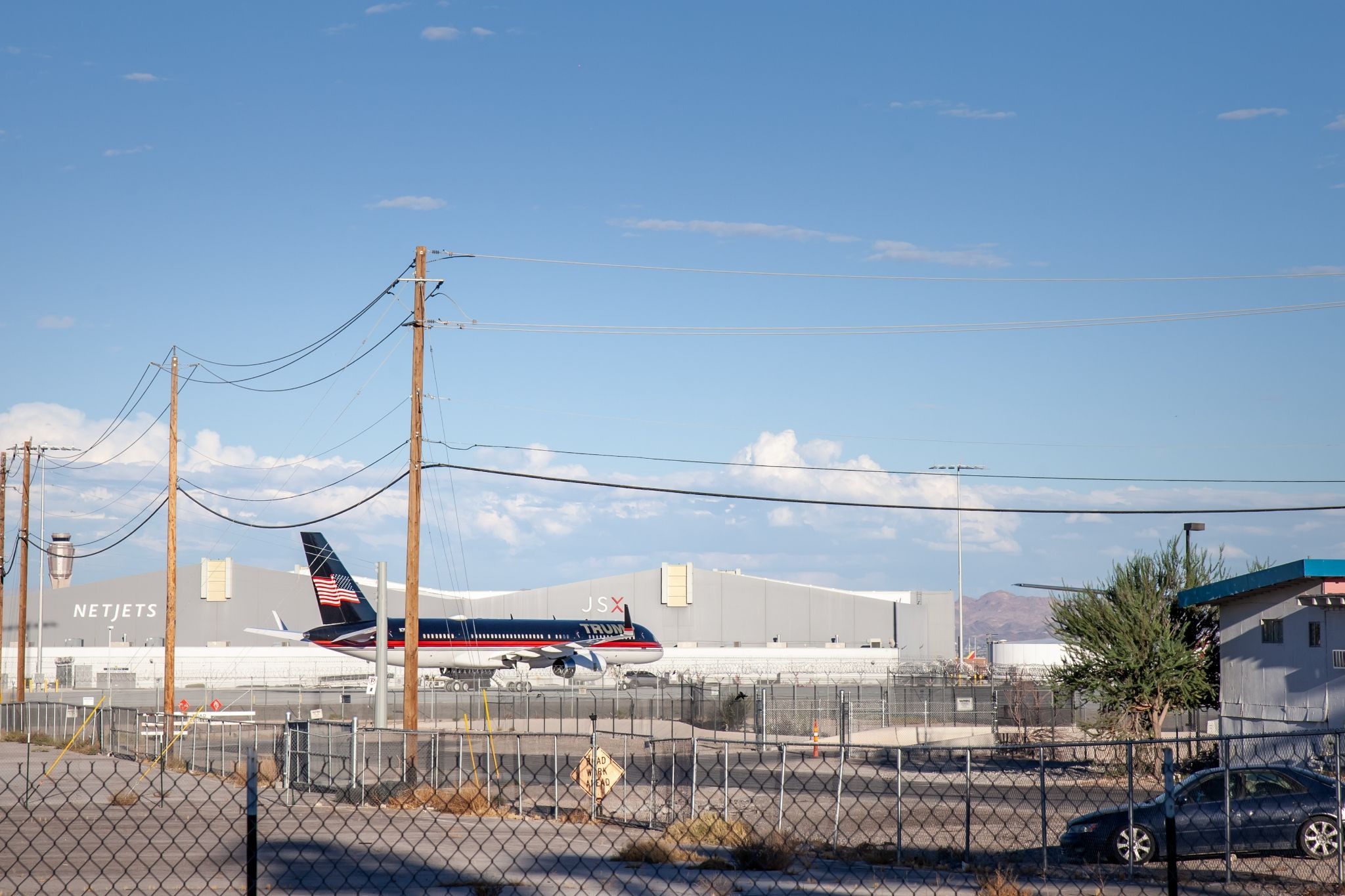
The Palm Beach airport will be renamed under the law as President Donald J. Trump International Airport awaiting FAA approval and signing of an agreement with Trump that would enable the airport to use the name at no expense. The main residence of Trump is Palm Beach, which gives at least a geographical justification of the relationship despite the mechanics of how the renaming occurred are currently receiving scrutiny on multiple aspects.
The conflict of law is as follows: Palm Beach County owns and runs Palm Beach International Airport. It is owned by the county, constructed and operated with local materials, and under local control. The Florida law has long empowered local governments to purchase, build, run and maintain airports. The intervention by the state to require the county to rebrand a facility that will require actual costs on signage, operational changes, documentation changes and the likes is a significant claim of state power over local infrastructure.
What the Suing in fact Asserts
The plaintiff is a licensed pilot, and he frequently flies in Palm Beach County airspace. His case revolves around a variety of objections: that the law is unconstitutional because it is intruding on local control of the airports, that the state has no interest in dictating the manner of identification of a county-owned facility, and that the operational alterations that the enforced renaming generates cause confusion and burdens to users of the airspace. Interesting arguments in theory. In practice, the lawsuit faces some significant headwinds.
The most immediate challenge is likely to be the standing question. The pilot is a personal person who does not own, run or have legal accountability of the airport. He is not under some responsibility to redesign signage or rewrite documentation on how it works. His assertion on the airspace confusion is hypothetical and not factual the courts usually demand a more direct and tangible injury to develop standing and this may create confusion in the future seldom cuts that bar.
The bigger constitutional issue of local versus state power is also a steep climb under Florida law. The state of Florida gives charter counties the powers of local self-government, but specifically provides that this power is limited to the extent that it is not incompatible with general law. The municipalities and counties of Florida are, after all, creatures of the state, and have no independent sovereignty, and the legislature may preempt the local decision making when it wishes to do so. No that is not a loophole, that is one of the principles of the government structure of Florida.
The Best Case in Favor of Renaming and Who is Capable of Making the Case
Where there is a legal point to be noted, it is one that the private pilot is unlikely to have a standing to bring: whether HB 9199 is an inappropriate special local law.
The constitution of Florida usually does not allow the legislature to enact special laws which apply to one locality, when a general law can serve the same purpose. Renaming act actually asserts jurisdiction over a category of airports large commercial service airports but in the real sense, one facility is targeted by one action. The difference between the scope of what was declared and its real impact might be the foundation of a substantial constitutional challenge.
The hitch is that such argument would be most likely brought up by Palm Beach County itself rather than by a private pilot with muted ties to the conflict. In case the county chose to bring a legal challenge based on such grounds, the case can appear much more viable. To date, the county has not done that and the private lawsuit is not likely to last long enough to get to that question.
The Bigger Picture: Shall we Be Calling Airports after Politicians?
With the legal mechanics aside, there is a broader debate to be had here regarding the tradition of giving major public infrastructure the names of political figures especially current or recent officeholders.
It is not unique to have airports that were named after former presidents. Ronald Reagan Washington National Airport, John F. Kennedy International Airport, and George Bush Intercontinental Airport are all named after presidents, but the majority of these renamings occurred decades or years after these presidents had left office. The time factor is significant because there is a significant distinction between commemorating history and putting the name of a sitting president on a work of public infrastructure when he is still in political authority.
The trend of giving airports the names of politicians more generally has a chequered history in regards to popular acceptance:
- When Harry Reid International Airport in Las Vegas was renamed, the Nevada legislature renaming McCarran International in 2021, it faced much criticism and many locals and travelers still address it by the former name years later.
- The Hartsfield-Jackson Atlanta International Airport also sparked controversy when the Jackson addition was added in 2003 and those who opposed the renaming claimed that the renaming was too soon and politically motivated.
- The presidential center talks on Obama in Chicago that brought up the issue of the public infrastructure brought in to discussion the timing and mode of awarding such honors.
The Palm Beach case falls right into this trend. Whether Trump should be recognized is a matter that reasonable people can disagree on but whether the process was right is a matter that people on either side of the political spectrum should be worried about and whether the state legislature, in its intervention, has established a precedent that people should be worried about.
A Working Concern that No one should Rule Out.
There is a logistical back story to this tale which is getting less attention than it deserves: should Palm Beach International be renamed Trump International, and any future attempt to rename Washington Dulles International Airport with the same name a possibility that has served in the political discourse, there would be two airports in the same country with the same name.
That is no small thing. Airport names and codes constitute utility infrastructure. Airport identification requires clear and unambiguous identification of passengers, airlines, booking systems, baggage handling operations and air traffic control. To some extent there is redundancy in the three-letter IATA code system, although the confusion that will be created by having two Trump International airports, one in Florida, and one in Virginia, both serving major metropolitan centers, is the kind of administrative nightmare that would fall on the traveler, airline and airport employees as opposed to the politicians who created it. The Palm Beach renaming, should it happen, hopefully becomes the specified end of said conversation about naming.
The Bottom Line
The state legislative power has been employed by Florida to rename the Palm Beach international Airport to honor President Trump effective July 1, 2026, should FAA approve. One has filed a lawsuit to put a halt to it, but that case has gone through significant challenges most notably in terms of standing and the long-standing tradition, which states that local governments in Florida are run at the will of the state law, and not in opposition to it.
The more appealing legal case that this is simply a special local statute in the guise of a general law is probably not one which this plaintiff can effectively prosecute. The decision to make that case directly is another question altogether to Palm Beach County.
You may feel what you like about the politics of it, but the renaming of major public airports after serving politicians is something to be questioned as a matter of principle rather than due to the identity of the honoured person, simply because public infrastructure is the property of all.
DISCOVER THE RIGHT CARD FOR YOU.
Explore our card recommendations and find a credit card that suits your personal needs.
Browse card categories
%20(1).jpg)
.svg)