.svg)

FlyDubai's Mammoth Aircraft Expansion: What Does It Mean for the Future of Gulf Aviation?
.jpg)
%20(1).svg)
A region of the world which already is ultra-competitive on the aviation scene is about to be reshaken. FlyDubai, long considered a small and lean airline, now prepares for a quantum leap. In two days, the carrier announced its first intentions with one massive aircraft commitment with the Airbus A321neo family, then followed up on another with the Boeing 737 MAX series.
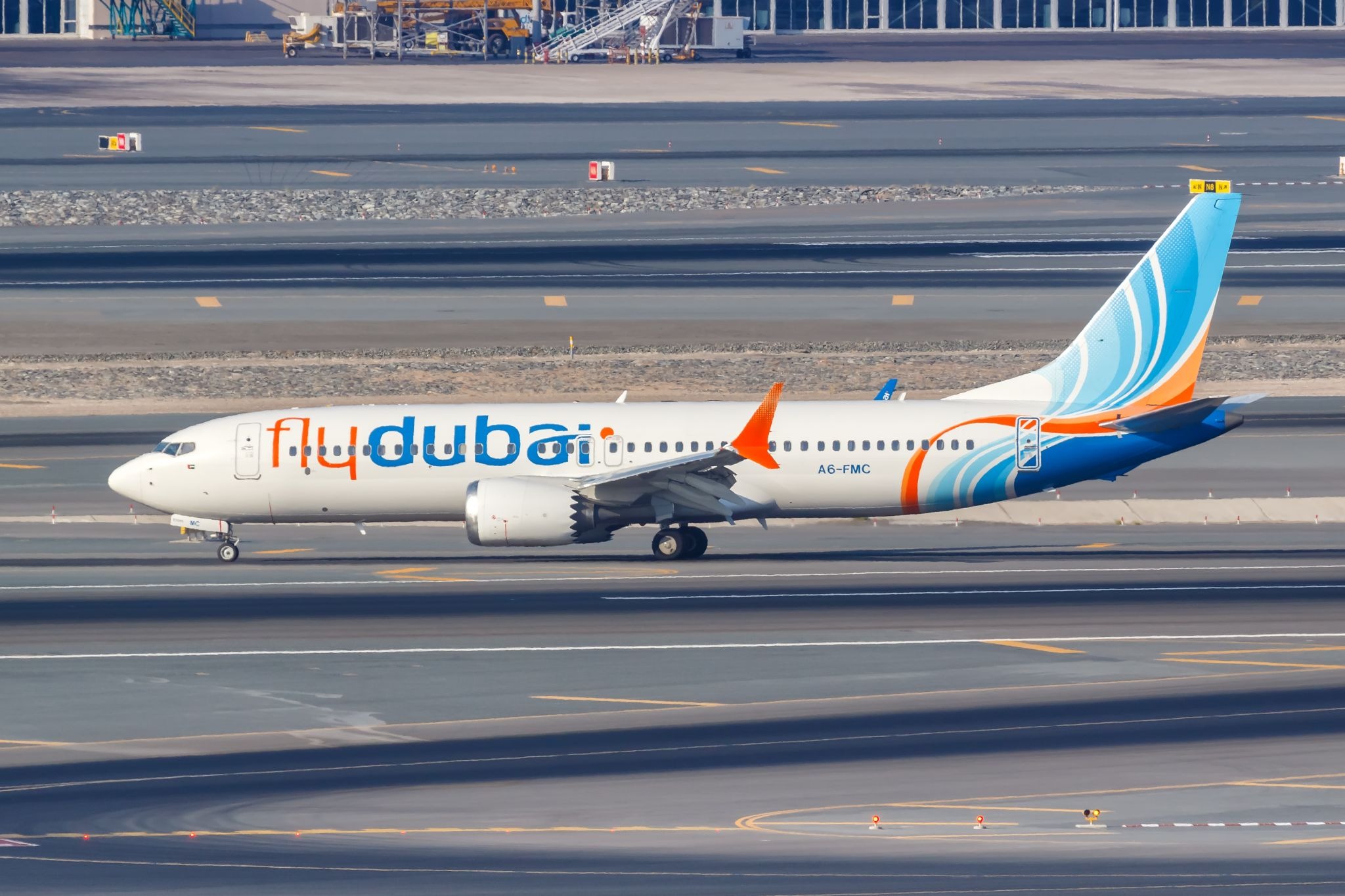
These announcements raise an important question-how big does FlyDubai want to get, and what is its real expansion strategy?
To understand the implications, one has to unpack the numbers, the business logic, and the larger competitive environment in which Dubai's aviation ecosystem sits.
A Bold New Phase: FlyDubai's Fresh Boeing 737 MAX Commitments
FlyDubai announced the signing of a Memorandum of Understanding with Boeing for up to 150 more 737 MAXs. Plans include a commitment for 75 jets with options for 75 more. Though exact breakdown among the MAX 8, MAX 9, and MAX 10 models has not been finalized, the scale alone is striking.
The leadership of the airline positioned this move as one that was forward-thinking and rooted in preparations for increasing volumes of travel and long-term regional demand. Everything remains undisclosed, except the details relative to delivery schedules, but one implication couldn't be any clearer: FlyDubai doesn't just want to grow; it wants dominance.
This represents a dramatic evolution for an airline that began life as a value-focused, single-aisle operator.
The Numbers Tell the Real Story: A Fleet Set to Multiply
Today, FlyDubai operates around 100 aircraft, the majority Boeing 737-800 and 737 MAX family variants. Before this week’s announcements, the carrier already had 118 MAX aircraft in its pipeline for delivery. Add to that last year's order for 30 Boeing 787-9 Dreamliners - FlyDubai's first foray into long-haul, wide-body flying - and the transformation is all the more remarkable.
Now, combine all this with:
- 115 firm orders for Airbus A321neos
- 35 A321neo purchase options
- 75 planned firm Boeing 737 MAX orders
- 75 optional MAX aircraft
Adding it all up, FlyDubai will grow to nearly 440 aircraft-more than four times its current size.
To put that in perspective, several long-established national carriers around the world do not operate even 100 planes. FlyDubai is planning a fleet larger than most global airlines.
This is not an incremental growth plan; this is an aviation moonshot.
What's Fuelling This Ambition?
A number of key contextual factors frame FlyDubai's aggressive expansion:
1. The Middle East will remain a high-growth aviation market.
According to Boeing's latest commercial market outlook, regional demand for narrow-body planes is set to more than double over the next two decades. While such forecasts naturally support Boeing's business narrative, there is similar optimism among many carriers in this region-particularly those from the UAE and Saudi Arabia.
In other words, the leadership of FlyDubai most probably sees a window of opportunity and is on the move before the competitors do.
2. Dubai's Long-Term Airport Strategy
Dubai World Central will continue to be the main priority for Emirates and FlyDubai in the following decade due to its designation as the city's "future mega-airport ".
A larger, more flexible airport requires a larger, more flexible fleet.
Yet expanding now enables FlyDubai to position itself for that transition.
3. A Changing Relationship With Emirates
For many years, Emirates and FlyDubai have operated in what many describe as a "complementary partnership": Emirates handles the longhaul routes with wide-bodies, while FlyDubai covers those routes which are better suited for narrow-body operations-destinations with limited runway capacity or lower passenger volumes.
But with FlyDubai now adding long-range narrow-bodies and wide-body 787-9s, the demarcation between the two networks could begin to blur. If both carriers eventually move to DWC, the pressure to redefine their roles—or even consolidate—will be greater.
Could FlyDubai Grow Too Fast?
Ambitious growth is not a risk that is endogenous in nature, but quadrupling fleet size does bring in a number of strategic questions that onlookers are starting to raise:
1. Intersecting Networks
Internal competition may well become a valid concern should FlyDubai start flying to traditionally Emirates-dominated markets. While both carriers are government-owned, there is likely to be inefficiency in their overlapping operations.
2. Premium vs. Value Positioning
FlyDubai is no longer, by any stretch of the imagination, a low-cost carrier. Pricing increasingly matches Emirates, at least on routes where they overlap. The challenge is in their branding:
What would be unique about FlyDubai if it expands into as large a network as Emirates?
3. Operational Pressures
Apart from purchasing airplanes, operating a fleet of approximately 440 aircraft involves the following:
- Expanded pilot recruitment
- Improved maintenance capacity
- more crew training
- additional hangar facilities
- more sophisticated scheduling systems
That's a huge organizational shift.
4. Stability in Demand
Decade-spanning fleet plans can potentially be disrupted by:
- geopolitical instability
- economic downturns
- Variable oil prices
- global travel disruptions
The Middle East aviation sector has weathered such shocks before but massive expansion locks FlyDubai into long-term commitments that may not be easy to unwind.
The future could be: Dubai-One Mega Airline?
A merger between Emirates and FlyDubai has long been speculated in the industry. It would achieve the following:
- create one of the largest airline networks in the world
- eliminate route duplication
- streamline fleet operations
Improve Dubai's status as an international transit area.
If that occurred around the time Dubai World Central opened as an integrated aviation hub for the city, it would make a strategic sense in terms of timing.
Without any formal statements regarding an imminent merger, the huge aircraft commitments of FlyDubai make the idea more plausible than ever.
What it means for travelers
Benefits brought about by the FlyDubai expansion include:
More Destination Choices
New planes open up dozens of new destinations, especially the underserved markets of Asia, Africa, and Eastern Europe.
More Frequent Flights
Larger fleets also allow airlines to increase frequencies on routes in high demand, thus giving more flexible options to travellers.
Modern, fuel-efficient aircraft
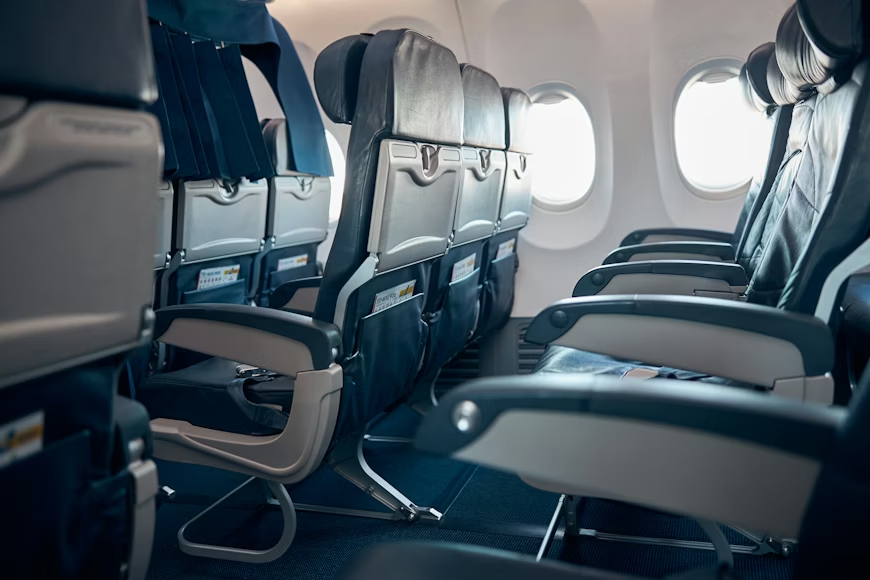
A321neo, 737 MAX, and 787-9 have been firm favorites because:
- Improved cabin comfort reduced
- noise better fuel efficiency
- Extended range
This will improve the flying experience without compromising on reasonable fares.
Improved Middle East Hub Connectivity Its role as an international connecting hub is bound to expand further, making multi-city itineraries easier and more accessible.

Conclusion
FlyDubai's plan to acquire up to 150 new Boeing 737 MAX aircraft, on top of a major Airbus A321neo commitment, ranks among the most ambitious expansion plans in the global airline industry today. If every order and option materializes, the airline could operate a fleet approaching 440 aircraft-a scale once unimaginable for a carrier that began with a modest low-cost model.
DISCOVER THE RIGHT CARD FOR YOU.
Explore our card recommendations and find a credit card that suits your personal needs.
Browse card categories
%20(1).jpg)
.svg)