.svg)

Iberia Faces Backlash After Airfare Spikes Following Fatal Spanish Train Accident
.jpg)
%20(1).svg)
Following the tragic high-speed train crash in southern Spain, Spain’s national airline, Iberia, has been under intense public scrutiny. Passengers affected by the train disruption accused the airline of significantly raising airfares at a time when thousands of people were desperately looking for alternative transport between Madrid and major Andalusian cities such as Málaga and Seville.
Although Iberia claims that the problem of pricing irregularities was caused by automated systems reacting to sudden demand, the issue has brought back debates on dynamic pricing, the ethics of airlines in times of crisis, and the boundaries of algorithm-driven pricing management.
A Tragic Rail Disaster Shakes Southern Spain
Late Sunday evening, a disaster accident occurred on one of the busiest high-speed routes in Spain. At least 39 people died, and dozens more were injured when two trains derailed after a violent collision near the town of Adamuz, in the province of Córdoba.
Preliminary reports indicate that the rear carriage of a high-speed train running for the private rail operator Iryo derailed and made its way onto a neighboring track. This was quickly followed by a collision between a train traveling in the opposite direction, which was running for the state-owned operator Renfe, and the overturned carriage.
The emergency services mobilized a massive effort, with rescue teams working throughout the night to extract the survivors. Hospitals in the region were put on high alert as injured passengers were rushed for medical attention.
As the authorities began to assess the damage, officials called for the immediate halt of all high-speed train services linking Madrid with other major cities in Andalusia. The affected cities included Córdoba, Málaga, Seville, Granada, Cádiz, Huelva, Algeciras, and other neighboring provinces.
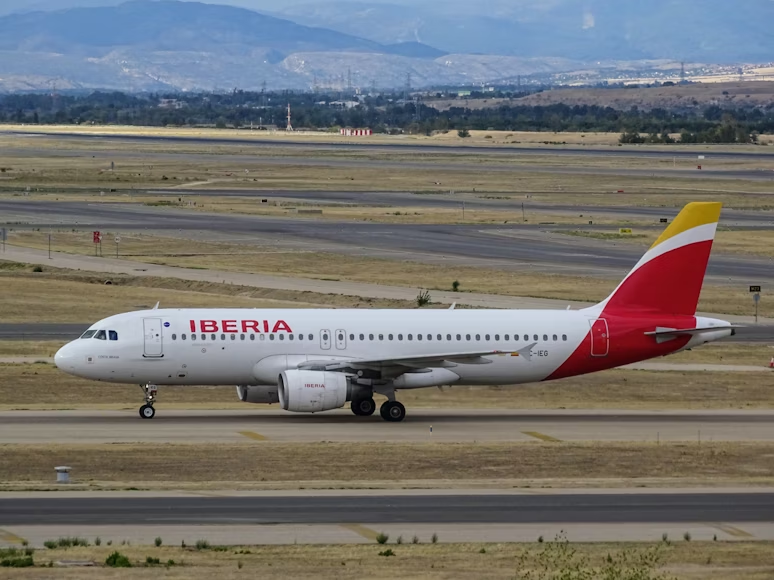
Iberia Reacts with Condolences and Increased Capacity
Only a few hours after the crash, Iberia released a public statement expressing its condolences to those who were affected by the tragedy.
The airline stated that it had “extended its deepest condolences to the families and loved ones of the victims” and wished “a swift and complete recovery” to the injured passengers.
However, Iberia and other airlines were quick to respond to the needs of displaced train passengers. With thousands of people no longer able to travel by train, the only alternative was air travel between Madrid and southern Spain.
Iberia, together with its short-haul carrier Iberia Express, announced the introduction of hundreds of additional seats on affected routes. The airline operated eight additional daily flights between Madrid and Malaga, which highlights the extent of the disruption.
Another competitor, Air Europa, also increased capacity, and combined, the two carriers added almost 1,900 extra seats to meet the rise in demand.
Passengers Cry Foul Over Sudden Fare Hikes
However, despite the increased capacity, anger quickly erupted on social media sites. Passengers reported that prices on major routes had skyrocketed just after the train services were suspended.
Some travelers reported that air prices between Madrid and Málaga had increased by as much as 200%, with one-way tickets costing as much as €300.
“You call this solidarity?” a frustrated passenger wrote on X. “Flights to Málaga and Seville now cost €300.”
Only hours before the crash, similar flights on the same routes had been available for €150 or less, according to screenshots shared on the internet. The timing of the price increases added to the perception that the airline was profiteering from a crisis.
Adding to the problem was the fact that Madrid was also hosting a large tourism and business convention at the same time, which further reduced availability and increased demand for all forms of transport.
The Role of Airline Pricing Algorithms
Although emotions were running high, industry insiders had a less ominous, but still contentious, explanation for the price hikes: automated revenue management systems.
Contemporary airlines are heavily dependent on dynamic pricing algorithms that adjust prices in real-time according to market demand and available seating capacity. When thousands of train passengers searched for flights at the same time, it is likely that Iberia's algorithm picked up this trend as normal market demand and accordingly raised prices.
In such scenarios, the changes in the pricing take place automatically without any human interaction, and this happens in a matter of minutes. Although such systems are optimal in terms of revenue generation, they can be controversial in the case of an emergency.
To its credit, it seems that Iberia has intervened once the backlash was apparent. By Monday, fares on affected routes had fallen considerably, indicating that the airline had overridden its pricing algorithms manually.
Prices Return to More Reasonable Levels
One-way prices between Madrid and Málaga were quoted at around €136 by Tuesday, while prices dropped further to €108 on Wednesday and Thursday.
Flights in the other direction also became stable, with tickets costing €128 on Tuesday and then reducing to approximately €100 for the rest of the week.
These adjusted fares were more or less in line with, or slightly lower than, the price of high-speed rail tickets on the same routes, suggesting a return to more normal pricing levels.
For many tourists, the price correction was a welcome relief. But critics said that the harm was already done, and trust had been undermined at a time when passengers needed compassion, not surge pricing.
What This Means for Travelers
For passengers, this is a wake-up call to act fast and consider a variety of booking alternatives during large-scale disruptions. Keeping a close eye on prices, searching a variety of carriers, and being flexible with dates of travel can go a long way in keeping prices low when demand spikes unexpectedly.
It also highlights the need for transparency. Transparency in communication from the airlines regarding their pricing policies during emergencies could help reduce frustration and restore trust.
Final Takeaway:
The reaction of Iberia to the train disaster in Andalusia is indicative of the strengths and weaknesses of airline operations in the modern era. Although the airline was quick to increase capacity and then adjust fares downward, the rapid increase in prices at first left many passengers feeling exploited during a difficult time. It seems that the events were fueled by automated pricing systems, as opposed to attempts to make a profit.
However, the reaction to the situation emphasizes the importance of human intervention on the part of airlines during extraordinary events that affect basic transportation routes. As travel systems become more and more interconnected and automated, the question that arises from incidents such as this is: When technology responds faster than empathy, who is there to restore balance?
DISCOVER THE RIGHT CARD FOR YOU.
Explore our card recommendations and find a credit card that suits your personal needs.
Browse card categories
%20(1).jpg)
.svg)