.svg)

KLM Resumes Flights to Tel Aviv Gradually after sudden suspension in Middle East
.jpg)
%20(1).svg)
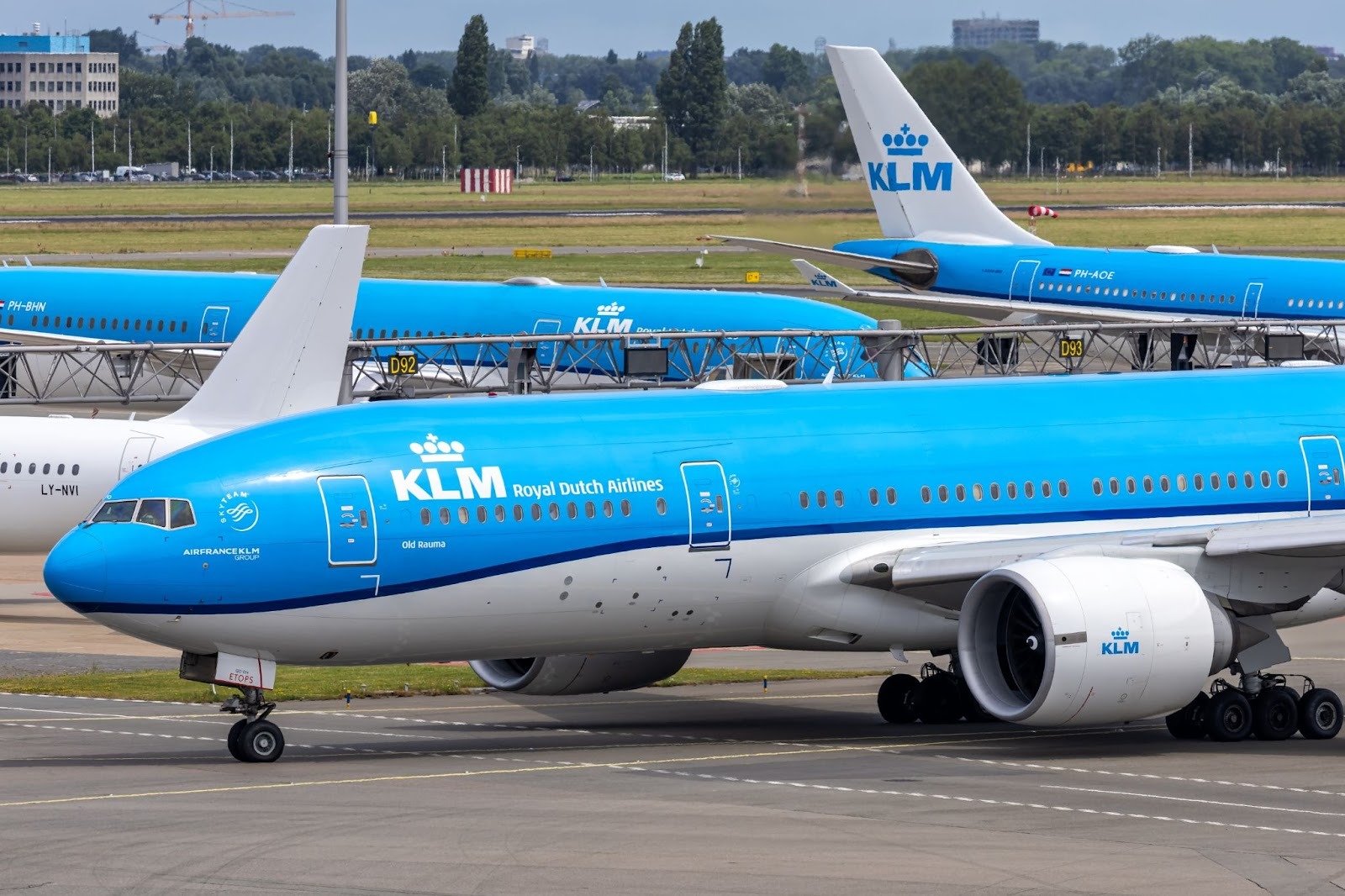
Following an unwarranted and blanket-like suspension of flights in critical Middle East destinations, KLM Royal Dutch Airlines is ready to regain flights between Amsterdam and Tel Aviv. The move is a cautious step in reinstating one of the busiest routes in the region later after the security concerns increased and the airline had to stop its operations with minimal notice.
Having flights resume in a plan that starts Wednesday is accompanied by adjustments in the operations, so that the risk posed to both passengers and crew is minimized. Whereas KLM is gradually opening a few routes, other ones are grounded as the airline keeps eyeing the stability of the region.
Cancellation of flights abruptly brings about confusion and disruption
On Friday afternoon KLM suddenly canceled flights to Israel, Saudi Arabia and the United Arab Emirates because of rising tensions in the geopolitical situation. The news was surprising to many passengers who nearly jumped to get information as flights were canceled almost instantly.
The airline claims that the move was motivated by the fact that the security situation in the sections of the Middle East has the potential to worsen very rapidly. Although KLM made no allusions to a particular threat, the uncertainty that affected the region in general, especially in reference to Iran, made the carrier adopt a conservative attitude.
The direct ban impacted on leisure travelers, business fliers, and transit customers using the Schiphol Airport in Amsterdam. Lots of rebooking delays were reported to be adding to the stress of an already anxious travel time.
A Precise Recovery: Flights are Resumed, But with Limits
KLM reported on the weekend that it was busy evaluating how and when it would be able to safely resume its operation. Tuesday, the airline had been already operating flights back to Dammam and Riyadh in Saudi Arabia, indicating that a gradual recovery was in the offing. According to industry observers, it is possible that the geographical distance of Saudi Arabia and Iran could contribute to KLM deciding to start service there first.
Although the airline did not explicitly describe its risk evaluation, the action indicated a higher level of confidence when it comes to operating in Saudi airspace under the existing circumstances. Emboldened by these reports, KLM affirmed that it will also restart flights to Tel Aviv on Wednesday, albeit with some major modifications to the manner in which the route was conducted.
Adjusted Tel Aviv Operations An attempt to minimize crew exposure
The route between Amsterdam and Tel Aviv operated by KLM will now operate under a different revised operational structure that will aim at removing the overnight stays of crew in Israel. The service will remain with a Boeing 737 to the airline with the outbound being a non-stop trip as normal.
The contrast occurs in the back trip. The plane will not go directly back to Amsterdam but will have a short technical stop in Cyprus. At this point in time, the aircraft will receive fuel and a whole different crew of the flight will have to replace the previous crew to complete the journey.
This will enable KLM to swap pilots and cabin crew and not have to spend the night in Tel Aviv. This is being seen by the airline authorities as a safety measure in case a situation arises where the situation in the region develops unpredictably.
The Crew Rotation Strategy works
According to the revised scheme, a single flight between Amsterdam and Tel Aviv is made by one crew. Upon landing they take on passengers in the return part however fly only up to Cyprus. At that point, the crew of that boat jumps off and another crew is employed to manage the remaining part to the Netherlands. Although the added stop would cost more time to travel, the strategy would considerably reduce the exposure of the airline-staff.
It also enables KLM to remain operating on a key destination but still remain flexible in case there is a need to change swiftly based on the conditions on the ground. This kind of operation is not rare at the time of instability. Technical stops and crew swaps are frequently used as a way of keeping the service on, with a view of reducing risk to the minimum.
Other airline companies are implementing the same type of safety measures
KLM is not the only company to change its operations in Israel. The same model has been used in the past by British Airways in returning to flights to Tel Aviv, as well as not overnighting crew members. Lufthansa Group has chosen another but no less careful direction.
Instead of using stopovers, Lufthansa does the flights between Tel Aviv as a turnaround flight. In such an arrangement, the crews will be on board the plane throughout the stop and disembark only after the plane goes home with them.
These measures are indicative of a larger industry trend: airlines are becoming more comfortable with the trade-off of operational complexity in favor of increased safety and crew protection.
The Dubai Flights Still Suspended Temporarily.
Although KLM has already progressed to reestablish a few of its routes to the Middle East, its flights to Dubai are still canceled. The airline has affirmed that it is in the process of making decisions it believes it can safely resume service but has not given a time frame. Aircraft type is one of the challenges.
Dubai flights have been normally served by widebody aircrafts which accommodate more passengers and have more flight attendants. The idea of organizing crew shifts on these types of aircraft is a lot more complicated than the case of small jets such as Boeing 737.
Also, the identification of appropriate points to have technical stops that would accommodate wide body aircrafts, refueling, and crew changes is another complication. Consequently, KLM seems less convinced to adopt a workaround to Dubai in the same manner that they have adopted to Tel Aviv.
Balancing Safety, Operations, and Customer Trust
KLM’s gradual return to Middle Eastern routes underscores the delicate balance airlines must strike during periods of geopolitical uncertainty. Safety remains the top priority, but operational decisions also carry significant consequences for customer confidence and brand reputation.
By reintroducing flights with modified procedures, KLM is signaling its willingness to adapt rather than withdraw entirely.
However, the airline’s experience also highlights the importance of clear communication and robust contingency planning when disruptions occur with little notice. As the situation in the region continues to evolve, travelers flying with KLM to destinations like Tel Aviv should expect ongoing flexibility and possibly further changes as the airline responds to real-time developments.
Final Thoughts
KLM’s return to Tel Aviv represents a cautious step forward amid ongoing regional tensions. Through creative operational solutions such as crew rotations and technical stopovers, the airline is attempting to maintain connectivity while minimizing risk.
Whether additional routes like Dubai will follow remains uncertain. For now, passengers are advised to stay informed, monitor flight updates closely, and understand their rights when traveling during periods of heightened geopolitical sensitivity.
DISCOVER THE RIGHT CARD FOR YOU.
Explore our card recommendations and find a credit card that suits your personal needs.
Browse card categories
%20(1).jpg)
.svg)