.svg)

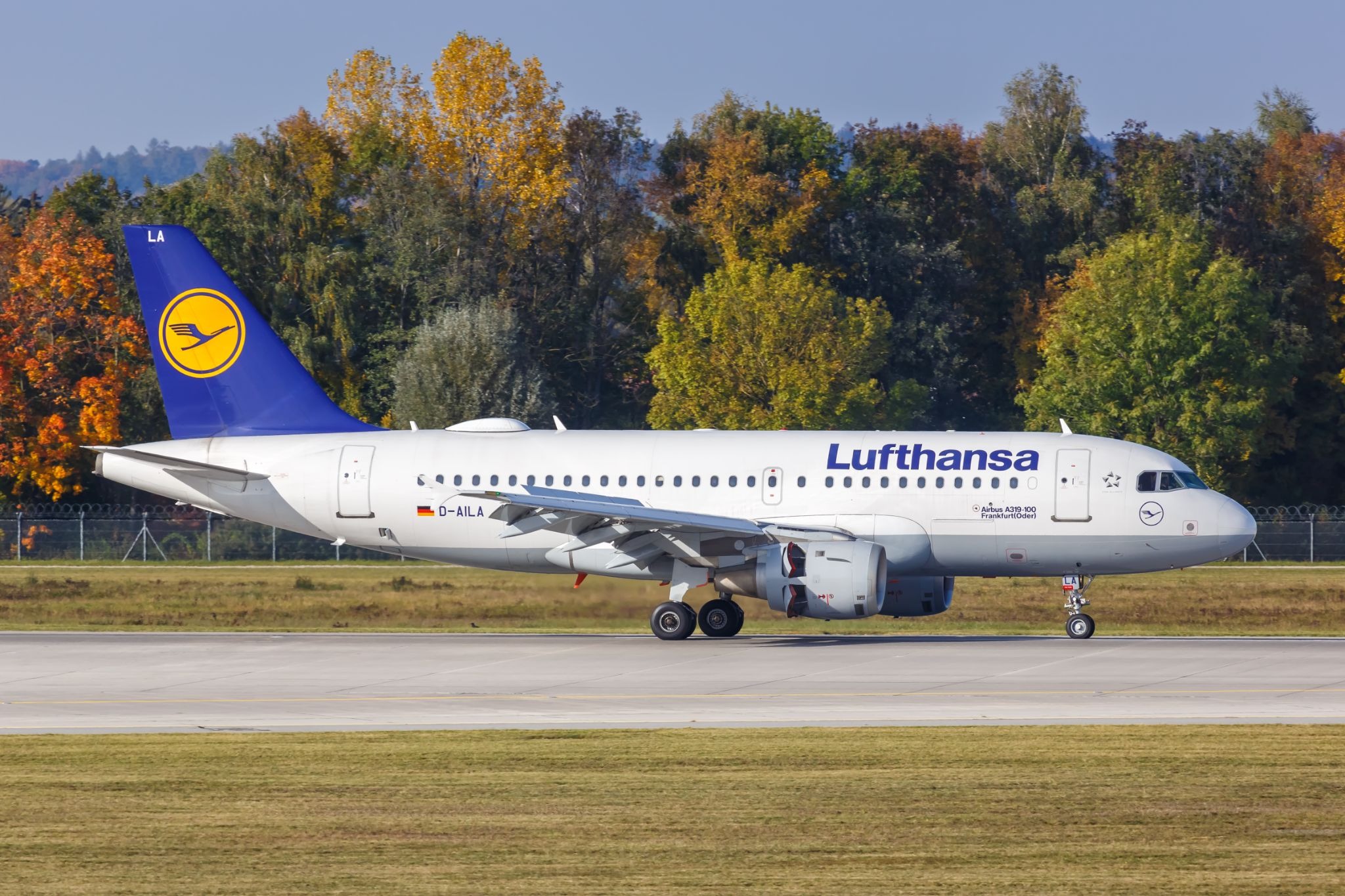
Lufthansa Faces Continuous Pilot and Flight Attendant Strikes
.jpg)
%20(1).svg)
Bad weeks come, and there are weeks when your airline is struck three times in a row, closes down the business five days in a row and is protested at its own 100th anniversary party all at once.
That is where Lufthansa is currently. The flagship carrier of Germany is currently caught in the middle of one of the most tempestuous labor conflicts in its history, and the timing of it could not be any more painfully ironic.
Three Strikes, Five Days, One Grounded Airline
We had better give the very order of things, which is almost incredible.
On April 13 and 14, the second time in recent weeks, Lufthansa pilots went on strike, following a strike on March 12 and 13. Prior to that upheaval completely subsiding, Lufthansa flight attendants went on strike on April 15 and 16, the same move after another had been undertaken on April 10. Then, nearly without explanation, Lufthansa pilots declared that they would resume striking on April 16 and 17, i.e. on Thursday, which implies that both groups were simultaneously striking, effectively adding a third strike to an operation that had already been grounded.
The conclusion: Lufthansa is mostly closed over five days, flights cancelled over six days within a eight days range. Nearly all of the flights out of Germany have been canceled, with thousands of passengers scurrying to change their reservations or drop their travel plans altogether.
The central issues revolve around wage, pensions and working conditions - the common grounds of airline labor negotiations - and both parties seem to be nowhere near an agreement. The representatives of pilots have suggested a way forward to binding arbitration. The management turned down the offer.
The Unions Are Not Holding Back
The language of the representatives of labor has been acute and to the point. The flight attendant union bargaining expert referred to the situation as being with an employer who has chosen to take a hardline stance yet persistently declaring his willingness to negotiate any time. It's the type of hypocrisy saying publicly that you are open to dialogue and denying any movement at the table that is likely to entrench stances instead of mellowing them.

The pilot union representative presented the conflict in wider context and said that it is about sustainable solutions and not a power struggle and that the negotiations are in a deadlock. The word deadlocked is working hard here, as it implies that neither party is optimistic or soon hopes that a resolution is forthcoming.
On its part, the Lufthansa management has described the demands of employees as being ridiculous and impossible to pay and recalled to stakeholders that with every strike, the concerned airline is becoming smaller. The latter is technically accurate but tactically tone-deaf, to inform your striking workforce that there is damage to the company is hardly going to help them to go back to the bargaining table in good faith.
A 100th Anniversary Review That Is Not Going to be Remembered with a Good Listening
It is here that the tale gets a twist, frustrating to almost surreal. It is also the 100th anniversary of Lufthansa this week - an occasion which the airline was going to celebrate with much pomp including the German Chancellor Friedrich Merz attending the event.
Rather, the centennial celebration is unfolding against the backdrop of an entirely grounded operation, canceled flights throughout Germany and employees protesting the anniversary event in the streets. The intention had been expressed by a union representative: when management and federal politicians are sitting down to celebrate a hundred years of Lufthansa, workers are planning to make visible under what conditions the employees work - and on whose backs decisions are being made now.
It is indeed hard to envision a more unsightly lens to a flagship national carrier on what should be a milestone moment. One hundred years of airline history, when a single company was too much bogged down in labor warfare to move a single aircraft.
A Trend That Makes a Comeback Years
The situation is particularly frustrating to those who have been following the airline industry because it is not new. This is the same cycle Lufthansa has gone through - negotiations are frozen, strikes are called, flights are cancelled, the passengers have been hurt, the management has been saying that they are not making demands that are sustainable, the unions have been saying that they have been acting out of bad faith - all this has happened over the last decade.
The comparison with other European airlines is educative. Air France, with a history of its own dysfunctional labor relations, has actually made significant progress in its management-union relationship in the past few years by both the implementation of structural reforms and an actual change in the way leadership views the negotiating relationship. It did not occur in a single day, but it occurred - and the outcome is a carrier which can concentrate its energies on air travel, instead of dealing with rolling work stoppages.
The management at Lufthansa apparently has failed to make the same lessons. The most notable thing is that it is Lufthansa, the mainline carrier but not the group as a whole, that is said to be the least profitable airline in the Lufthansa Group. The management has made it clear to the employees that the airline is unprofitable enough not to invest in new aircraft.
But the same group is also centralising management activities in Frankfurt, and the subsidiaries with greater margins, such as Swiss and Austrian, are getting drawn closer to the parent with lower margin. That organizational decision is tough to reason, and it is easy to see why employees struggle to accept the austerity message when management makes those types of structural decisions.
Who Actually Loses Here
The honest answer is everyone but the losses aren't distributed equally.
Passengers bear the most immediate pain. Thousands of travelers with carefully planned itineraries, connecting flights, hotel reservations, and event commitments are being told their flights don't exist this week. The disruption ripples outward missed connections, stranded families, business travelers who can't reach meetings, tourists who lose nonrefundable bookings at their destinations.
Lufthansa employees are also losing, in the less obvious sense that every day the airline is grounded is a day of revenue that never comes back. Strikes are a costly negotiating tool even when they're the right one to use and the cumulative financial impact of six strike days in eight weeks is not trivial for an airline already operating on thin margins.
And Lufthansa as an institution loses something less quantifiable but potentially more lasting: passenger trust and brand reputation. Every traveler who misses a flight this week is a traveler who will think twice about booking Lufthansa for their next trip.
Final Thought
Lufthansa's 100th anniversary should have been a celebration of a century of connecting Germany to the world. Instead, it's become an uncomfortable spotlight on a management culture that has never quite solved its most persistent problem: the relationship between leadership and the people who actually fly the planes.
Labor disputes are a normal part of the airline business no carrier operates for a century without friction at the negotiating table. But there's a meaningful difference between isolated contract disagreements and a chronic, recurring pattern of breakdowns that shut down operations repeatedly across multiple years. Lufthansa has crossed from the former into the latter, and until management genuinely reckons with why that keeps happening rather than characterizing every union demand as absurd the cycle is likely to continue.
The binding arbitration proposal from the pilot union was a reasonable off-ramp. Rejecting it without a credible alternative suggests management either doesn't want a quick resolution or doesn't understand the cost of not having one. Either way, it's the passengers and the airline's long-term reputation that pay the price and that's a poor way to start a second century.
DISCOVER THE RIGHT CARD FOR YOU.
Explore our card recommendations and find a credit card that suits your personal needs.
Browse card categories
%20(1).jpg)
.svg)