.svg)

Spirit Airlines Wants a Government Bailout Here's Why That's a Problem on Multiple Levels
.jpg)
%20(1).svg)
When a bankrupt company is requesting taxpayers to pay the bill to keep them afloat, it is worth questioning some tough questions on whether it is a good use of tax money and even whether it is legally allowed.
According to The Air Current, Spirit Airlines is claiming hundreds of millions of dollars in emergency government bailouts to prevent liquidation, which it has allegedly requested with the Trump Administration. Secretary of Transportation, Sean Duffy, is reported to be holding a meeting with the executives of various low-cost carriers in a few days, at the request of the Department. The optics is in itself remarkable. However, there are legal, financial and competitive consequences of what Spirit is requesting that are worth considering.
The Government Has Bailed out Airline companies in the past but the situation was quite different
In fairness, the federal intervention in the airline industry is not a first. Two important historical examples that are worth being acquainted with before ruling out the concept or accepting it are worth considering.
Following the September 11 attacks, the Congress enacted the Air Transportation Safety and System Stabilization Act that allocated 4.6 billion dollars to over 400 air carriers in the United States and created the Air Transportation Stabilization Board, which guaranteed loans to air carriers such as America West, US Airways and Frontier. This was a catastrophic shock that was sudden, external and could not be anticipated or hedged by any airline.
In the case of COVID-19, the stakes were even greater. The CARES Act and later relief packages provided U.S. airlines with direct grants amounting to $54 billion and subsidized loans amounting to 25 billion dollars - tax relief and other contractor assistance. Spirit itself was given a direct payment of taxpayer funds of $754 million in the process. Once again, the reason was an unprecedented external crisis which effectively closed global air travel through no fault of any single carrier.
The significant difference between those times and the present circumstance of Spirit is as follows: Spirit is not grappling due to an unexpected disastrous event. It is not doing well since it lacks a viable business model, has not been able to find a working way out with two separate bankruptcy filings and has not been able to attract any form of private investment to risk its future. It is a whole different story.
The Lawful Way to a Bailout Is Essentially non-existent
Even leaving the issue of whether a bailout is a good policy or not, whether it is legally feasible or not is a question that is actually hard to answer in favor of Spirit.
The issue here is as follows:
The Department of Transportation lacks a mechanism to provide huge subsidies to one airline. The tools it offers, such as the Essential Air Service program, the Small Community Air Service Development Program, War Risk insurance, and airport incentive programs are all limited in scope, and underfunded to this end, and legally limited to certain use cases.
Possible workaround may be the Exchange Stabilization Fund at Treasury which is designed to deal with foreign exchange arrangements and international commitments. Tim Geithner, the former Secretary of the Treasury clearly indicated that this mandate is not applicable to investing in a collapsing domestic firm in the private sector.
No active law is an authorization of such kind of emergency assistance of the airlines. Congress had specifically created the programs that provided post-9/11 and COVID relief. There is no similar act in existence today, and under the present political circumstances, a near even-divided House, probable Democratic objection to a Spirit-specific bail-out, a quick congressional response is unrealistic.
The Trump administration has been innovative in its application of available legal authorities in new ways, and it might be plausible to suggest that the administration may seek to transfer money in ways that are not common practice and merely call forth a legal challenge post facto. That would be a massively risky institutional and legal strategy even without altering the fact of business reality which Spirit is dealing with.
The Competitive Distortion Problem
Although the legal obstacles might somehow be overcome, the market implications of a Spirit bailout would be both direct and dramatic- and JP Morgan analyst Jamie Baker outlined them directly to investors.
With government emergency funding to Spirit, there would be little doubt that Frontier and JetBlue would seek the same. The CEO of JetBlue has been publicly insisting that the government policy ought to be biased toward the airline. And in case Frontier and JetBlue are aided, Baker inquired, would not American be far behind?
That is not a hypothetical domino effect, it is an account of the mechanism which competitive industries have to shift to in response to selective government intervention. When the precedent is established that the federal government will bail out a failing airline to prevent the political fallout of a collapse, all airlines whose balance sheets are already tarnished have a reason to demand the same treatment instead of restructuring, privatization or a reform of its operations.
The outcome is a market in which failure is socialized and profits are privately held - a process that systematically erodes the competitive drive that should lead the airlines to operational efficiency as well as real values to passengers.
The Real Purpose of Bankruptcy
It may be worth mentioning what Chapter 11 bankruptcy protection is supposed to accomplish, as the circumstances Spirit is going through are arguably a good use case of precisely that mechanism.
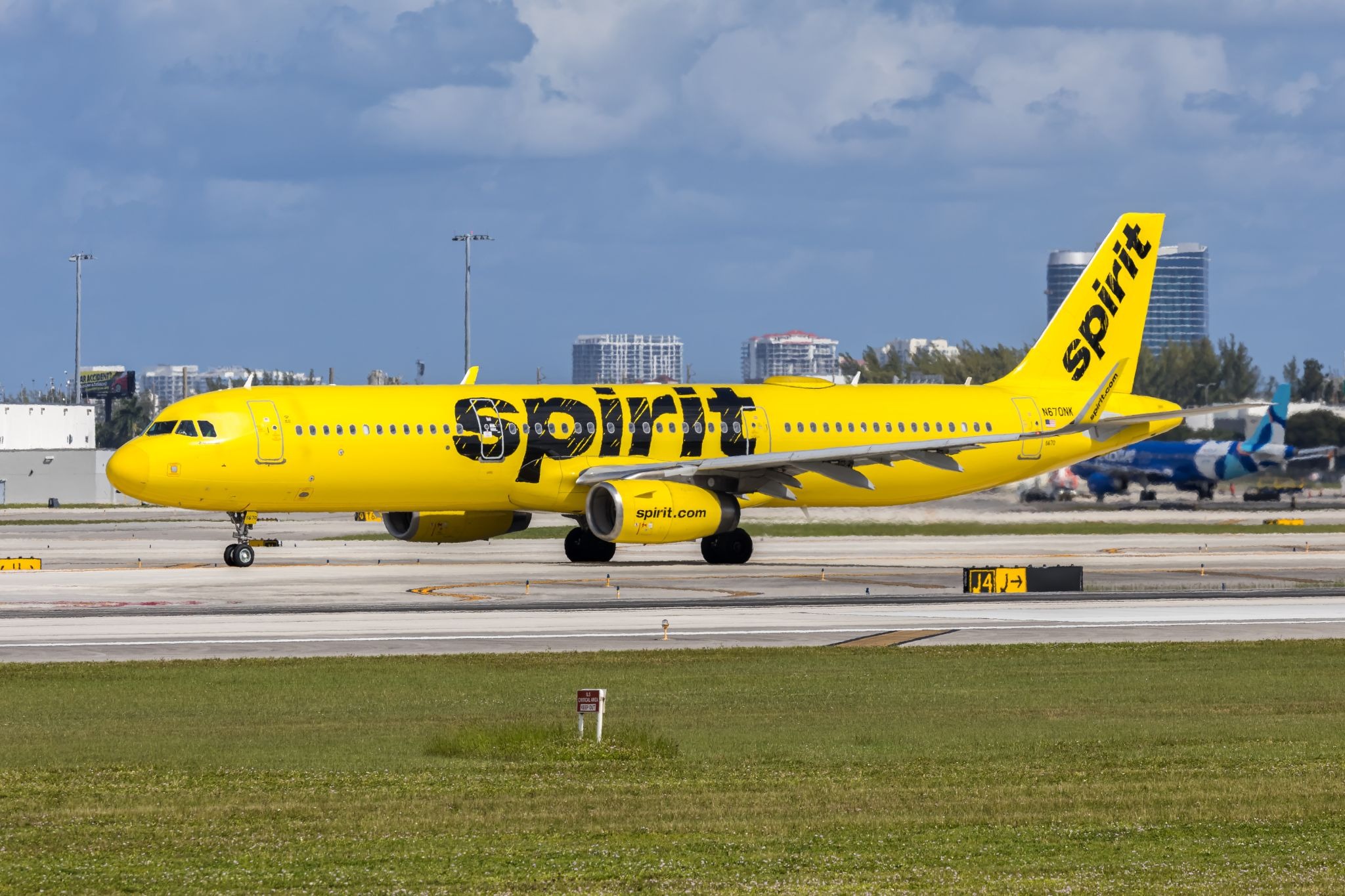
When an airline files for bankruptcy, its aircraft don't disappear. Its pilots don't leave the industry. Its gates don't cease to exist. The assets are repurposed by the operators who can more effectively use the assets through restructuring, sale, or orderly liquidation. Passenger demand remains. The traveling population is still served, which may be by carriers that are in a better position to serve them in a sustainable manner.
Government bailout that supports Spirit without addressing the structural causes of its failure does not safeguard passengers, but only postpones the inevitable, and uses the resources of the state to support a business case that the markets have already assessed and refused to finance.
Final Thought
The request by Spirit Airlines of the federal government to bail them out with taxpayer money is a tale that tells us more about the health of the ultra-low-cost carrier model than it does about the particular policy issue. The legal barriers to such a bail out exist in large numbers and are probably unattainable via regular means. The competitive implications of going ahead would be short-term and long-term. And the business case of saving Spirit, as such, as to why it is better to save it, rather than have its assets redeployed following bankruptcy, has not been persuasively put across by anyone.
There are valid precedents of government bailouts in the airline industry in the case of actual external disasters. The present state of Spirit, which is sympathetically considered, is not such. A business failure, as opposed to a market failure that needs state intervention, is two bankruptcies in less than a year, failure to lure private capital, and a business model that has not been able to compete in the post-pandemic economy.
The aircraft will continue to fly irrespective of the fate of the corporate structure of Spirit. The seats will be available to the passengers. Whether or not those seats are flown by an airline that can make ends meet is the question, and the market has already given a pretty clear answer to that question.
DISCOVER THE RIGHT CARD FOR YOU.
Explore our card recommendations and find a credit card that suits your personal needs.
Browse card categories
%20(1).jpg)
.svg)