.svg)

Lufthansa Is Testing Reduced Cabin Cleaning Here's What That Actually Means for Passengers
%20(1).svg)
Whether it was you on a short-haul trip in Europe and were wondering silently why the seat pocket in front of you has not been opened since the last customer, Lufthansa may shortly be making such a question just a little bit official.
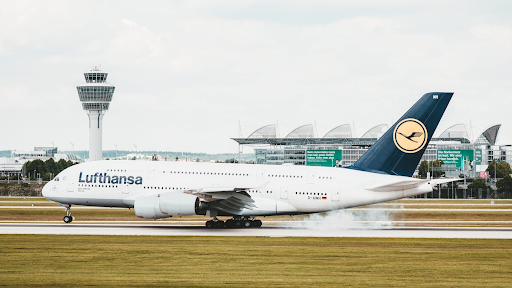
The German flag carrier is in the midst of a silent yet exposing experiment, one which is attracting both aviation observers and frequent fliers in equal measure. Lufthansa is conducted on a trial basis, between March 16 and March 29, 2026, a pilot on light cleaning on approximately 20 short-haul flights out of different European outstations. According to reports, the goal is to investigate the business and operational possibilities of reducing the extent to which the cleaning of economy cabins is performed between flights. Simply put: do less cleaning, hire less cleaning, do cleaning more reactively, at least in coach.
What Light Cleaning Really Means
In such a trial, economy cabins will not be cleaned in between flights. Rather, cleaning will be done on-demand, which, in theory, makes sense, but in reality, some eyebrows will be raised.
The meaning of that concretely is as follows:
- There will be no automatic emptying and servicing of lavatories between flights, only emptying and servicing on request.
- Unless flagged as necessary, seat back pockets will not be checked and cleared.
- Spot checks are used to substitute detailed cleans where flight attendants determine what cleaning is necessary and request it.
The test is restricted to outstation flights, i.e. the flights that move out of smaller airports of Europe and not the headquarters of Lufthansa Frankfurt and Munich. Flights that have their origin at FRA or MUC are not impacted as well as those that spend the night at a station, which will still get a full clean before the operation of the next day starts.
It is notable that business class on these short-haul flights is nothing but economy with blocked middle seats, no cabin, no different seats. However, business class is still being washed down under the test as economy runs on the new low protocol. It is an interesting question to sit and consider whether Lufthansa is subtly positioning clean cabin as a point of difference between cabin classes.
The Staffing Math -And Why It is a Little Complicated
The aspect that Lufthansa is testing is not only about the cleaning procedure itself, but it has to do with the possibility of operating with a smaller number of ground crew at outstations. The case examines the idea of cutting the number of cleaning personnel at affected airports to two.
The catch? The remaining two crew members would have a more time to complete the work to some extent negating the argument of efficiency. When you are reducing the number of staff by a half and the time of cleaning is increasing, the gains of turnaround time are less obvious. The airlines operate on a very short turn time and anything that delays an aircraft back in the air has actual operational cost. It is a strain Lufthansa must probably pay before rolling anything out at a larger scale.
What is also noteworthy is the fact that the airline has already been modifying the trial as fast as it could due to real-time feedback concerns. One of the initial aspects - the absence of crossing seat belts between flights - was reverted within just a few moments after being protested by the crew members. Such swift correction of course indicates that Lufthansa is taking this as a learning process and not a fait accompli.
Is This So Bad as It Seems?
Herein where a little plain sense comes in. The already bare short-haul economy offering of Lufthansa already includes being given a bottle of water, and the ability to purchase a buy-on-board menu that, on most of the short routes in Europe, does not experience massive adoption. There is just less food, less service, and less general mess on an hour and a half flight between say Vienna and Brussels than long-haul flight.
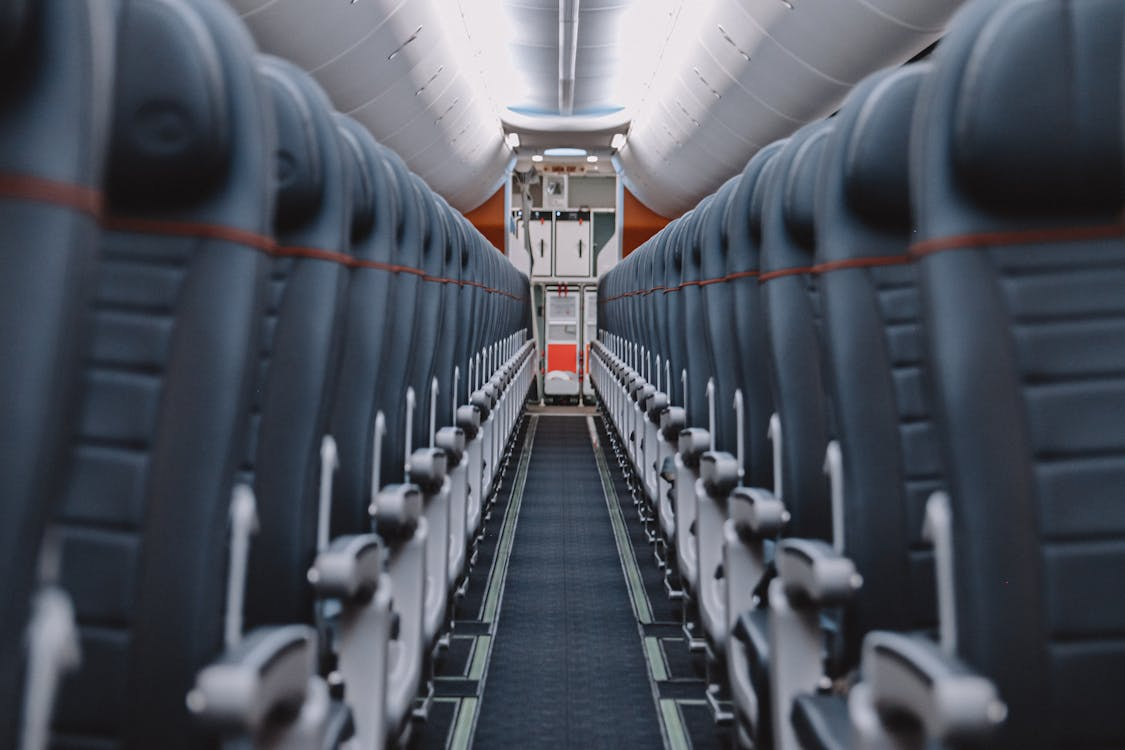
The Lufthansa short-haul fleet also has seat back pockets that are netted, not solid fiber pockets and therefore the remaining trash can be easily spotted at a glance. Even a cursory look is truly adequate in most instances.
In the greater context of airline cost-cutting, then, and there is a long and sometimes dismal history of it, this trial is not the most panic-inducing thing the industry has ever tried to do. This decrease is factual, yet it is made to scale to an environment in which the burden of cleaning was already light.
With that said, it has one aspect of this that is more difficult to relax about: the lavatories. Without any doubt, the area of any aircraft that decays the most between flights and the one that brings the most irritation to the passengers is the bathrooms. Sitting on an aeroplane and realizing that the lav has been used since the last sector is not a pleasant experience at all, and by increasing the chances of that happening to one, even within the short flights, passenger tolerance is probably going to stretch as thin as a sheet of paper.
The Bigger Picture: Airline and The vicious cycle of cost squeezer
All these do not occur in empty space. Avation as an industry has extremely low margins and airlines are walking on a tight rope between reducing costs and ensuring that they do not ruin the passenger experience to an extent that customers refuse to revisit the airline. Even small efficiencies, even ground handling, cleaning crews, and turnaround logistics can add up to significant savings of hundreds of daily flights.
The problem lies in the fact that passengers can and most certainly will experience the impact of cost reduction more in certain spheres than in others. A fairly trimmed down buy-on-board menu? Most people shrug. A stained pocket seat or an unhygienic lavatory? That is destined to stick in the mind, and more and more in the online reviews.
The case of Lufthansa is specifically constructed to find out the location of that threshold. Is it possible that the airline can cut on cleaning workforce and frequency on short routes without it reflecting negatively against it among the passengers? This is the question that the data will answer in due course.
What Comes Next
The trial wraps up March 29, 2026, after which Lufthansa will presumably analyze what it learned passenger feedback, crew response, operational data, and whether the cost savings were meaningful enough to justify any permanent changes.
Given that the airline already walked back at least one element of the trial within days of launching it, there's reason to think Lufthansa is approaching this with at least some sensitivity to where the limits are. A full rollout of reduced cleaning across the network seems unlikely; a more targeted, route-specific refinement of cleaning protocols is more plausible.
For now, if you're booked on a Lufthansa short-haul flight out of a European outstation between now and the end of March, you may be part of an unannounced experiment in airline cleanliness standards. Not the most glamorous form of participation in aviation history but there it is.
The Bottom Line
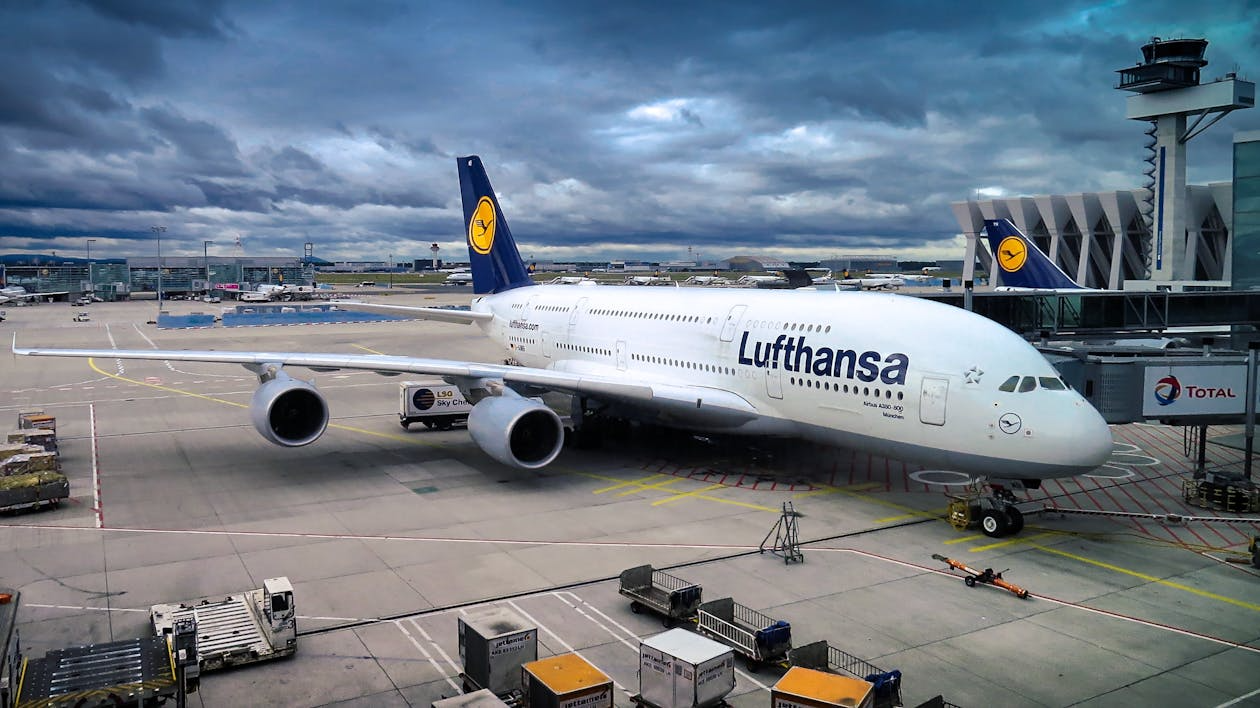
Lufthansa is testing whether it can pull back on economy cabin cleaning between short-haul flights without passengers noticing enough to care. Business class despite being nearly identical in seat product on these routes continues to receive full cleaning, which is its own kind of commentary. The trial is small in scope, carefully bounded, and already showing signs of real-time adjustment based on crew feedback.
Whether this leads to any permanent change depends entirely on what the data shows. Airlines will always look for places to trim costs. The question is always the same: how much will passengers actually notice, and how much will they mind?
DISCOVER THE RIGHT CARD FOR YOU.
Explore our card recommendations and find a credit card that suits your personal needs.
Browse card categories
%20(1).jpg)
.svg)