.svg)

Southwest Airlines Slipping Profits And Declining Fuel Costs Are Working More than the Turnaround Plan.
.jpg)
%20(1).svg)
Southwest Airlines was completely different as compared to the other airlines in the United States of America. When others lost their heads, it made a profit; when others became complicated, it stayed simple, and it was obstinately consistent in a business that is volatile. It has been among its biggest assets.
However, recent full-year and fourth-quarter earnings by Southwest indicate that the recent reinventions by the firm are not living up to the hype. Though the company is still technically profitable, the underlying statistics reveal that the firm is experiencing growing weaknesses in performance, deteriorating revenues, and increasingly relying on external factors, and most specifically, the prices of jet fuel.
Even the significant changes in business did not affect profits
In 2025, Southwest was reporting a net profit of $441 million, compared to 2024 when the company recorded a profit of 465 million. The fall might seem small at the face of it. As a matter of fact, it is concerning considering the number of revenue generating changes the airline executed in the course of the year.
When an organization adds new charges, re-organizes pricing and reduces expenses throughout the organization, investors want to see better performance, not worse. However, Southwest did not make as much money prior to the changes.
The passenger revenue only rose by 2.2% year-on-year. Such figure was not keeping up with the inflation, i.e. Southwest essentially lost revenue in a real way. Flat revenue is a grave red flag to an airline trying to go through a turnaround.
Checked Bag Fees Failed to give the Boost that was promised
The introduction of the fees on checked bags in Southwest was one of the most debatable changes in the company history. Over the years, bags fly free was a brand promise and one of the major reasons why customers preferred the airline to other airlines.
Prior to the adoption of the change, Southwest estimated the baggage fees to earn up to 1.5 billion every year. Later modifications indicate an amount of about 1 billion annually which is already half of what was initially projected.
More importantly, the airline already realized that the baggage fee would send away customers, estimating a loss of up to 1.8 billions of dollars in the revenue that the company would have done without the baggage fee. That background has been disregarded in popular discussion to a large extent.
Earnings were maintained on a positive footing, not through demand, but through cost cutting
The fact that Southwest will be able to remain profitable in 2025 had little to do with increased demand and everything to do with lower costs. The airline surpassed the cost-cutting goals and the airline reported savings of over 370 million dollars.
Much of such savings was achieved through layoffs and this was the first time that Southwest had cut non-contract and management employees. Even though it is essential to cut the waste, layoff is not a sustainable growth policy.
Reducing the expenditures will provide temporary protection of the margins, yet they will not make the airline stronger in competition. The cost reduction has a point of equilibrium without increase in revenue.
The Jet fuel prices made a silent rescue of the year
Cheaper fuel has been the singular most significant factor that kept Southwest profitable in 2025. The average oil prices fell by 14.5 percent and this reduced the fuel costs by about 655 million dollars relative to the last year. Southwest would have probably recorded a loss without that decrease.
Worse still, is what will happen when fuel prices are normalized. The performance of Southwest declined by almost 700 million year on year with the fuel costs remaining as constant. That fall happened even with new charges, work mode adjustment, and downsizing of the employees.
One of the reasons as to why the Turnaround is not translating into results
According to the leaders of Southwest, such changes are the ones that are establishing a foundation of success in the future. Nonetheless, the present information demonstrates that the airline is not becoming more efficient but less efficient.
There are two structural realities which are distinguished:
- The revenue efforts have not significantly added to the overall earnings.
- The fuel prices have become very sensitive and a determinant of profitability as opposed to operational strength.
This mix exposes Southwest to risks in case of increase in the fuel prices or fall in the demand.
The Money Is Going Instead Where
Certainly, Southwest used the profit amounting to 441 million to pay out stock buybacks amounting to 2.9 billion in 2025. That move has been one of the most controversial issues of the financial plan of the airline.
Stock repurchases may be rational where a business has surplus cash flow and it has few available investment opportunities. That is not the case with Southwest.
The airline will require the new types of aircrafts to explore new markets, the new types of onboard facilities to be able to stay competitive and airport lounges to appeal to the high-value customers. All these have a high capital cost.
There are two strategic errors that are keeping Southwest behind
Southwest did have to change and the implementation has brought new issues, and did not fix the old ones.
- Use of nearly all Boeing 737 aircraft only limits route flexibility and expansion to markets which need other aircraft sizes or range.
- The rejection of airline alliances and long-haul routes to international destinations would mean that Southwest is not able to win the premium traffic and credit-card income that its competitors use to make money.
All these problems are distinct structural drawbacks affecting directly the long-term earnings potential.
Distribution Changes Came Too Late
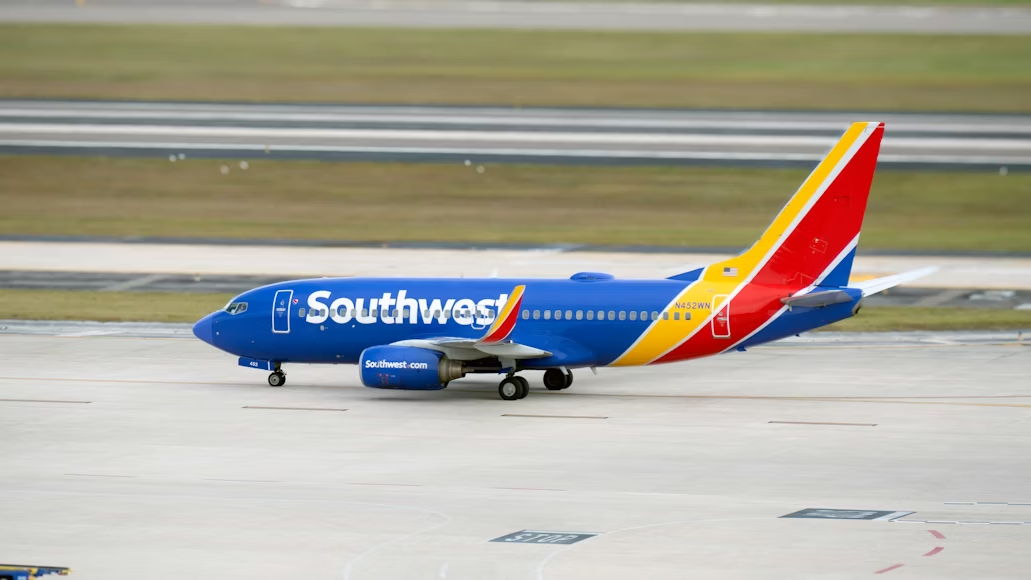
Southwest did not sell tickets in online travel agencies and on large booking platforms. Although that lowered distribution expenses, it also turned this airline undetected by millions of passengers.
Another problem arose once Southwest entered into third-party platforms another company was often more expensive because of costs on baggage. That put the pressure of unbundling the pricing and introducing more restrictive fare options.
What the rest of the industry has taught
We have seen what transpires when financial engineering replaces strategic investment by other airlines. American Airlines had issued over $12 billion in stock buybacks over the years, most of which had been borrowed. The outcome has been high debt, minimal fleet investments and recurring interest costs that have burdened profitability.
The historical strategy of Southwest was to avoid such a route by ensuring an excellent balance sheet and long-term stability focus. It is possible that it is leaving that discipline as indicated by recent decisions.
What the Numbers Find out in the End
The thing that is most worrying is the increasing reliance of the airline to the low fuel prices. The fundamental business model is weak when the profitability depends on things beyond the control of the management.
Southwest was in need of change, but it did not have to do away with the things that made it special. The airline is now facing the risk of being a weaker version of its competitors instead of a stronger version of itself.
DISCOVER THE RIGHT CARD FOR YOU.
Explore our card recommendations and find a credit card that suits your personal needs.
Browse card categories
%20(1).jpg)
.svg)