.svg)

When Dressing Like a Pilot Almost Worked: The Strange World of Airline Impostors
%20(1).svg)
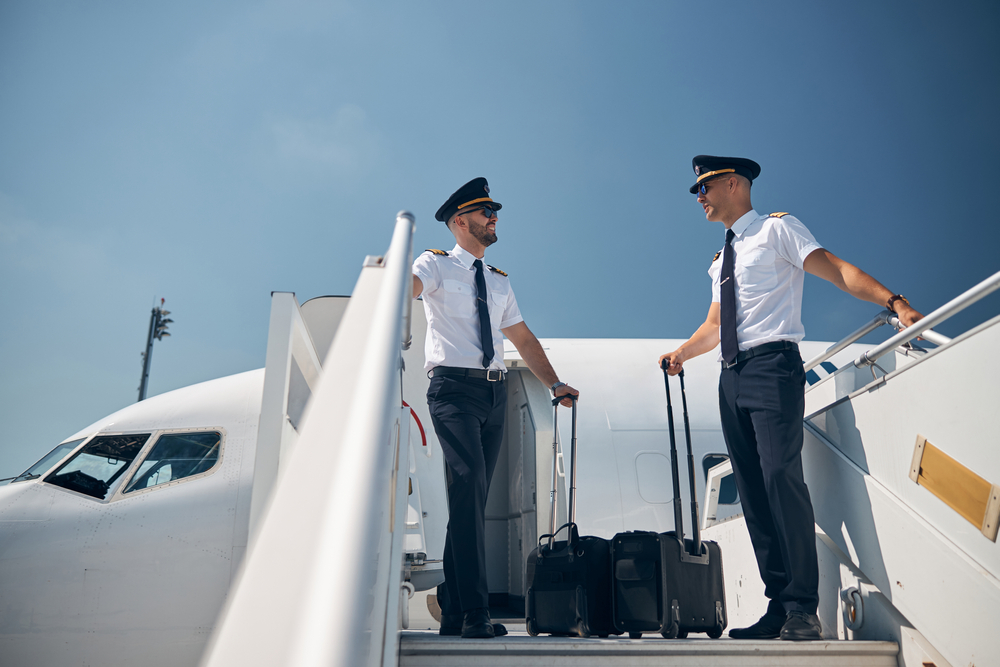
If you’ve ever spent time in an airport, you’ve noticed it immediately. Pilots and flight attendants move differently. They walk with confidence, bypass lines, disappear through staff-only doors, and are treated with an automatic level of respect that regular passengers rarely experience. No one asks many questions. They’re assumed to belong. For most travelers, it’s just something to observe. For a small but fascinating group of people, it became a temptation.
Over the years, several ordinary passengers decided to test a risky idea: what if they dressed like airline crew and acted the part? Could a uniform, confidence, and a convincing story unlock free flights, upgrades, lounges, or simply the feeling of being important? In some cases, the answer was yes — at least temporarily.
The Original Airline Impostor: Frank Abagnale Jr.
The most famous airline impostor of all time is Frank Abagnale Jr., whose story dates back to the 1960s. As a teenager, Abagnale discovered that pilots could “deadhead,” meaning they could fly for free on other airlines while repositioning for work. With a Pan Am pilot uniform, forged credentials, and remarkable confidence, he boarded hundreds of flights without ever piloting a plane.
He sat in empty seats, occasionally even in the cockpit jump seat, and traveled to dozens of countries. At the time, aviation relied heavily on trust and paperwork rather than digital verification. That trust worked in his favor for years. Eventually, authorities caught him, but by then he had already cemented his place in aviation history and later reinvented himself as a security consultant.
Trying the Same Trick in the Modern Era
Modern airports are very different. Biometric scans, employee databases, and automated audits have replaced the trust-based systems of the past. Still, that hasn’t stopped people from trying.
One of the most extreme modern cases involved Tiron Alexander, a man who exploited airline employee travel systems to book flights reserved for crew members. This wasn’t a one-time stunt. Alexander studied how non-revenue travel worked and repeatedly presented himself as airline staff. Over time, he boarded hundreds of flights without paying.
What finally exposed him wasn’t a suspicious gate agent or a uniform mistake. It was data. Airline audits flagged travel patterns that didn’t align with any real employee. Once investigators followed the trail, the scheme collapsed completely and legal consequences followed.
When Overconfidence Ruins Everything
In some cases, the deception unraveled much faster. In 2013, Philippe Jeannard, a French national, arrived at a U.S. airport wearing what appeared to be an Air France pilot uniform. He confidently asked for a first-class upgrade, something that occasionally happens for off-duty crew.
When the upgrade was denied due to lack of availability, he boarded anyway. Instead of quietly taking his seat, he entered the cockpit and introduced himself as a fellow pilot. That single decision triggered immediate scrutiny. Credentials were checked, security was alerted, and he was removed from the aircraft before departure. He later pleaded guilty and was fined. The uniform opened the door, but overconfidence closed it just as quickly.
Not Every Impostor Was Chasing Free Flights
Not all cases were about money or upgrades. In the early 2020s, a story out of Indonesia went viral involving a young woman named Nisya, who boarded a Batik Air flight wearing a flight attendant uniform she had purchased online along with a counterfeit ID badge.
At first, no one questioned her. She moved through the airport and boarded without issue. It wasn’t until real crew members noticed small inconsistencies — uniform details, behavior, and training gaps — that the truth came out. When confronted, she admitted she wasn’t an employee at all. Her motivation wasn’t criminal profit. She had told friends and family she’d been hired by the airline and didn’t know how to admit otherwise. Even so, impersonating airline crew is taken seriously, and she was detained and questioned.
The Lufthansa Pilot Who Pushed His Luck
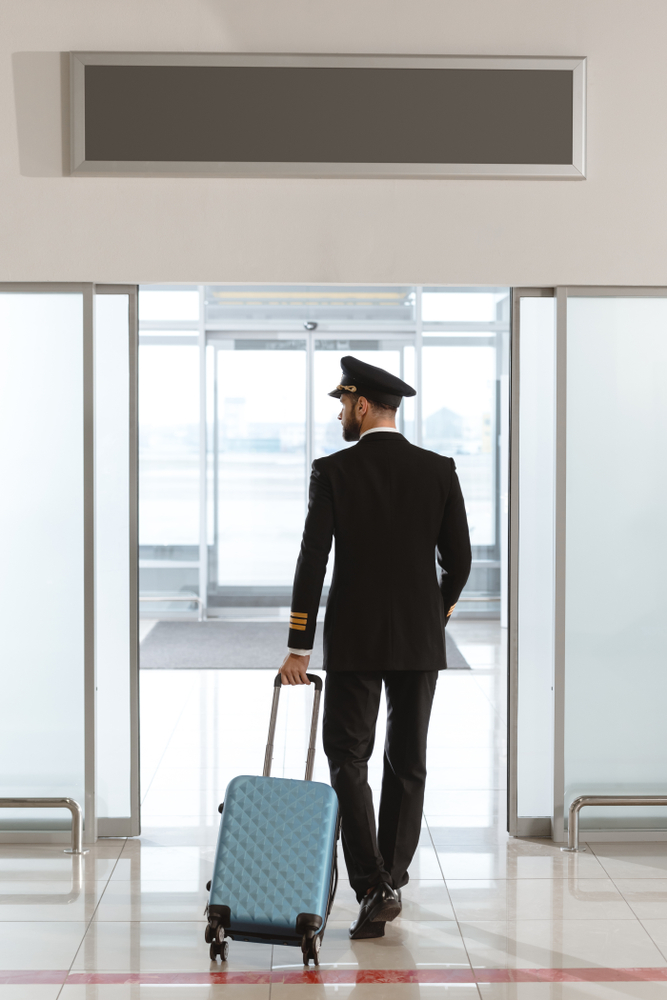
Another bold case involved Rajan Mahbubani, an Indian businessman who repeatedly dressed as a Lufthansa pilot to move through airports. Over more than a dozen flights, he used the uniform to gain priority treatment, avoid long lines, and access airport lounges.
Mahbubani later admitted that the disguise worked largely because people rarely question a pilot’s appearance. His streak ended when airport security noticed irregularities and verified his credentials. Unlike some impostors who deny everything, he openly acknowledged what he had done, making the case even more surreal.
Why These Schemes Always Collapse
What ties all of these stories together is how predictable their endings are. Each impostor relied on the same ingredients: a convincing uniform, confidence, and the assumption that no one would challenge them. For a brief moment, that combination worked. Airports are busy, high-pressure environments, and staff are trained to move quickly, not interrogate people who look official.
But airports are also layered systems. One mistake might slip through. Ten might go unnoticed. Hundreds never do. Eventually, a database doesn’t match, a colleague notices something subtle, or an audit raises a question no one can ignore. Once scrutiny begins, the illusion disappears instantly.
The Real Lesson for Travelers
Many people believe airline privileges come from appearance. In reality, they come from systems: employee IDs, backend databases, security clearances, and flight manifests. A uniform may open a door, but it cannot keep it open.
These stories also reveal something deeply human. Not every impostor was chasing money. Some wanted respect. Some wanted to feel important. Others wanted to avoid embarrassment or live a fantasy for just a moment. Airports, with their symbolism of freedom and status, make that temptation stronger than almost anywhere else.
Final Thoughts
The era when a crisp jacket and confident walk could carry someone across the world for free is effectively over. Modern aviation remembers everything. Systems talk to each other. Patterns are flagged. And once attention turns your way, there is no cinematic escape — only questions, reports, and consequences.
For travelers dreaming of elite treatment, the real path remains the legitimate one: loyalty programs, miles, points, and patience. The shortcuts may look clever, but history shows they always end the same way. The uniform comes off, the questions begin, and the person who thought they belonged learns just how closely airports are really watching.
DISCOVER THE RIGHT CARD FOR YOU.
Explore our card recommendations and find a credit card that suits your personal needs.
Browse card categories

%20(1).jpg)
.svg)